
Renting a car (a.k.a. where comfort meets convenience)
Pros:- Protection from sunburn, wind, sudden rain, dust etc. A car will give you full cover.
- More luggage space: ideal in case you are travelling with large suitcases, shopping bags or like to have more space for your beach equipment
- More convenient for families or groups of people: comfortable for 3-5 people even on longer distances
- Safer for night drives or places with limited visibility: especially on islands with limited lighting or winding roads
- Air conditioning: this is a huge luxury during hot Greek summers (especially in peak summer season when temperatures are quite high)
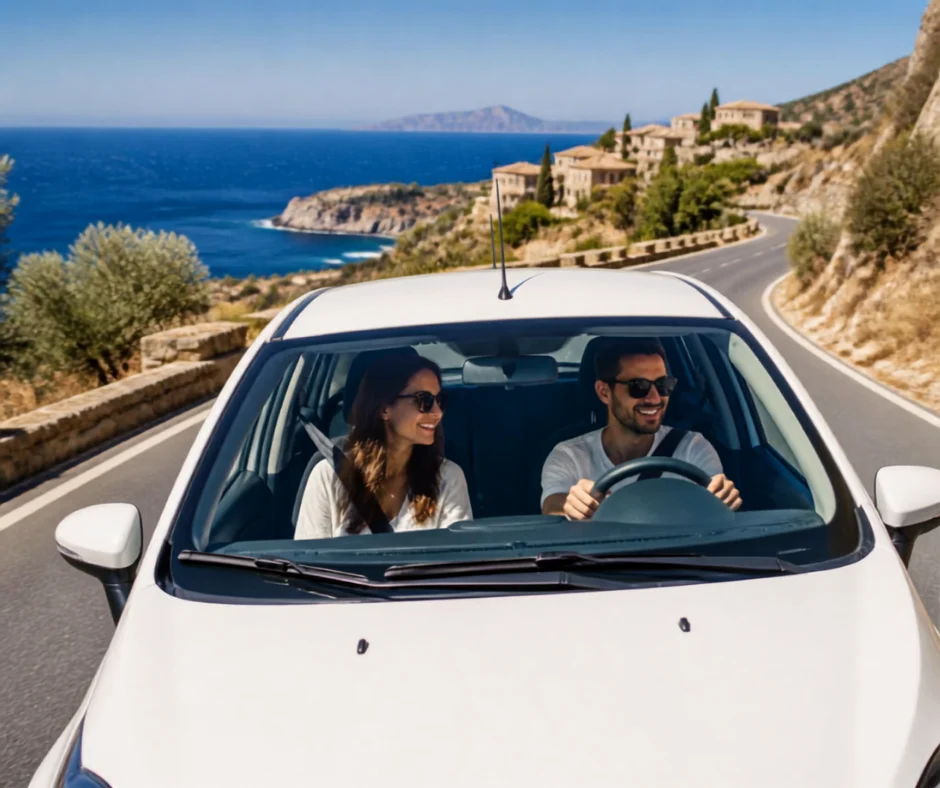
- Narrow roads and tight parking: very often, especially on islands’ Chora (main villages), driving can be significantly stressful due to lack of parking availability, narrow roads, risk of small damages or just a mini nervous breakdown while figuring out a way from these situations
- Higher cost: it is usually more expensive than a bike in terms of renting fees, fuel, parking, insurance etc.
- Traffic restrictions: some villages on islands are pedestrian-only zones and do not allow entrance of cars
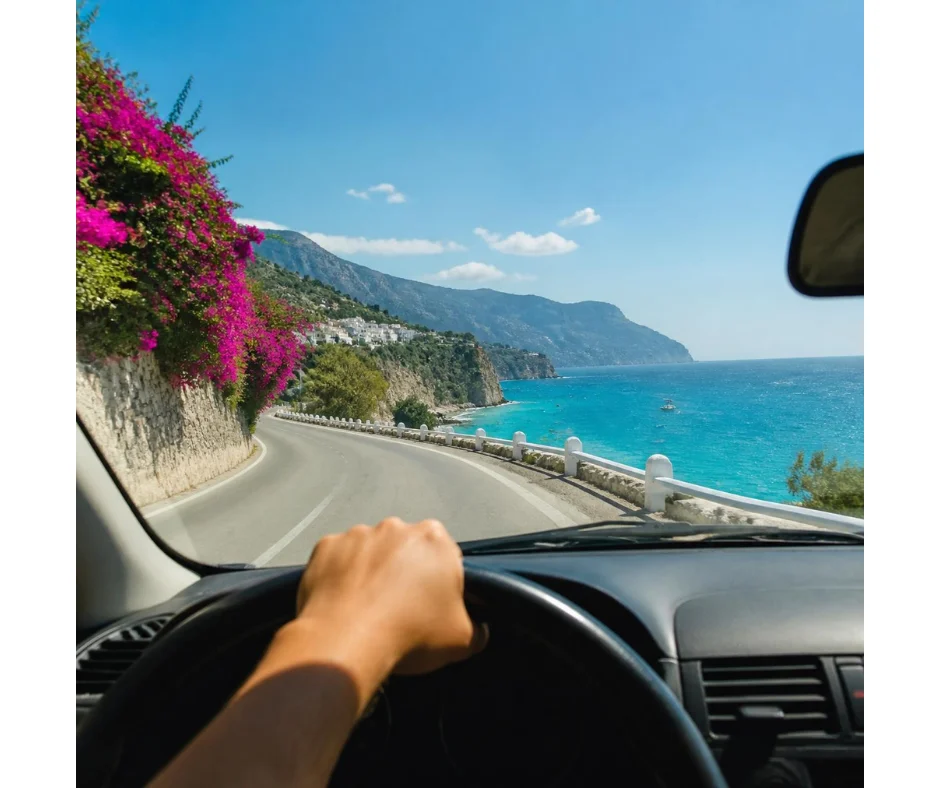
- Book in advance (as soon as possible), especially f you travel during peak season (July-August). In this way, you will have more options available at more reasonable prices.
- Choose a small vehicle fitting your needs – it will be easier to park and manoeuvre on narrow small streets (of course, this would depend on your plans and needs – if you want to visit off-road hidden gems, this won’t work well with a small vehicle).
- Choose full-coverage insurance, as some roads (especially on not so popular islands) are unpaved and rather poorly maintained. However, always check the car before you take it and if you see some scratches or damages – take a photo, inform the company and ask them to describe them in the paper you will receive a copy of.

Renting a scooter (a.k.a. feeling the sun and the fun)
Pros:- Feel the breeze and the wind in your hair: perfect for island-hopping vibes, sea views and spontaneous trips.
- Easy to park: as it fits into small spaces, it is perfect for small island streets and can also be used to get closer to beaches and breath-taking viewpoints.
- Great for solo travellers or adventurous couples: adds an additional wow element to your trip.
- More affordable: bikes tend to have lower rental fees and less fuel consumption.
- Opportunity to explore more places: you would be able to use some less accessible routes where cars may not be able to reach.

- Riskier: driving a motorbike is sometimes associated with higher risk of accidents, as roads are often slippery with sand and gravel.
- Exposure to weather conditions: if you rent a scooter, be ready for strong sun, wind and sudden rain showers.
- Luggage limitations: it is not possible to carry a lot of luggage on a motorbike, usually a backpack/beach bag is the maximum you would be able to use.
- Wear a helmet (which is required by law anyway, but it is often ignored) – DON’T SKIP IT!
- Make sure you have sunglasses and a lot of sun protection – sun hits quite hard on open roads.
- Don’t rent a scooter if you have never driven one before – island roads are definitely not the place to experiment with such things.
- Check your breaks and balance when you take the motorbike.
- Book in advance for better rates.

- Santorini/Crete/Milos/Karpathos/Lefkada – car is recommended due to long distances between villages and/or steep roads.
- Mykonos/Paros/Naxos/Ios/Alonissos/Halki: scooter-friendly with short distances and/or relatively flat terrains.
- Choose a car if you prioritise safety, comfort, travel as a group/family and/or have more luggage
- Choose a scooter if you like freedom, don’t mind weather exposure, are more adventurous and don’t need it to transfer more people or luggage
Frequently asked questions
Should I rent a car or a scooter on a Greek island?
Choose a car if you prioritise safety and comfort, travel as a family or group, or have more luggage. Choose a scooter if you want freedom, do not mind sun, wind and rain, are more adventurous and do not need to carry people or bags. Car is recommended on Santorini, Crete, Milos, Karpathos and Lefkada because of long distances and steep roads; Mykonos, Paros, Naxos, Ios, Alonissos and Halki are scooter-friendly.
Is it safe to rent a scooter in Greece if I have never ridden one?
No. Island roads are often slippery with sand and gravel and are not the place to learn. Wear a helmet, which is required by law even though it is often ignored, check the brakes and balance before leaving, and use plenty of sun protection.
What insurance should I take when renting a car on a Greek island?
Full-coverage insurance, because roads on less popular islands can be unpaved and poorly maintained. Before driving off, photograph any existing scratches or damage and make sure the rental company records them on the paperwork you keep a copy of.
When should I book a rental car or scooter for the Greek islands?
As early as possible, especially for July and August. Booking in advance gives more vehicle options at better prices. A small car is easier to park and manoeuvre in narrow village streets unless you plan to reach off-road beaches.
Was this useful?