
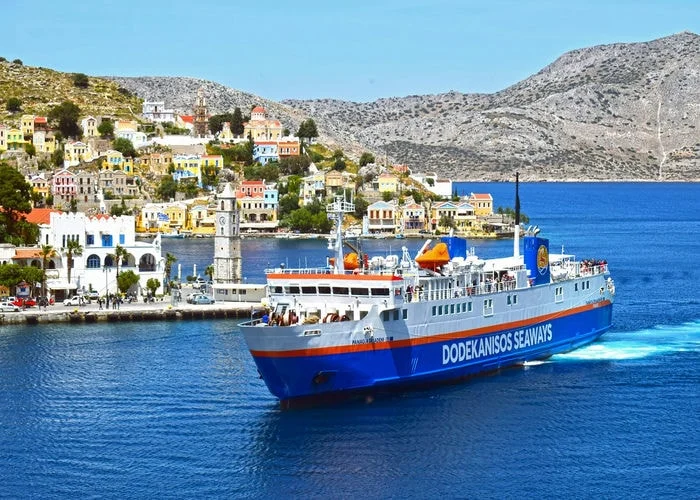
1. The digital foundation: booking smarter
The days of walking up to a port booth in August and expecting a ticket are long gone and frankly, a recipe for a ruined holiday.- The aggregator advantage: Use platforms like Ferryhopper (the best one, in my opinion) or similar booking engines. They don’t just sell tickets, they provide the most accurate real-time schedules and, crucially, allow you to visualize the entire route. If you are island-hopping, these apps can show you the “daisy chain” of connections.
- Book your “backbone”: If you have a flight to catch at the end of your trip, book your final return ferry to the mainland weeks, if not months, in advance. Islands can become “trapped” during peak season if a Meltemi (the fierce north wind) kicks up and ferries are cancelled. Always leave a buffer day between your last ferry arrival and your flight out.
2. Port tactics: the art of the arrival
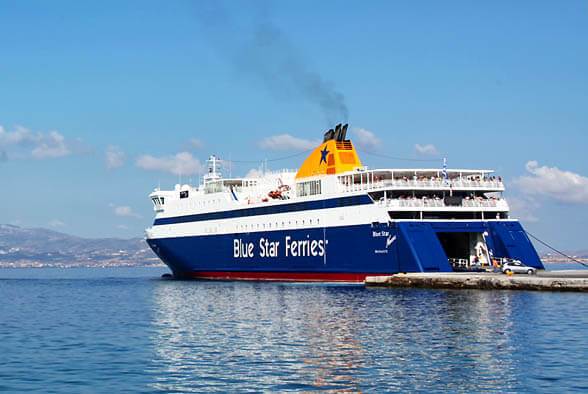
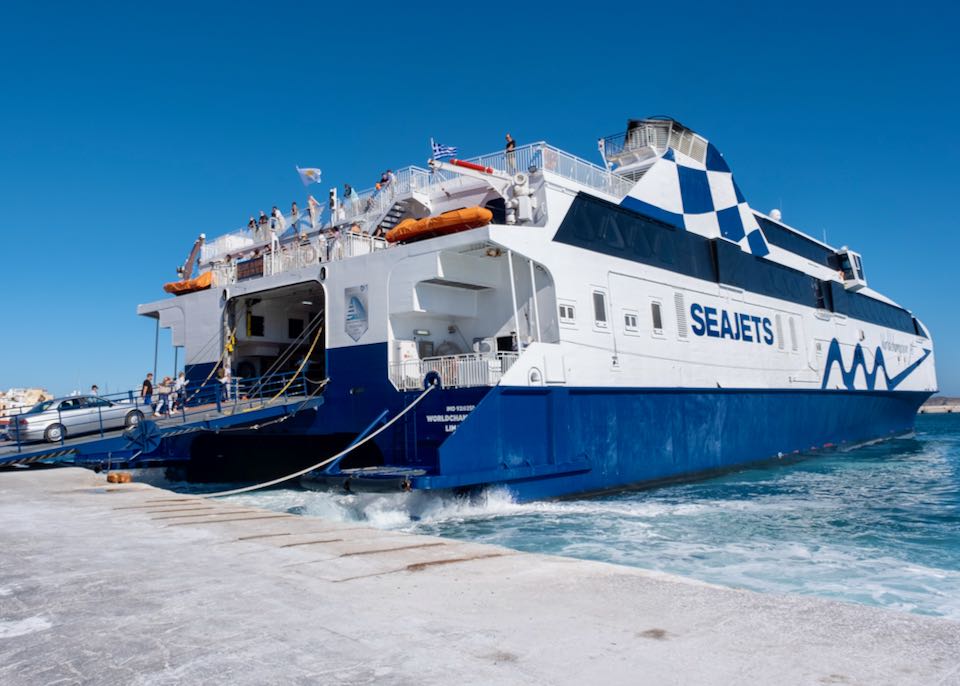
Greek ports are chaotic, energetic and uniquely fragrant with the mix of salt air and diesel exhaust. In August, they are also very (very!) crowded.- The “one-hour rule”: Arrive at the port at least 60 minutes before departure. This isn’t because you need to check in, you don’t, but because the port is often a hive of activity where finding your specific pier can be a challenge. Port authorities often change the docking position of large ferries at the last minute based on wind conditions.
- The pier position: When you arrive, don’t just stand at the main terminal building. Walk toward the docks. Look for the electronic boards, but better yet, ask a port official. They are usually identifiable by their uniforms or high-visibility vests. A simple “Pio einai to ploio gia Santorini?” (Which is the ship for Santorini?) will save you from standing at the wrong ramp.
3. The onboard strategy: choosing your territory
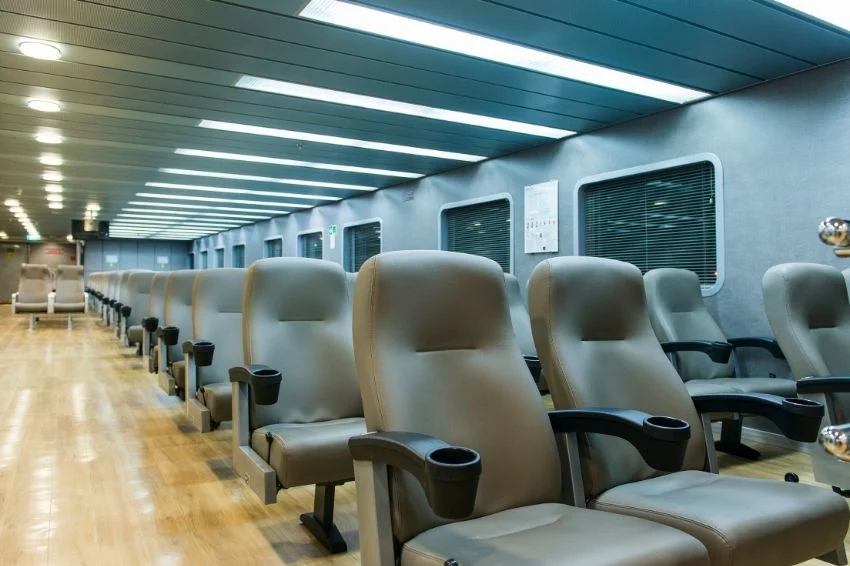
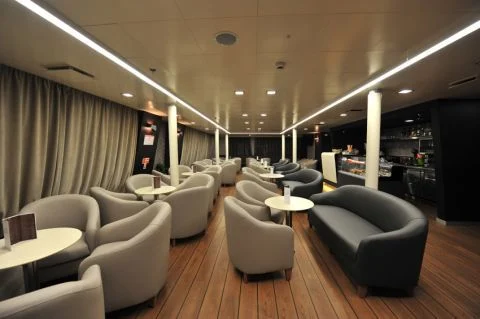
Once you have navigated the steep ramp (which can feel like a climb up Mount Olympus with luggage), you face the most important decision of the trip: Where do I sit? (though, this would depend on the ferry you take)- The “airplane seat” (reserved): If your journey is over three hours, spend the extra few euros for an “Airplane” or “Numbered” seat. These are usually in an air-conditioned lounge. It guarantees you a place to sleep and a spot for your bag.
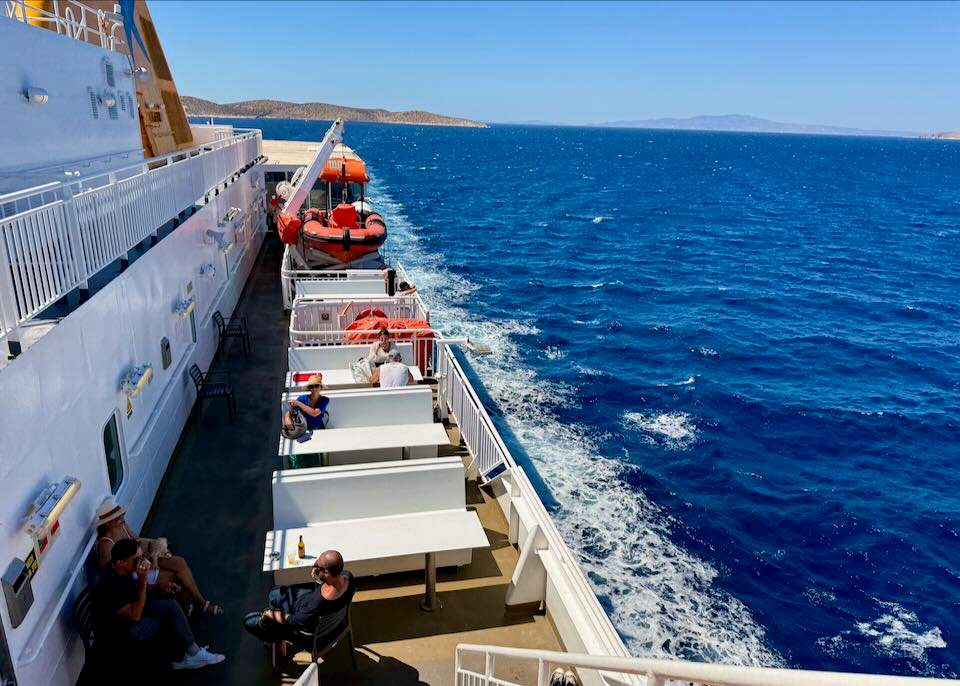
- The “deck” strategy: If you want the authentic experience, choose a standard (deck) ticket. You will have access to the outside deck. During peak season, grab a seat on the plastic benches early. Bring a small, lightweight microfiber towel to wipe down the seat or to use as a makeshift pillow.
- The “AC vs. wind” balance: The interior of large ferries is often blasted with aggressive air conditioning that feels like a meat locker, while the exterior deck is hit by the relentless Aegean wind. Pro Tip: Always have a lightweight scarf or a windbreaker easily accessible in your carry-on, regardless of how hot it is on the pier. You will thank yourself an hour into the voyage.
4. The “Meltemi” factor: managing seasickness
The Meltemi wind is a fact of life in the Aegean. In July and August, it can turn a smooth cruise into a rolling, pitching journey.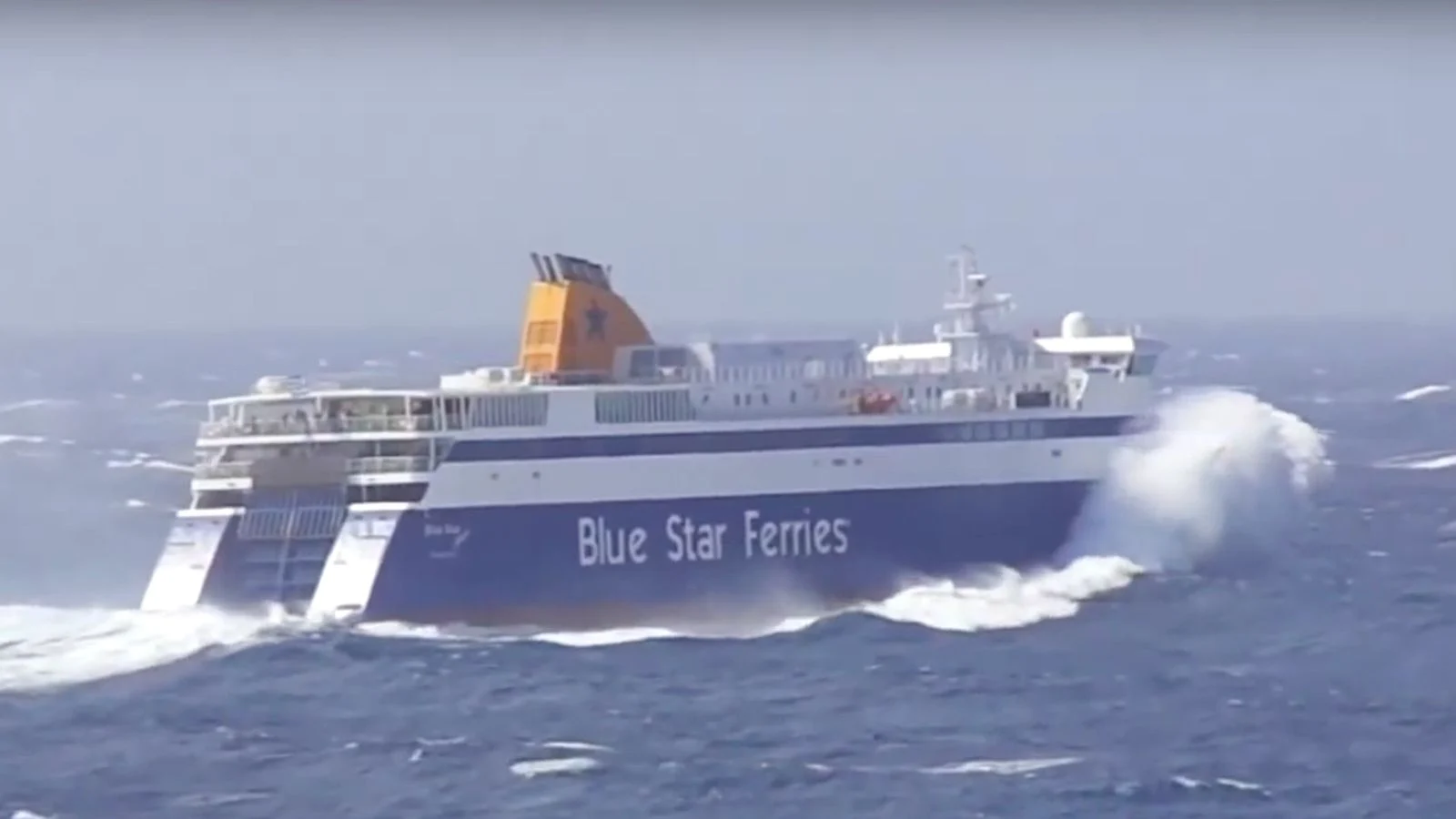
- Mid-ship, low-down: If you are prone to seasickness, avoid the top decks and the bow of the ship. The motion is amplified at the front and the highest points. Seek a seat in the middle of the vessel, on the lowest passenger deck possible.
- The horizon fix: If you feel the waves getting to you, do not go into the dark, air-conditioned lounges. Step out onto the deck and stare at the horizon. Watching the line where the sky meets the sea helps your inner ear recalibrate.
- Pharmacy prep: Visit a Greek farmakeio before your trip. Ask for “sea sickness pills.” Greeks are experts at this and the local brands are often more effective than standard international ones.
5. Survival kit: snacks and connectivity
The snack bars on ferries are convenient but they are expensive, and during peak season, the lines can be daunting.- The BYO feast: Pack your own supply. A bottle of water (or two), a bag of nuts, some fruit and a sandwich. Eating on the deck while watching the islands drift by is one of the great joys of Greek travel.
- Power up: Electrical outlets are a rare commodity on crowded ferries. Your phone battery will drain quickly as it searches for a signal in the middle of the sea. Carry a high-capacity power bank.
- The luggage locker myth: Many travelers look for the “luggage room” on the ship. While some large ferries have them, they are often overflowing by the time you board. Treat your luggage like your shadow, keep it with you. Pack a “day bag” with your valuables, water and jacket and leave your larger suitcase in the designated racks near the car deck entrance (but don’t leave electronics in it).
6. The etiquette of the voyage
The ferry is a shared space, and the real Greece Enthusiast knows that how you behave reflects on your respect for the local culture.- The queueing culture: Greeks generally do not form neat, single-file lines. When the ferry pulls in, there will be a surge of movement. Don’t be aggressive, but don’t be timid either. Stand your ground, keep your bag close to your body and be polite but firm.
- Seat hogging: It is common for people to put a bag on the seat next to them. If the ferry is packed, it is perfectly acceptable to gesture and ask, “Is this seat taken?” Most people will immediately move their bag with a friendly smile.
- Disembarkation: When your island is announced, do not wait until the ship is tied to the dock to get your gear. About 15 minutes before arrival, move toward the exits or the car deck. It is a mass exodus and being at the back of the line can mean an extra 10 minutes of waiting in the stairwells.
Quick reference checklist for peak season ferries
| Item | Strategy |
| Tickets | Book online via aggregator; print or download in advance. |
| Arrival | Reach the port 1 hour before departure. |
| Seating | Book “Airplane” seat for long hauls; bring a jacket for the AC. |
| Seasickness | Sit mid-ship/low-deck; watch the horizon; buy local meds. |
| Food | Bring your own snacks; avoid terminal-price markups. |
| Luggage | Keep valuables in your day bag; keep bags within sight. |
| Mindset | Expect delays; embrace the “slow” nature of island life. |
Frequently asked questions
Do I need to book Greek ferries in advance in July and August?
Yes. Walking up to a port booth in August and expecting a ticket is a recipe for a ruined holiday. Book online through an aggregator such as Ferryhopper, and book your final return ferry to the mainland weeks or months ahead if you have a flight to catch, leaving a buffer day in case the Meltemi wind cancels sailings.
How early should I arrive at the port for a Greek ferry?
Arrive at least 60 minutes before departure. You do not need to check in, but ports are crowded in peak season and the docking position of large ferries often changes at the last minute because of wind, so you need time to find the right pier.
Is it worth paying for a numbered or airplane seat on a Greek ferry?
If your journey is longer than three hours, yes. A numbered or airplane seat is usually in an air-conditioned lounge and guarantees you a place to sleep and a spot for your bag. For shorter trips a standard deck ticket gives you the outside deck, which is the more authentic experience.
What is the best place to sit on a ferry if I get seasick?
Sit mid-ship on the lowest passenger deck and avoid the bow and the top decks, where the motion is amplified. If you start to feel unwell, go outside and watch the horizon rather than staying in the air-conditioned lounge, and buy local sea sickness pills from a Greek pharmacy before you travel.
Can I leave my luggage in a luggage room on the ferry?
Some large ferries have luggage rooms, but they are often full by the time you board. Keep valuables, water and a jacket in a day bag with you, and leave larger suitcases in the designated racks near the car deck entrance without any electronics inside.
Was this useful?