Digital Nomads: Working from a Beach Bar – Truth or Myth?
If you search for “digital nomad Greece” on Instagram, you are bombarded with a specific aesthetic: a sleek MacBook Pro resting on a weathered wooden table, a tall, condensation-beaded freddo espresso to the left, and a backdrop of turquoise Ionian waters. The caption usually implies that the “office” for the day is a beanbag chair under a straw umbrella.
For the Greece enthusiast dreaming of trading their cubicle for a Cycladic cove, this image is the ultimate siren song. But as any seasoned remote worker in the Mediterranean will tell you, the reality of working from a beach bar is a complex mix of logistical gymnastics, atmospheric interference, and the occasional glorious success.
Is the “beach office” a viable lifestyle or a curated myth? Let’s peel back the palm fronds and look at the reality of being a digital nomad in Greece.
The Myth: The “Office” on the Sand
The idea that you can spend an eight-hour shift effectively working from a sunbed is, for the most part, a myth. Here is why the Instagram version rarely matches the Tuesday morning reality:
1. The Glare of Apollo
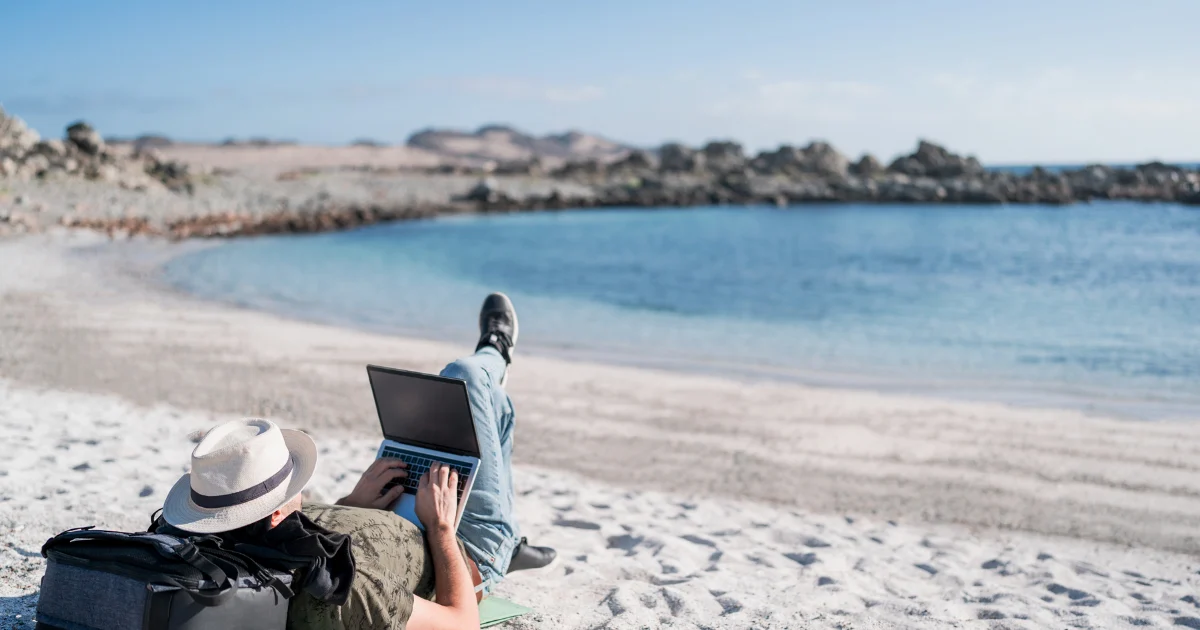
The Greek sun is magnificent, but it is the natural enemy of the liquid crystal display (LCD). Even with screen brightness at , the mid-morning glare in Santorini or Naxos makes a laptop screen essentially a mirror. Unless you enjoy staring at a high-definition reflection of your own squinting face for six hours, the open beach is a difficult workplace.
2. The Salt and Sand Factor
Electronics and the Aegean coast are in a constant state of war. Fine volcanic sand has a way of finding its way into MacBook butterfly keyboards, and the salty “sea spray” (almyra) that makes your hair look great is corrosive to charging ports.
3. The Soundscape
A Greek beach bar is rarely a library. Between the rhythmic thump-thump of deep house music, the frantic clatter of tavli (backgammon) tiles, and the shouting of children, your “Zoom background” might look professional, but your audio will sound like a chaotic summer festival.
The Truth: The “Semi-Beach” Hybrid
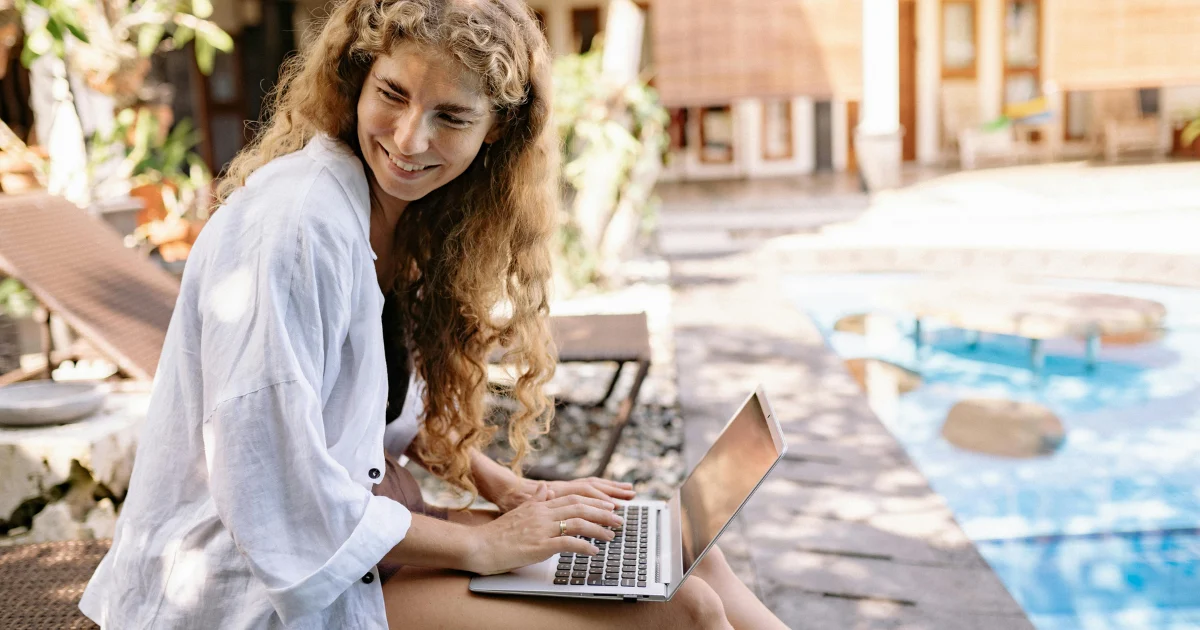
While the “laptop on the sand” is a myth, the “Digital Nomad in Greece” lifestyle is very much a reality, it just looks a little different. The trick to working remotely in Greece isn’t working on the beach, it’s working near the beach.
The Taverna Office
The most successful nomads in Greece seek out the “Second Row” tavernas. These are the establishments located just across the street from the water. They offer:
- Solid Shade: Thick vine-covered pergolas or heavy canvas awnings that kill the glare.
- Power Outlets: Unlike a sunbed, a taverna table near a wall usually has a “kleftis” (power strip) nearby if you ask the waiter nicely.
- Stability: A real wooden table is far superior to a shaky lap-tray for typing.
The Infrastructure Evolution
Greece has recognized the nomad trend and responded with infrastructure.
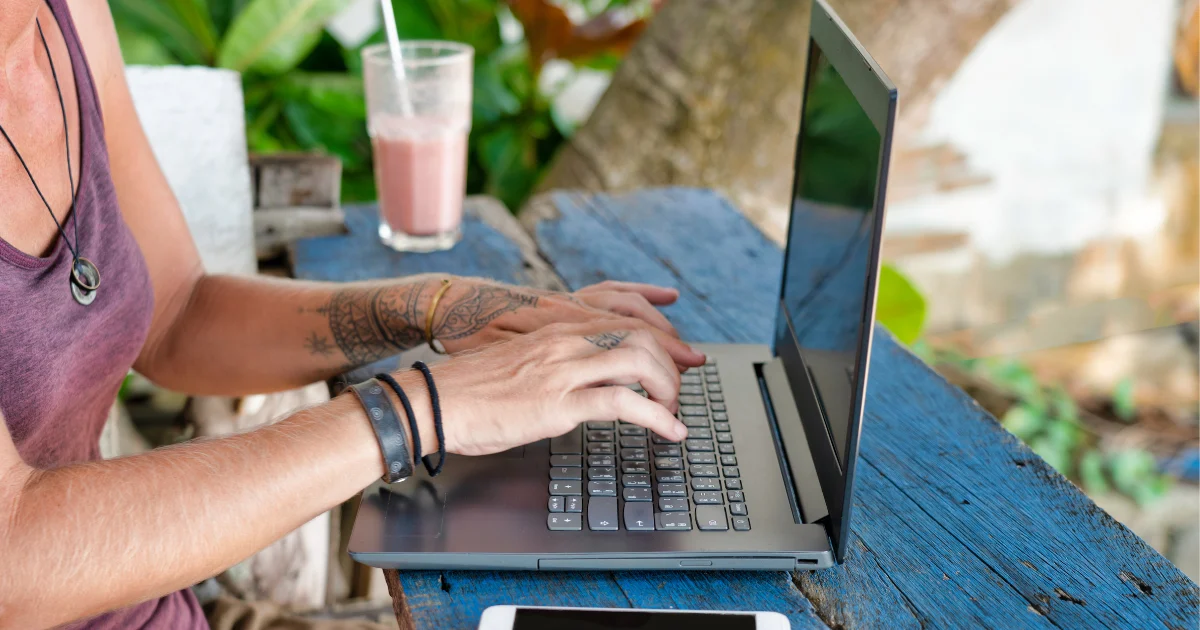
- The 5G Revolution: Greece’s 5G rollout has been surprisingly aggressive. In places like Athens, Thessaloniki and even parts of Mykonos or Rhodes, mobile speeds often outperform hotel Wi-Fi. Many nomads now rely on a local SIM card and a “MiFi” hotspot rather than the spotty “Guest Wi-Fi” of a café.
- The Digital Nomad Visa: Since 2021, Greece has offered an official Digital Nomad Visa, allowing non-EU citizens to live and work in the country for up to a year (extendable to three). This legitimizes the “myth” and provides a legal framework for long-term stays.
The Nomadic Geography: Where the Truth Happens
Not all islands are created equal for the remote worker. If you want to make the “beach bar office” work, you have to choose your location with the precision of a software architect.
1. Crete (Chania & Heraklion)
Crete is the heavyweight champion of Greek nomadism. Because it is a massive island with a year-round economy, the internet infrastructure is robust. Chania offers a “Venetian-meets-Silicon-Valley” vibe where you can work in a 500-year-old building with 100 Mbps fiber.
2. Rhodes
Rhodes has leaned heavily into the “Smart City” and “Nomad” branding. The island has dedicated hubs and a community of remote workers that meet regularly, turning the myth of isolation into a truth of networking.
3. Syros (Ermoupoli)
The administrative capital of the Cyclades, Syros is perfect for those who want a “city” feel by the sea. It’s elegant, the Wi-Fi is reliable, and the grand marble plazas provide plenty of shaded spots for laptop work that don’t involve getting sand in your hardware.
Survival Tips for the Greek Beach Nomad
If you are determined to try the beach-bar work session, follow these “Nomad Hacks” to ensure you actually get work done:
- The “Shadow Hunter” Strategy: Identify where the sun will be at 2:00 PM. A spot that is shaded at 9:00 AM might be a solar oven by noon. Always sit with a wall or a solid structure at your back.
- The Noise-Cancelling Investment: High-quality, over-ear noise-cancelling headphones are not an option, they are actually a survival tool. They signal to the waiter that you are busy and drown out the Sirtaki remixes.
- The Power Bank Rule: Never rely on a beach bar for electricity. Bring a power bank capable of charging a laptop.
- The “One Coffee Per Hour” Etiquette: Greek hospitality is legendary, but taking up a prime seaside table for four hours while ordering a single €3.50 freddo is poor form. Order a snack, buy a large bottle of water and tip well. You are paying for the “rent” of the view.
The Ultimate Truth: The “After-Work” Reward
The real secret, the true “truth” of the digital nomad in Greece, isn’t about what you do between 9:00 AM and 5:00 PM. It’s about what happens at 5:01 PM.
The “beach bar office” myth exists because of the transition. In a standard office, your commute is a gray highway or a crowded subway. In Greece, your “commute” is a ten-step walk into the Aegean. The mindfulness of the Greek morning meets the social vibrancy of the Greek evening. Working from a beach bar might be a logistical headache, but living in a place where the beach is your backyard creates a work-life balance that is very much real.
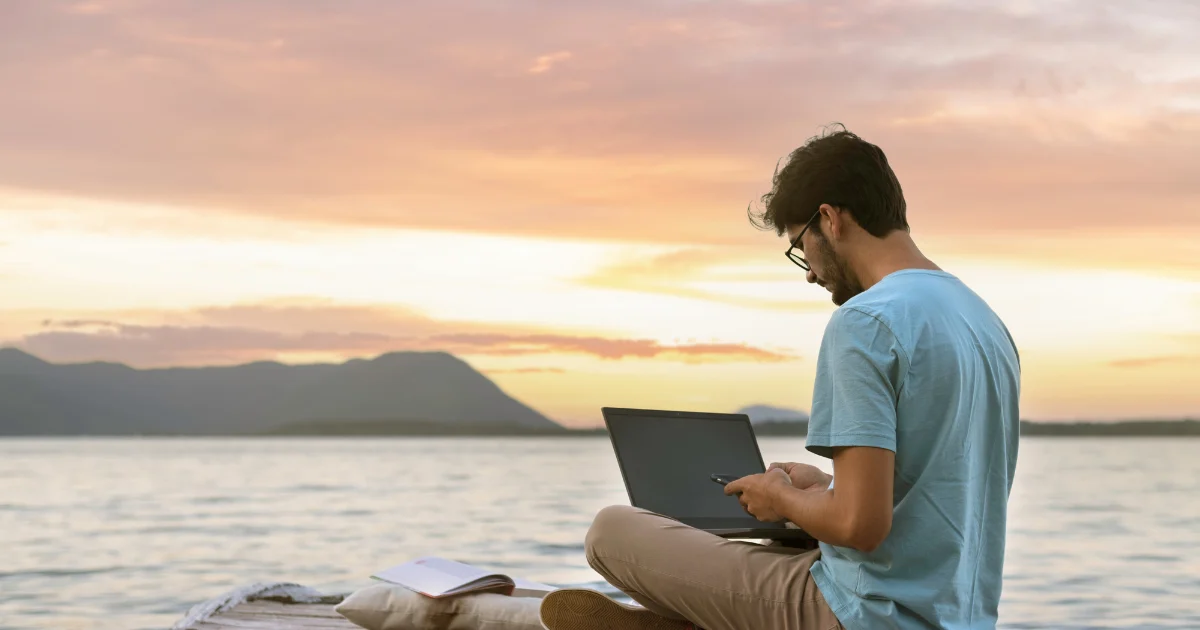
Verdict: Is it a Myth?
The Myth: Sitting on a beanbag in the sand with a laptop for 8 hours. (False! Your neck will hurt, your laptop will overheat and you won’t be able to see your Excel sheets).
The Truth: Working from a shaded, breezy stone terrace overlooking the water, supported by 5G and a steady supply of Greek coffee, followed by a sunset swim. (True! And highly recommended).
Greece isn’t just a place to vacation anymore, it’s a place to function. As long as you respect the glare of the sun and the power of the wind, the Aegean can be the most inspiring cubicle you’ll ever occupy.
The Nomad’s “Office Essentials” Checklist
| Category | Must-Haves |
| Connectivity | Local COSMOTE or Vodafone SIM (5G); MiFi Hotspot. |
| Hardware Protection | Anti-glare screen protector; Silicone keyboard cover. |
| Energy | 65W+ Power Bank; EU Plug Adapter with surge protection. |
| Audio | Active Noise Cancelling (ANC) Headphones; Wind-muffled mic. |
| Comfort | Lightweight linen clothing; Polarized sunglasses (for the breaks). |
Was this useful?