
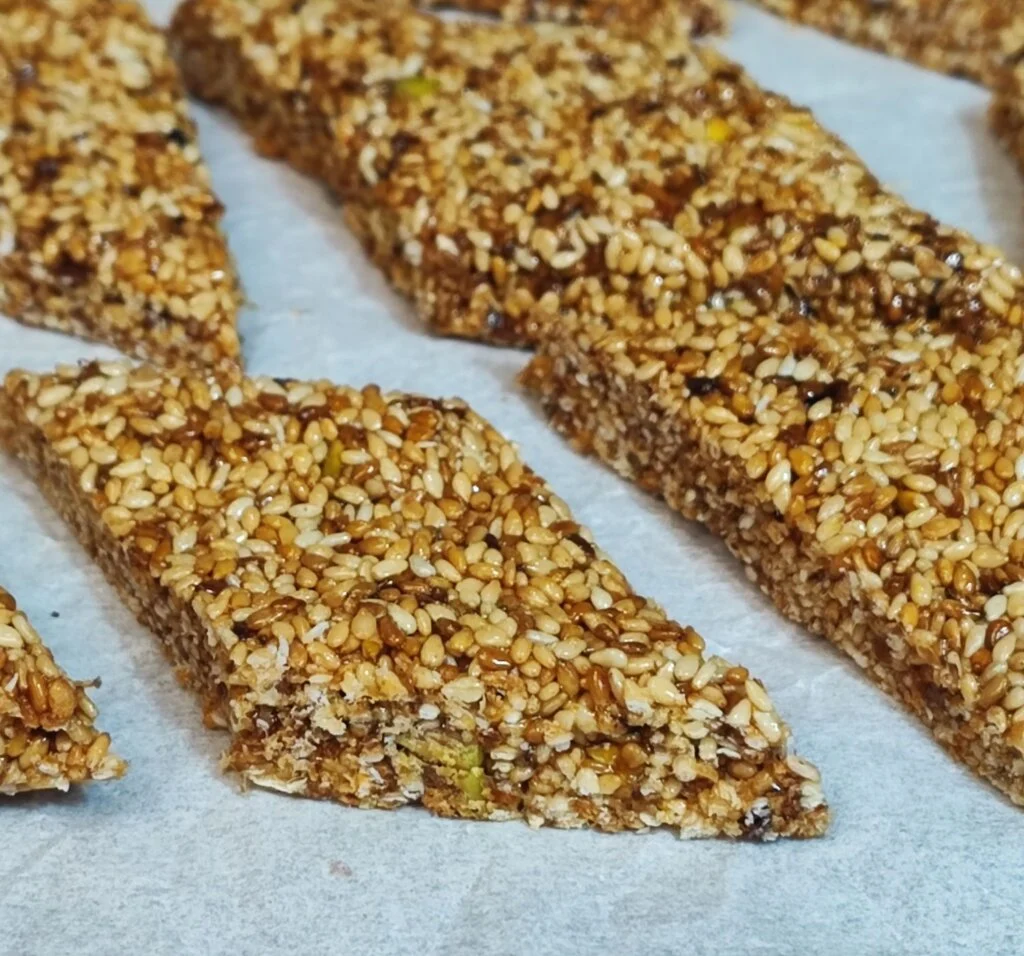
Before protein bars filled supermarket aisles… before energy gels lined up in athletes’ kits… there was pasteli — a sweet, sesame-and-honey bar with a history stretching back to Ancient Greece.
Once offered to gods and warriors alike, pasteli is more than a snack. It’s a nutritional time capsule wrapped in golden simplicity — and it’s having a modern revival, especially among wellness lovers and traditional food fans today.
A Snack with Ancient Roots
In Homer’s Iliad, a similar preparation called itrion was mentioned as a treat made of roasted sesame seeds and honey, given to warriors for strength and stamina. Ancient Greeks prized sesame and honey for their nutritional and medicinal properties — and pasteli was both a food and a ritual offering.
Thousands of years later, the recipe is nearly unchanged. Why fix what’s already perfect?
What Is Pasteli, Exactly?
Pasteli (παστέλι) is a traditional Greek sesame and honey bar, usually made with just two ingredients:
- Toasted sesame seeds (rich in healthy fats, calcium, iron, and protein)
- Pure Greek honey (a natural antioxidant, anti-inflammatory, and energy booster)
Some modern variations include:
- Almonds or pistachios
- Orange zest or cinnamon
- A pinch of salt to balance the sweetness
- Carob syrup instead of honey, especially in the Cyclades
It’s sweet, nutty, chewy (or crispy, depending on the recipe), and surprisingly filling — the perfect natural energy boost.
Why Pasteli Is a Nutritional Powerhouse
| Benefit | How It Helps |
| 🧠 Brain Boost | Sesame is full of healthy fats and B vitamins |
| 💪 Energy | Natural sugars + protein = steady fuel |
| ❤️ Heart Health | Antioxidants in both honey and sesame |
| 🌱 Vegan-Friendly | No artificial additives or dairy |
| 🧳 Travel-Proof | Long shelf life, no refrigeration needed |
No wonder it’s making a comeback in wellness circles — pasteli is ancient functional food. And the greatest bonus is that it is unbelievably tasty!
Where to Find Pasteli in Greece
- Island bakeries in places like Amorgos, Sifnos, and Chios sell handmade pasteli wrapped in wax paper or fig leaves.
- Traditional sweet shops (zacharoplasteia) often carry both soft and crispy types.
- Local food markets feature artisanal versions with unique twists — thyme honey, lemon peel, or sesame-black sesame blends.
Insider tip: In the Dodecanese, try Rhodes-style pasteli made with sesame and nuts pounded into a soft paste, called melekouni — it’s often given at weddings as a symbol of health and fertility.
Want to Make Your Own? Here’s a Basic Recipe
Ingredients
- 1 cup sesame seeds (lightly toasted)
- ½ cup high-quality Greek honey
- Optional: orange zest, nuts, pinch of sea salt
Instructions:
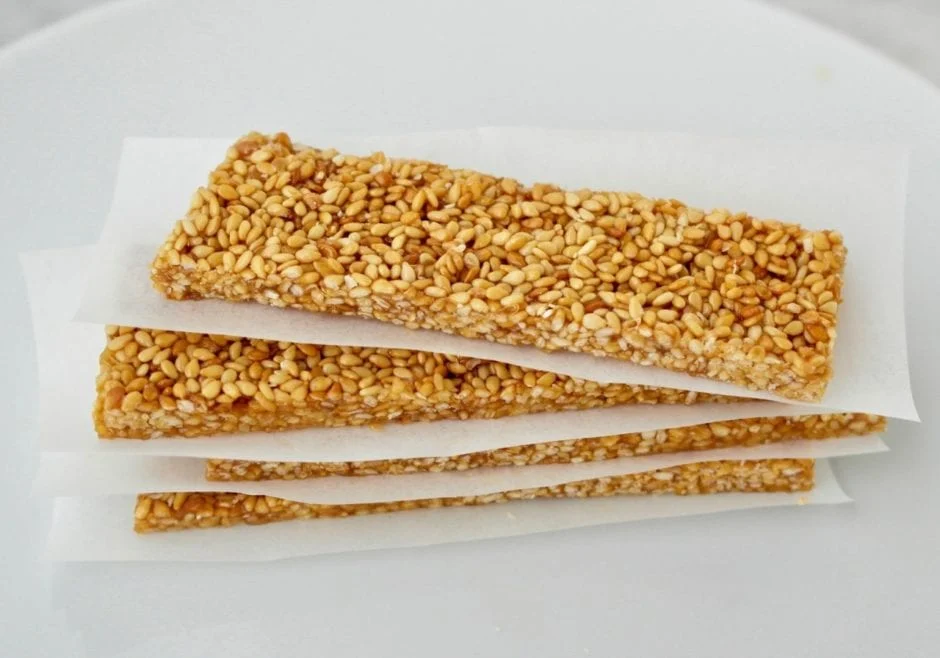
- Warm the honey gently until it bubbles.
- Stir in toasted sesame seeds and any extras.
- Pour onto parchment paper and flatten to desired thickness.
- Let cool, cut into bars, and store in an airtight container.
Enjoy as a snack, breakfast bite, or even a sweet treat after a meal.
Pasteli as a Souvenir or Gift
Looking for a meaningful, edible gift from Greece? Pasteli checks all the boxes:
- Compact and travel-friendly
- Traditional and handmade
- Packed with cultural and nutritional value
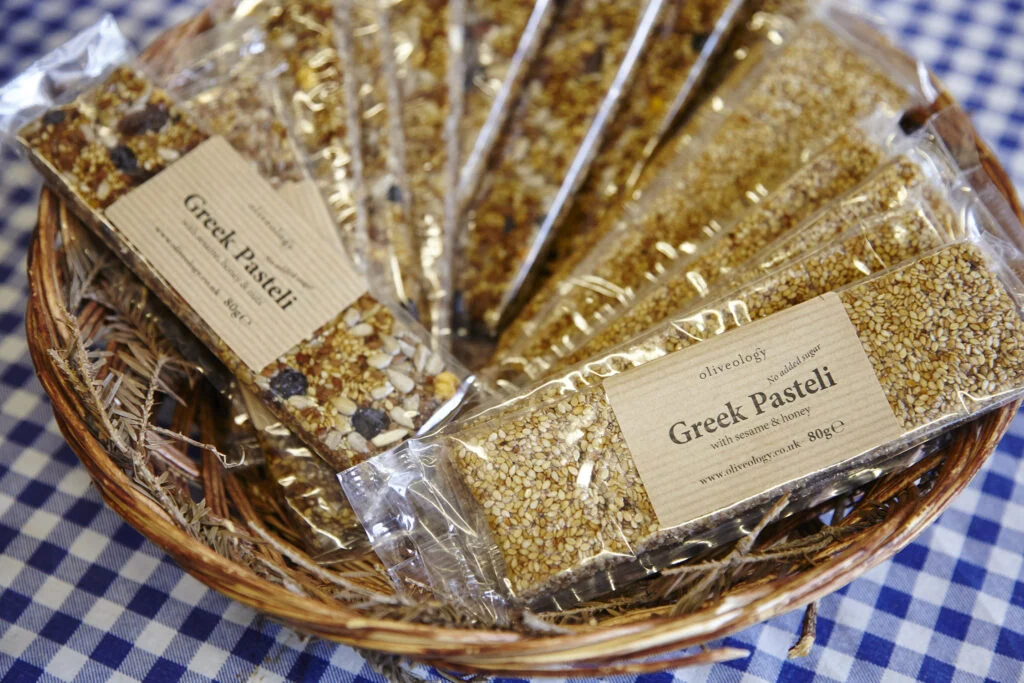
Many brands now offer elegant, eco-friendly packaging — perfect for gifting.
Just keep in mind that if you travel by plane, you definitely have to buy the packed version of pasteli.
In a world obsessed with new wellness trends, pasteli reminds us that the oldest solutions are often the best. Two simple ingredients, infinite health benefits, and a history that spans millennia — all wrapped into a bar that fits in your pocket.
So the next time you’re hiking in the Greek mountains or lounging by the sea, ditch the protein bar. Reach for a piece of the past — and taste the timeless strength of pasteli.
— Greece Enthusiast Team
Was this useful?