Editor’s note: Some people arrive in Greece as visitors.
Others arrive as if they are being remembered.
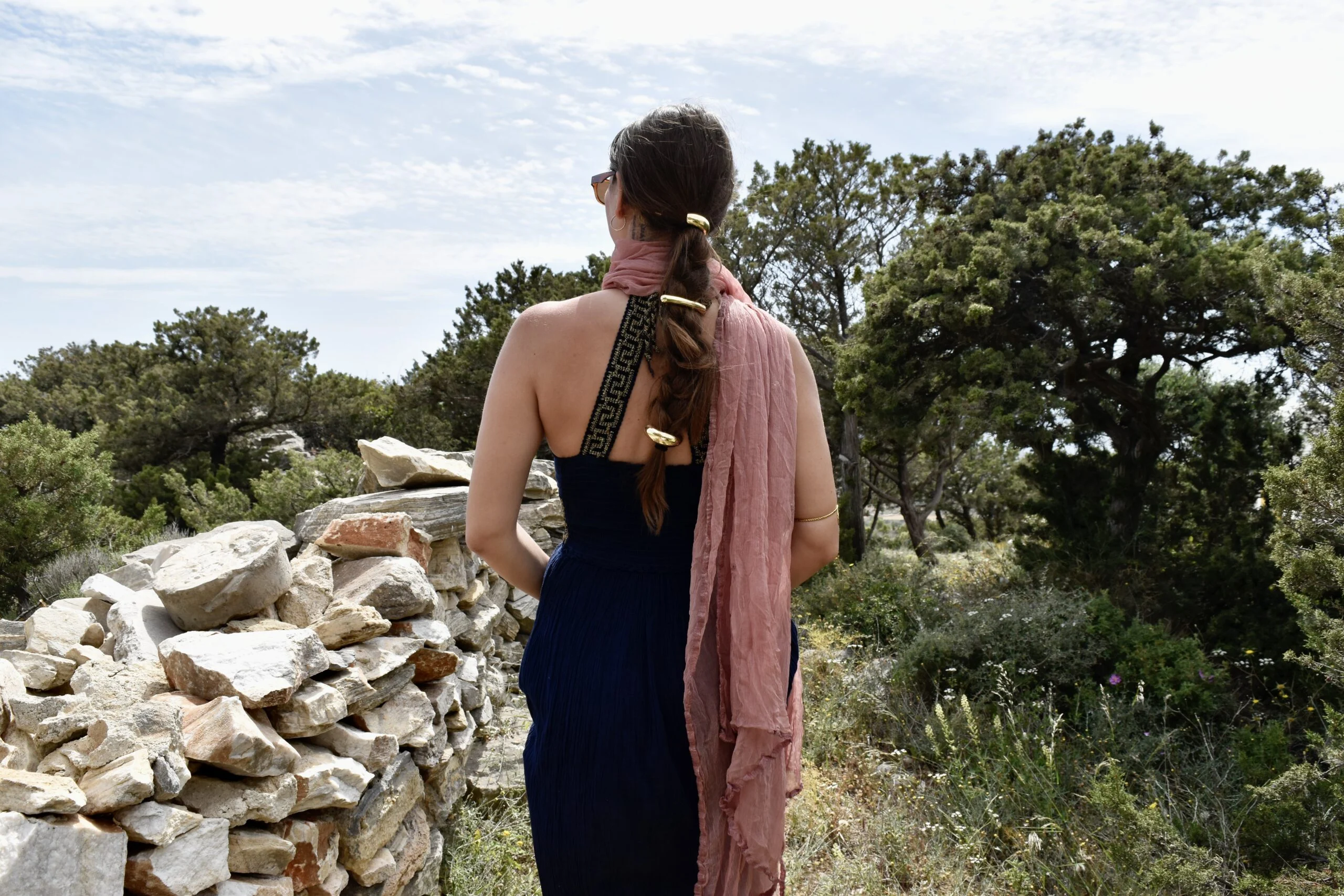
She is twenty-eight, a builder of worlds both seen and unseen, and she came to Greece not chasing opportunity, but answering something far older than ambition. Something carried in blood, in bones, in stories whispered long before she had language for them. When she speaks of Greece, it is not with nostalgia but with recognition—as if the land reached for her first.
Her journey did not begin on a sun-washed island or beneath the Acropolis, but in a quiet room at eleven years old, holding space for death for the first time. That moment—watching life continue outside a window while her pappous slipped away—taught her a truth she would spend the rest of her life living into: time does not wait, and neither should the soul.
Years later, after a decade in business marked by both failure and success, after learning how to rise by falling, she followed a pull that logic could not explain. Guided by ancestral memory, faith, and an unshakeable trust in something greater than herself, she crossed the ocean alone and rooted herself in Greece—the land of her grandfather, of ancient gods, of living myth.
What she found here was not escape, but home. Not certainty, but safety. Not answers, but permission—to slow down, to feel joy, to remember what it means to be human.
This is not just a story about moving countries.
It is a story about returning—to ancestry, to the body, to the earth, and to a life that listens when the land calls back. Enjoy the story of Kai-Lee Worsley – a girl who impressed with her bravery, pure soul and authenticity.
There is a moment in childhood when the world cracks open and you realise it will never quite close again.
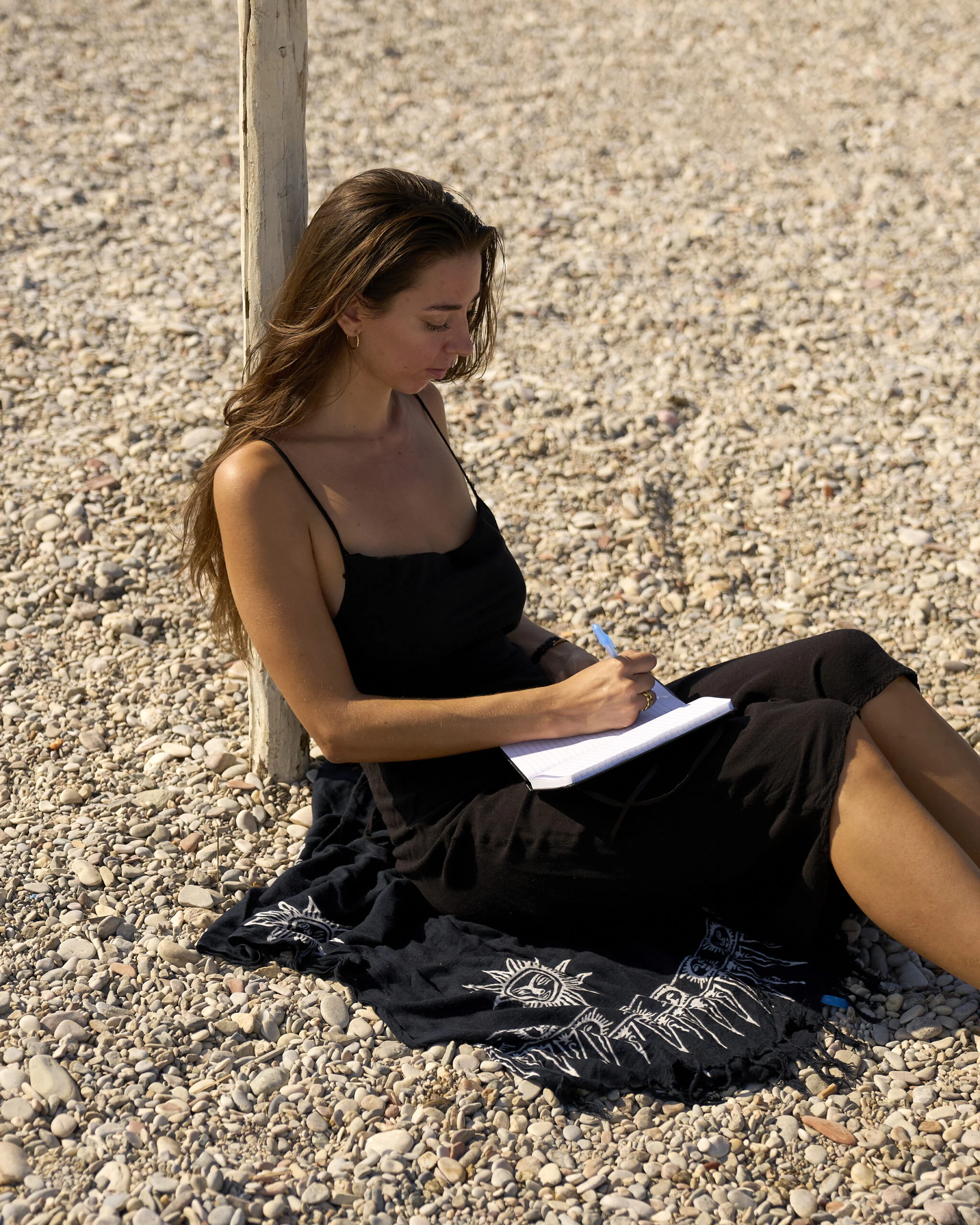
For her, that moment happened at eleven years old, in a quiet room where her pappous took his final breath. While adults around her dissolved into grief, she remembers something else with startling clarity: a window. Cars passing outside. Life moving forward with unsettling indifference. Time, relentless and unimpressed by human sorrow.
“That’s when I understood,” she says, “life doesn’t stop for anyone.”
It was an understanding that would shape everything that followed. Risk would no longer feel reckless. Waiting would feel dangerous. Purpose would become something urgent, something to be lived rather than postponed.
Years later, that same understanding would carry her across an ocean—back to Greece.
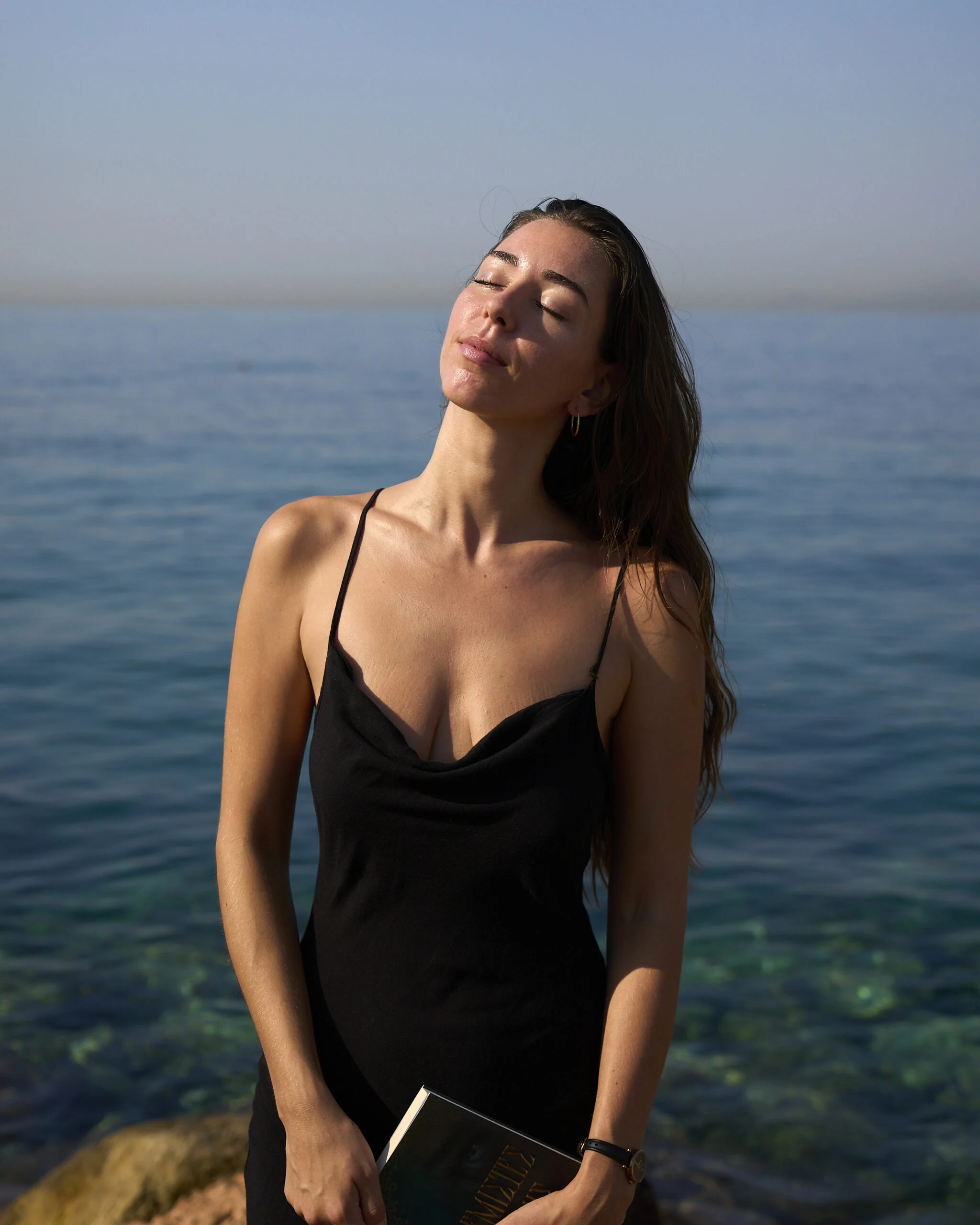
She grew up far from the Aegean, raised by a first-generation Canadian mother who carried Greece quietly but firmly in her bones. Though resources were limited, imagination was not. As a child, she was drawn to ancient worlds—to Greek and Egyptian mythology, to gods and symbols older than organised time. Stories became a kind of memory she didn’t yet know how to name.
After her grandfather’s passing, signs began to appear. Dimes on the ground. The number 313 repeating itself in unexpected places. Small, persistent reminders that connection does not end where breath does.
“He was Greek,” she says simply. “And I always felt him with me.”
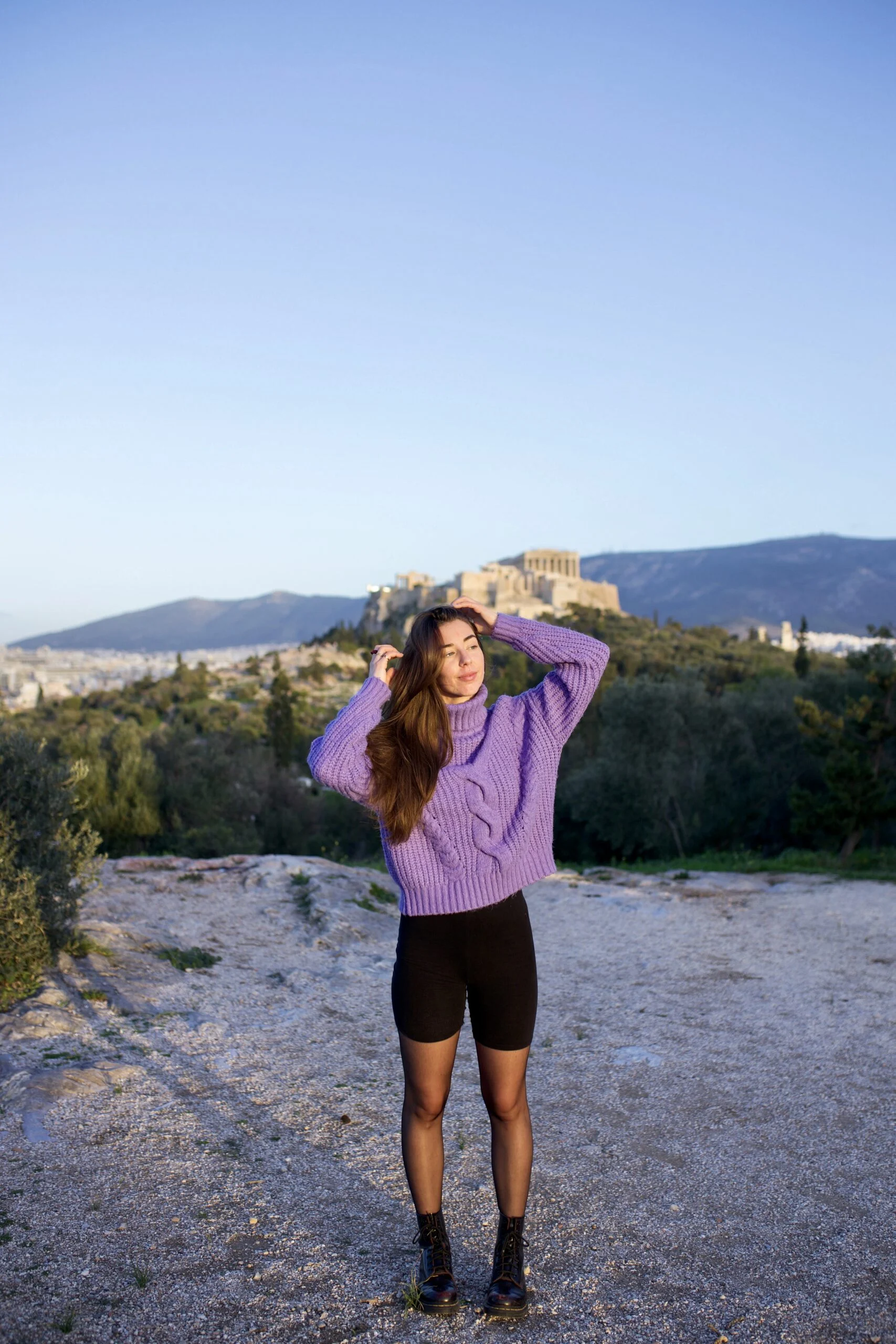
When she finally had the means to travel, Greece wasn’t a question. It was the answer. She booked two weeks in Athens, intending only to visit. Instead, she found herself standing at the edge of a life rearranging itself. An Airbnb conversation turned into an apartment offer. A temporary stay softened into permanence. Greece, it seemed, was ready for her too.
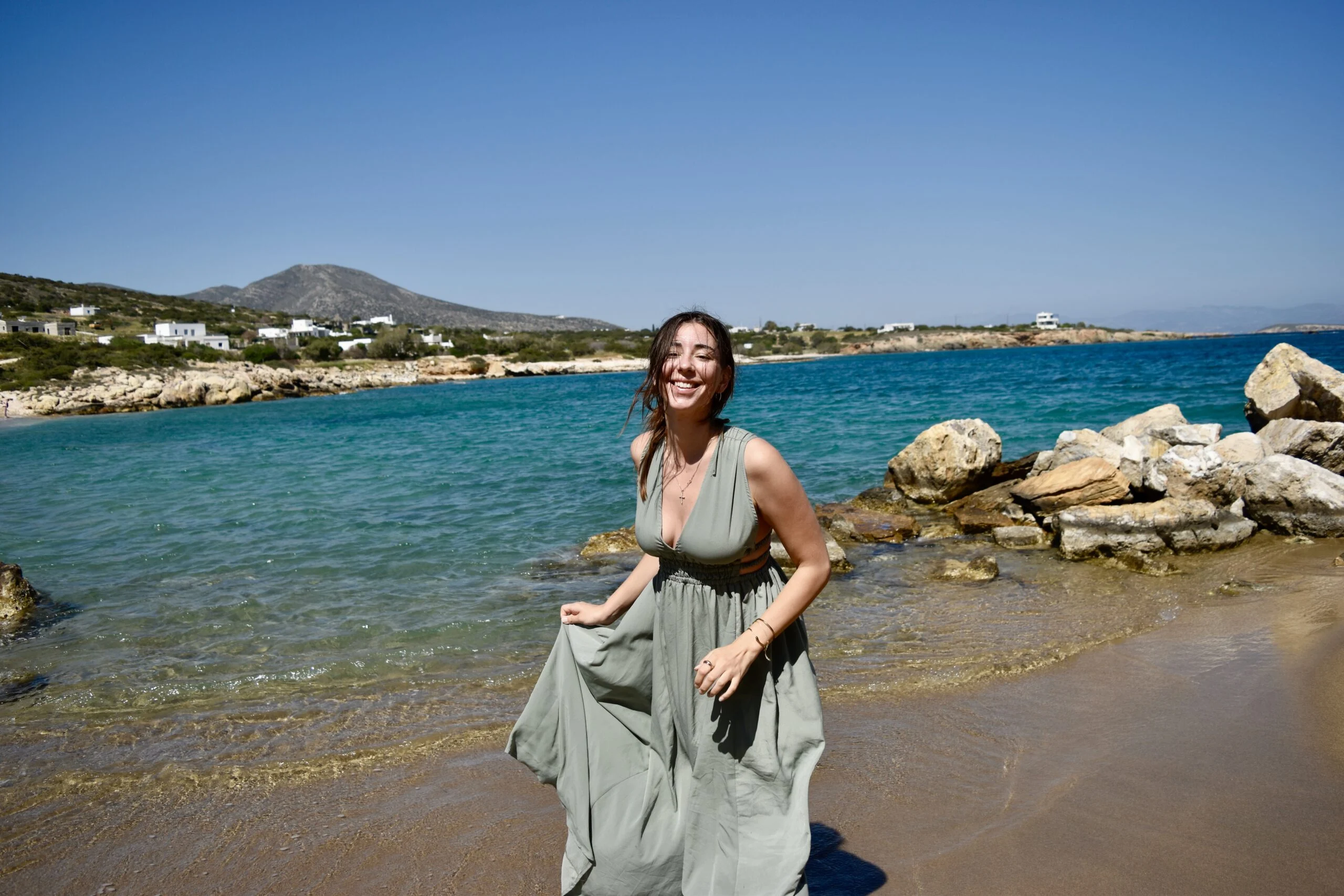
Some people fall in love with places. Others remember them.
Before ever setting foot on Greek soil, she felt the pull “in my bones, in my DNA.” But it was only after arriving that the feeling found language. For the first time in her life, she felt safe.
Her upbringing had been rough, safety an unfamiliar state of being. Yet in Greece—among marble ruins and ordinary streets—her nervous system finally exhaled. The land did not ask her to perform. It simply held her.
Even after returning briefly to Canada, her life was already oriented elsewhere. Within months, she packed up everything and moved across the world. Paperwork, logistics, uncertainty—it all dissolved under the strength of the pull.
“When something calls you like that,” she says, “you don’t negotiate with it.”
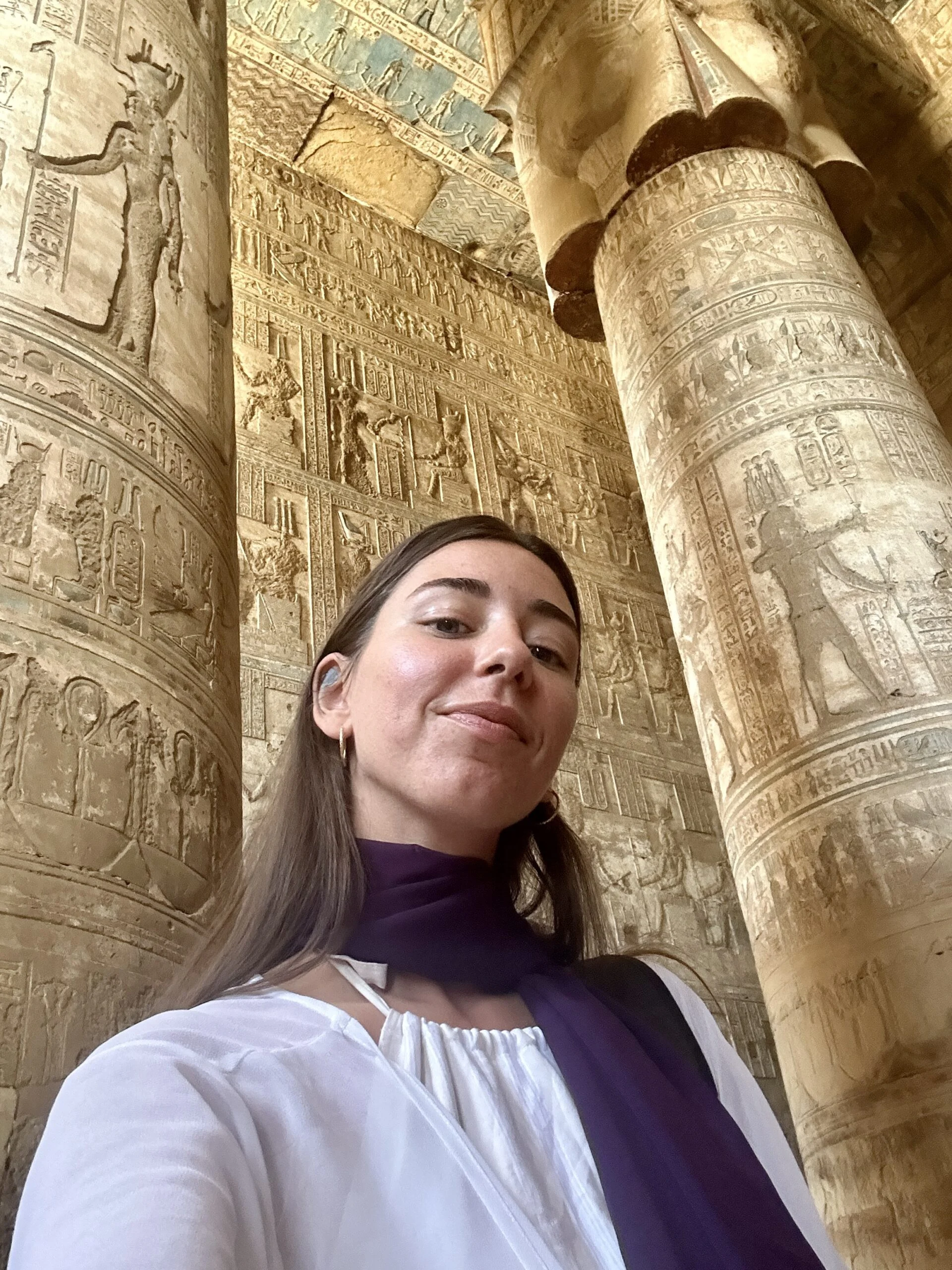
The first six months in Greece were not about building, but listening.
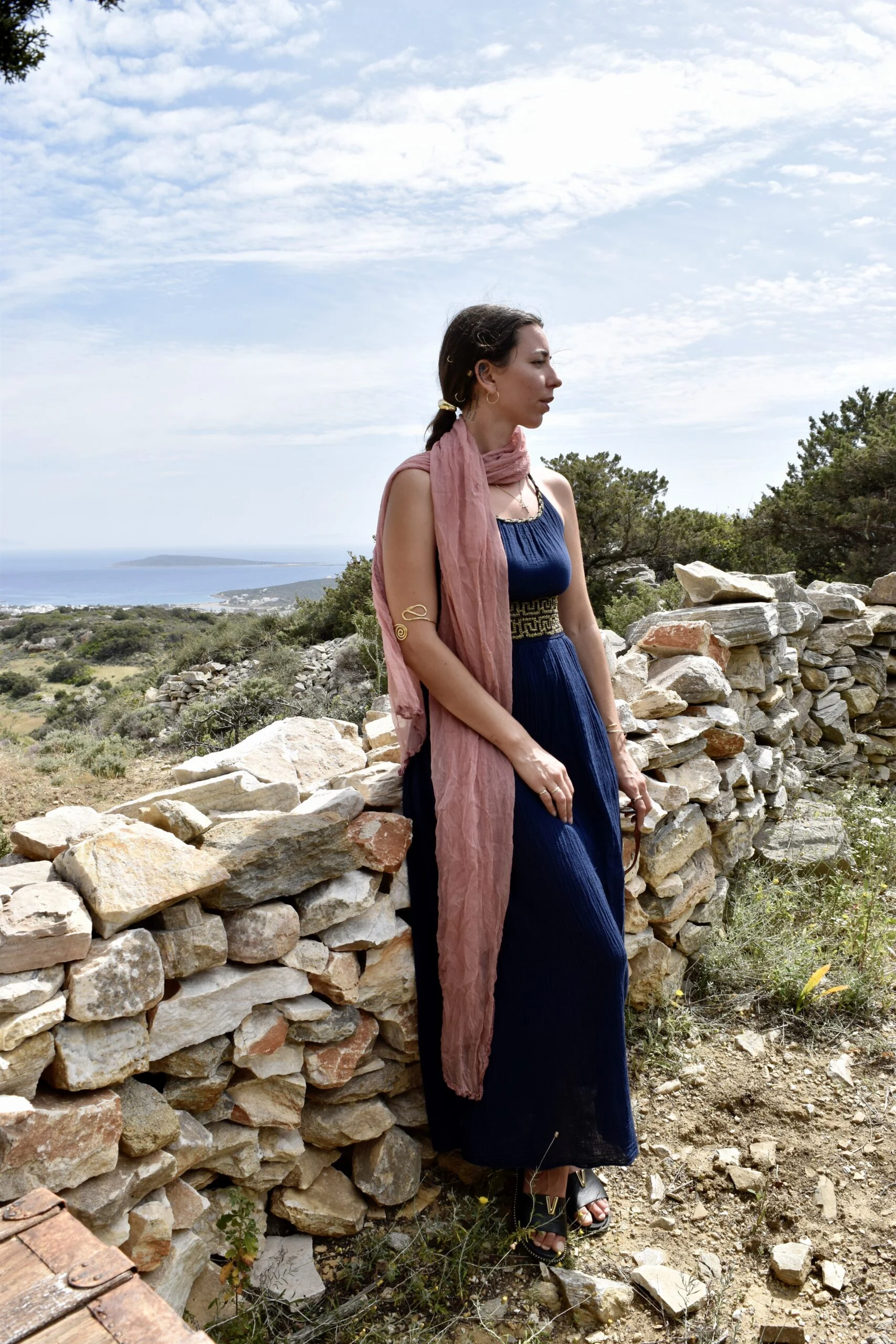
She arrived without a plan, without the language, without expectations. Instead, she surrendered—to God, to her grandfather’s spirit, to the land itself. She traveled slowly: to the mountains of Crete, to islands where the sea reveals fish beneath its surface like secrets meant only for the patient.
Nature became a teacher. Flow replaced force. Life unfolded without resistance.
And somewhere between sunlit waters and stone paths, something inside her shifted.
“I learned how to feel joy,” she says. “And I learned how to feel rooted.”
Greece offered both—pleasure and belonging. Beauty without urgency. People without pretence. Food that tastes like memory. A rhythm that does not apologise for existing.
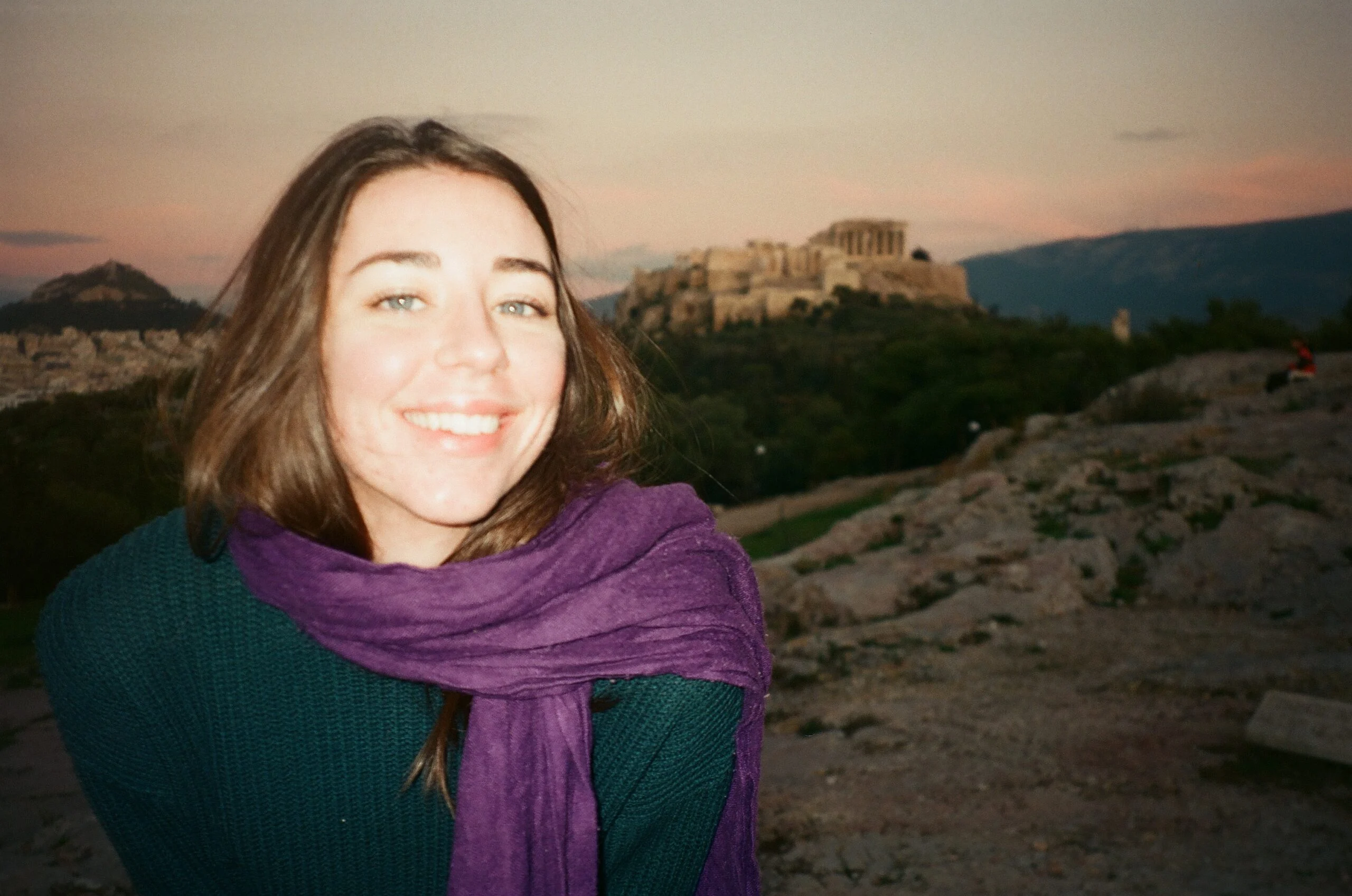
Fear, interestingly, arrived before courage.
Before even visiting Greece, she had a dream—dark, unsettling, symbolic. A door marked with her life path number. Her mother beside her. A room filled with patterns of three. A window revealing the Acropolis—though she had never been to Athens. Stones. Ancient silence. And then an energy that revealed itself violently, as if trying to warn her away.
The dream unsettled her deeply. For days, she withdrew, unsure how to name what she had seen. But when the time came to move, fear vanished entirely.
“I’ve never been less afraid,” she says. “Not once.”
Some paths remove fear not by explaining it, but by rendering it irrelevant.
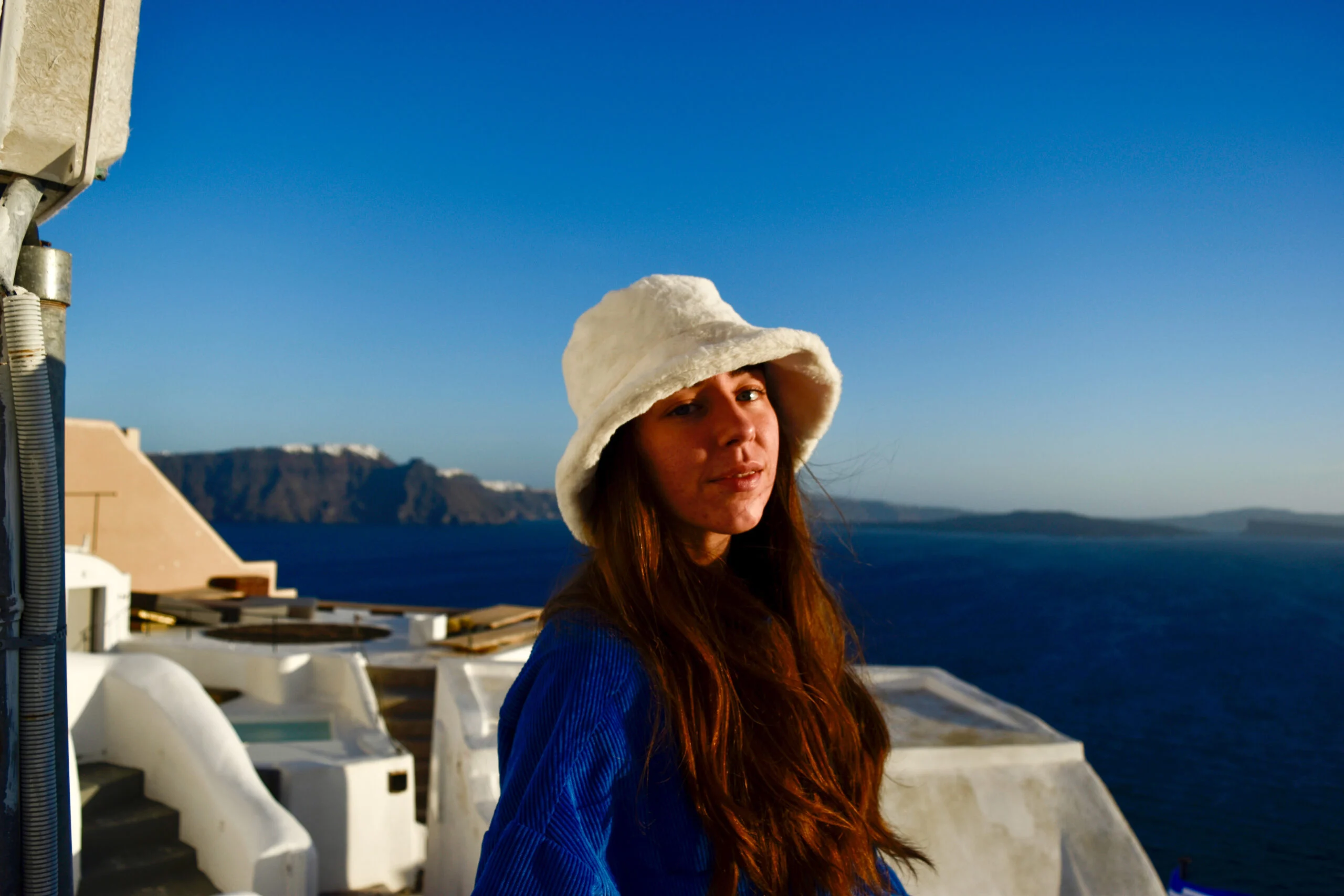
Living in Greece transformed mythology from story into sensation.
Growing up on Indigenous land in North America, she had witnessed how ancient knowledge survives through voice, through ritual, through community—and how easily it can disappear when land is taken. In Greece, the ancestors left stone behind. Temples that refuse silence. Ruins that insist on memory.
Being here dissolved her ideas about religion and culture. She began to see humanity not as divided, but mirrored. Myths repeating across continents. Gods wearing different names. A shared subconscious weaving itself through land, language, and time.
“The soul of humanity is connected,” she reflects. “It just expresses itself differently depending on where you stand.”
Modern life, she believes, has lost something essential: connection.
Not the digital kind—the real kind. The kind that binds people to each other, to land, to spirit. Ancient cultures understood the world as alive. Modern systems, she argues, taught us separation. Sacred versus profane. Human versus nature. One truth versus all others.
In Greece, sitting beside the sea or touching ancient stone, those divisions collapse. Spirit is not confined to buildings. God is not offended by herbs, trees, or bodies that move freely in joy.
Here, connection feels intuitive again.
Her relationship with business mirrors her relationship with life: experiential, nonlinear, honest.
Ten years. Seven or eight ventures. Many failures. A few successes. Long stretches of working multiple jobs just to keep learning, travelling, surviving.
Failure was never philosophical. It was practical. Something didn’t work. She adapted. Moved on. Learned quietly.
Today, her last three ventures continue to grow. But ambition has softened. It now works alongside surrender.
She measures alignment not by ease, but by movement. Open paths mean continue. Brick walls without tools mean pause. Knowing when to push and when to yield, she says, takes time—and mistakes.
Greece, too, has taught her how to live.
The bureaucracy slows you whether you want it to or not. Things take time. Plans unravel. People linger. Cafés are communal spaces, not productivity zones. Being alone is rare—and gently discouraged.
At first, she noticed it everywhere: groups talking, laughing, walking together. Slowly, she let people in. And paradoxically, with community came acceleration—not burnout, but expansion.
“Now I can go further,” she says. “Because I’m not doing it alone.”
If her pappous could see her now—living in Greece, speaking the language, studying the culture—she imagines pride, peace.
He left Greece after World War II, believing Canada offered safety and possibility. Now, with Greece standing on its feet again, a piece of his blood has returned—not to survive, but to live well.
For those afraid to leap, she offers grounded wisdom.
Spiritual loss, she believes, often comes from disconnection from the body. From overthinking. From forgetting that being human is the point. Nature, movement, presence—these are not distractions from the path. They are the path.
Fear of jumping is not fear of spirituality, she says. It is fear of self-knowledge. Because when you stop running, everything rises: grief, rage, jealousy, shame. Feelings we label ugly, though they are simply human.
People numb themselves instead—through work, substances, distraction. But feelings don’t disappear. They wait.
“Sit with them,” she says. “They pass.”
Only then can trust, timing, and intuition begin to matter. Only then can you hear yourself clearly enough to know when Greece—or anything else—is calling you home.
And sometimes, if you listen closely enough, you’ll realise it has been calling all along.
Was this useful?