In Greece, wine is more than a drink. It is a bridge between the ancient and the modern, a ritual that carries the memory of gods and villagers alike. Every autumn, as the air cools and vineyards turn golden, Greece enters one of its most cherished seasons: the grape harvest, or “trigos.”
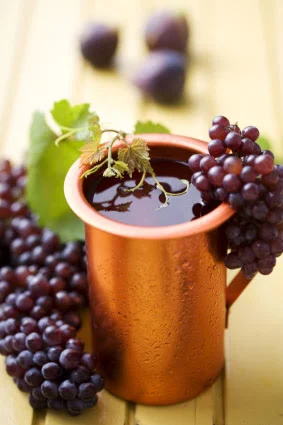
To witness a Greek grape harvest is to see tradition alive. Families, neighbours, and friends gather in vineyards that have often been cultivated for generations. Laughter, songs, and the earthy scent of ripe grapes fill the air. This ritual has been part of Greek life for millennia. It was first honoured by Dionysus, the god of wine, and later embedded in Orthodox customs and rural rhythms.
The Ritual of Trigos
The harvest begins in mid-August in southern regions like Crete and the Peloponnese, continuing into October in northern Macedonia and Thrace. Timing is everything: pick too early, and the grapes lack sugar; too late, and they lose their balance.
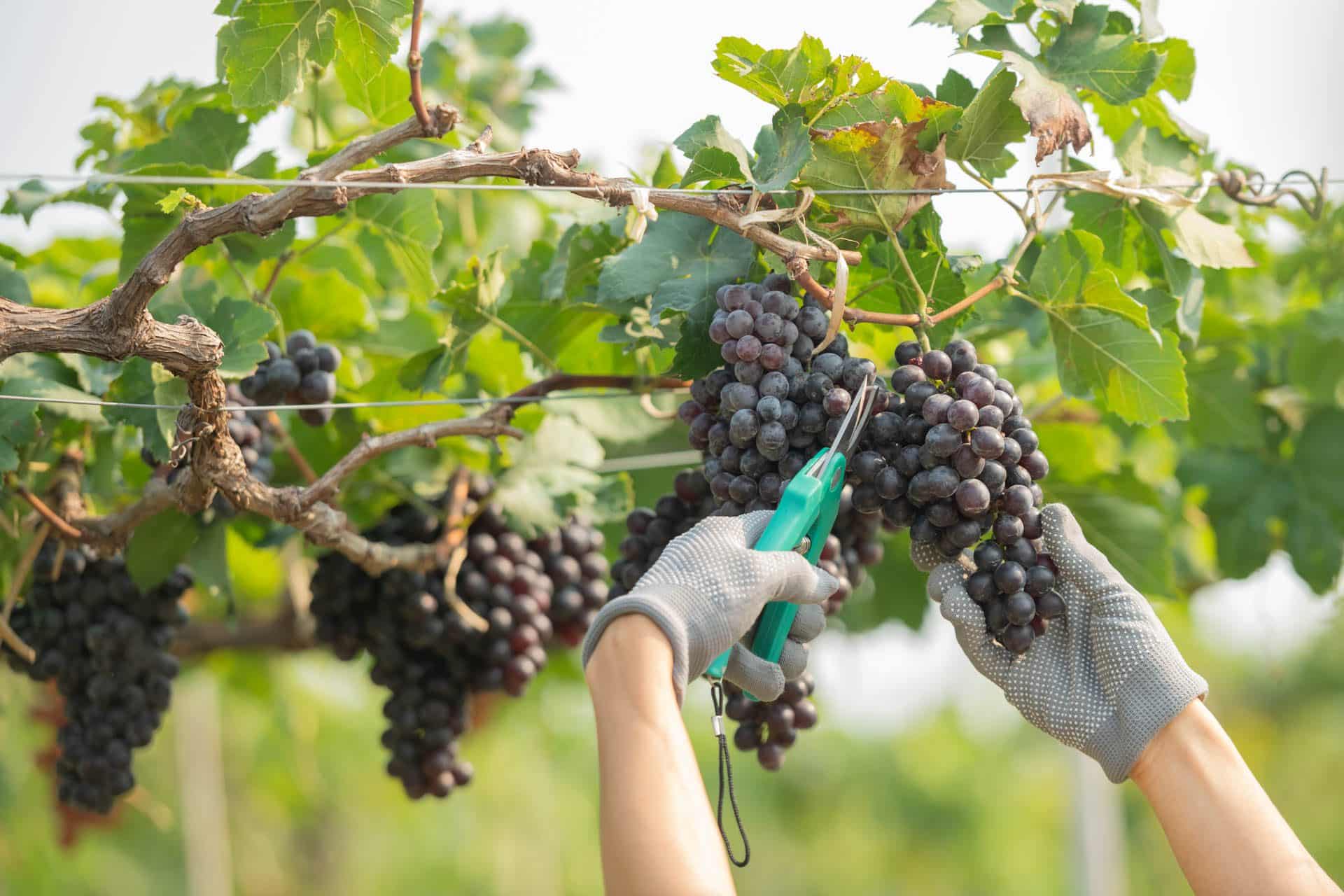
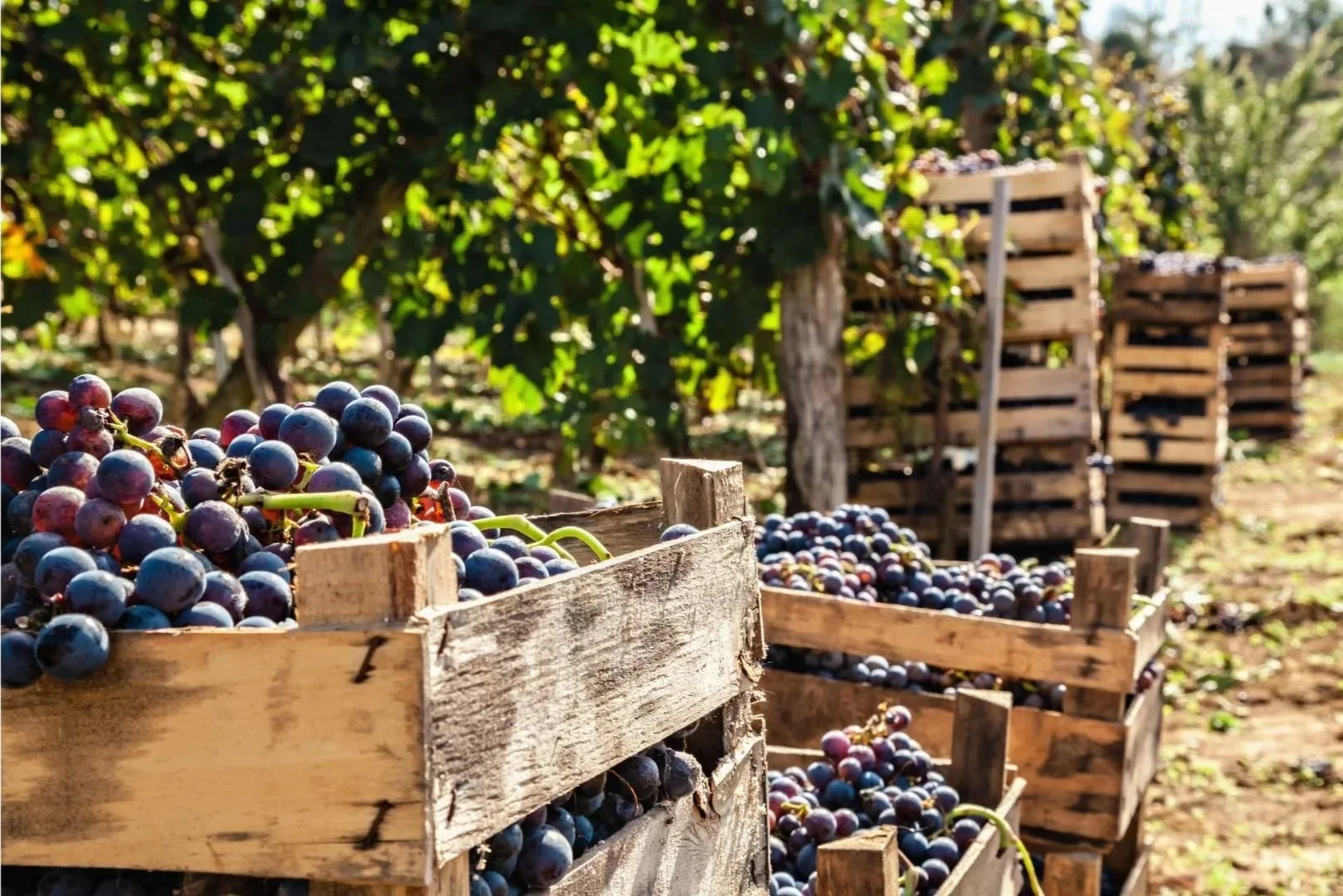
Harvest days start early, with villagers arriving at dawn armed with baskets and pruning shears. Many places still hold a holy tradition – every year on 6th of August winemakers fill a basket with the first grapes and send it to the church for a blessing. The work of grape harvest is hard but joyous, accompanied by food and song. In many places, traditional folk music still plays as people clip bunches of grapes, sharing stories while filling baskets. Children run between the rows, tasting the sweetest grapes straight from the vine.
Once picked, the grapes are taken to a linos (winepress used to extract the juice from grapes), where they are crushed. Though modern wineries now use stainless steel equipment, in some villages you can still find the age-old custom of stomping grapes barefoot in stone presses. The laughter of stomping feet has become a symbol of community and continuity.
And when the harvest is over, a feast follows. Tables laden with bread, cheese, roasted meats, and of course, the first taste of freshly pressed must, or moustos (the freshly crushed juice of grapes), which will soon ferment into wine.
Ancient Roots of Greek Wine
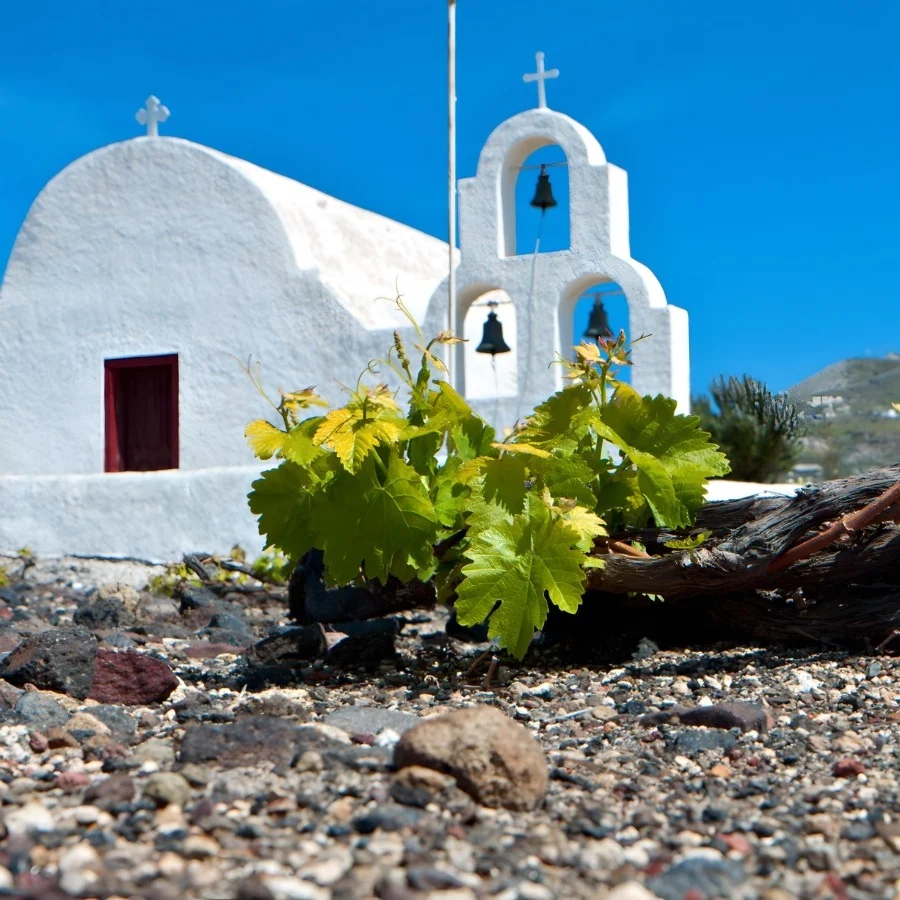
Greece is one of the world’s oldest wine-producing regions, with evidence of viticulture dating back to 6,500 years ago. The ancients not only drank wine but revered it: Dionysus was celebrated in festivals where wine symbolized both joy and transformation.
Greek wines spread across the Mediterranean through trade, influencing Roman and later European winemaking. Amphorae marked with grape symbols have been found as far away as Egypt and Italy. Today, this legacy lives on in more than 200 indigenous grape varieties still cultivated in Greece, many of which exist nowhere else in the world.
Wine Regions of Greece
Though small in size, Greece’s landscape is incredibly diverse, giving rise to unique wine regions. Each carries its own story, shaped by soil, altitude, and climate.
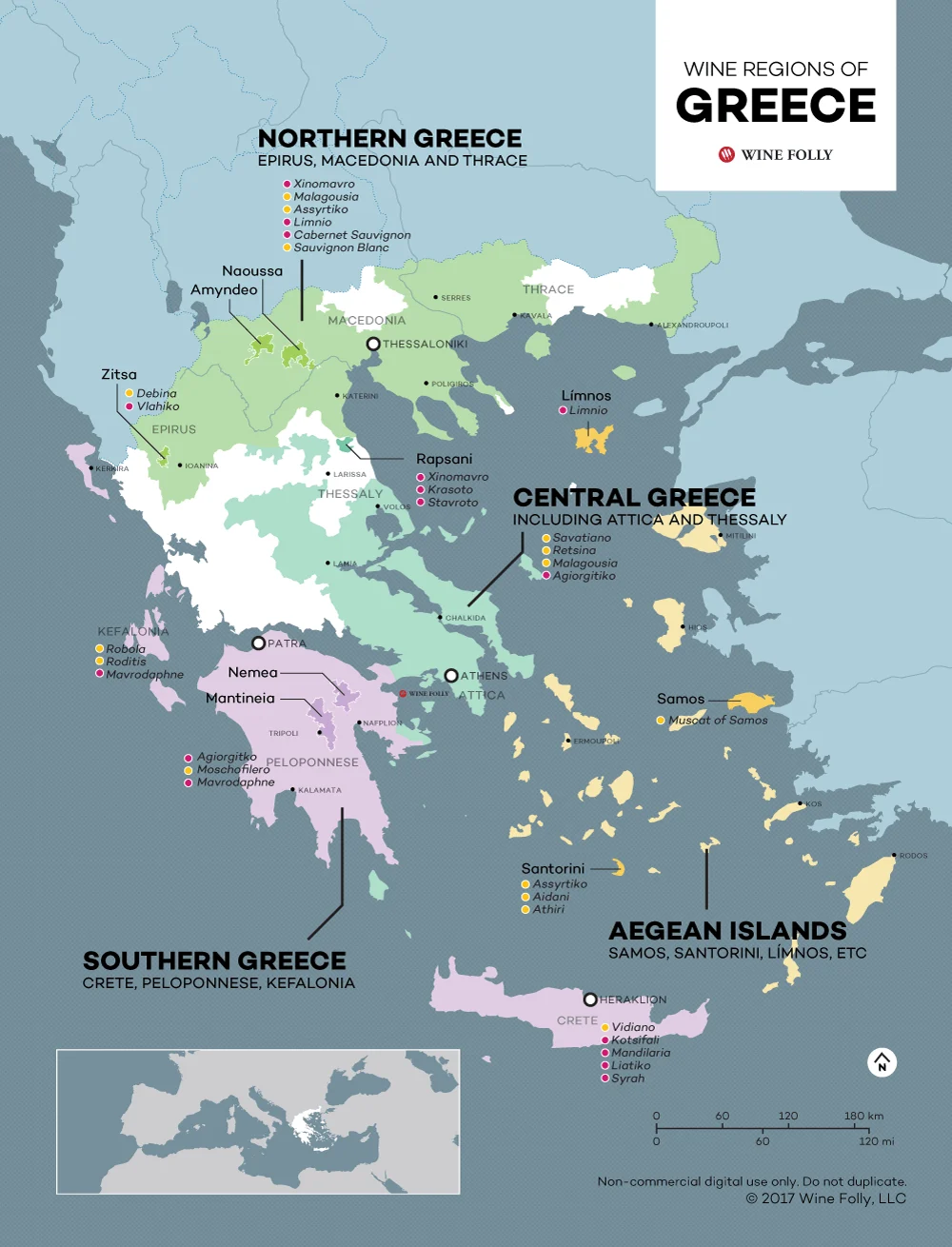
Northern Greece (Epirus, Macedonia and Thrace)
- White grapes: lots of Malagusia and Assyrtiko, often blended with Sauvignon Blanc and Chardonnay
- Red grapes: mostly Xinomavro with a little bit of Merlot, Limnio, Cabernet Sauvignon and SyrahAegean islands (Samos, Santorini, Limnos, Patmos and others)
- White grapes: Assyrtiko (Santorini), Muscat Bllanc (Samos), Athiri, Malvasia
- Red grapes: Limnio (Limnos), Mandilaria (Paros), MavrotraganoCentral Greece (Central Greece, Attica and Thessaly
- White grapes: a lot of Savatiano and a little bit of Malagousia, Assyrtiko, Athiri, Begleri and Chardonnay
- Red grapes: a lot of Xinomavro and a little bit of Agiorgitiko, KRasato, Stavroto, Limniona, Vradiano, Cabernet Sauvignon, Merlot and SyrahSouthern Greece (Crete, Peloponnese, Kefalonia)
- White grapes: Moschofilero, Muscat Blanc, Robola (Kefalonia), Vidiano (Crete) and Roditis
- Red grapes: Agiorgitiko (Peloponnese), Mavrodaphne (Kefalonia and Peloponnese), Kotsifali (Crete), Liatiko (Crete), Mandilaria (Crete), Syrah, Cabernet SauvignonUnique wine destinations:
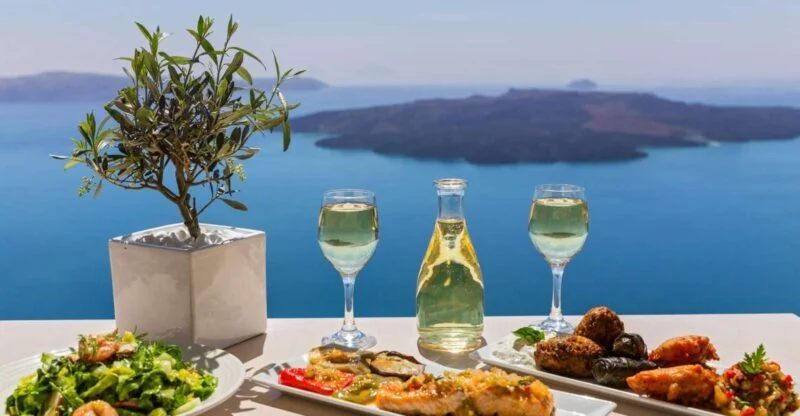
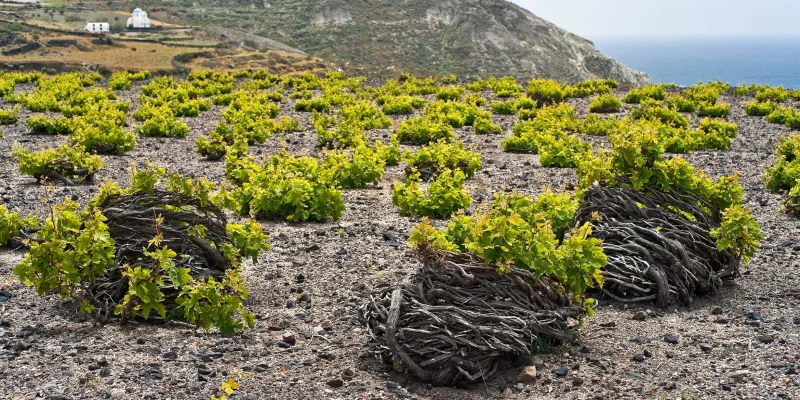
- Santorini (Cyclades) – Famous for its volcanic soil and the white grape Assyrtiko, which produces crisp, mineral wines. The vines here are grown in “basket” shapes to protect them from strong winds.
- Nemea (Peloponnese) – Known for Agiorgitiko, a red grape that yields wines ranging from soft and fruity to bold and complex.
- Naoussa (Macedonia) – Home of Xinomavro, often compared to Italy’s Nebbiolo, producing tannic, age-worthy reds.
- Crete – A mosaic of indigenous varieties like Vidiano and Liatiko, reflecting the island’s long history of winemaking.
- Drama & Thrace (Northern Greece) – Emerging regions producing refined blends of Greek and international grapes.
- Samos & Patmos (Aegean islands) – Known for sweet Muscat wines, golden and aromatic.
Each region embodies the philosophy of terroir – the belief that the land itself speaks through the grape.
Pairing Greek Wines with Food
Greek cuisine and wine evolved hand in hand, making pairings natural and delightful. A few examples to try:
- Assyrtiko – Pairs beautifully with grilled fish, octopus, or seafood pastas. Its sharp acidity balances the richness of olive oil and the salinity of the sea.
- Agiorgitiko – A versatile red that complements lamb chops, moussaka, or tomato-based stews.
- Xinomavro – Best with roasted meats, game, or earthy mushroom dishes. Its bold tannins stand up to strong flavors.
- Moschofilero – An aromatic white ideal with mezze, feta cheese, or lemony chicken.
- Muscat – A sweet finish, perfect with baklava, spoon sweets, or even just fresh fruit.
- Malagouzia – Perfect match for light dishes like light seafood or pasta
- Mavrodaphne – Ideal for heavily spiced dishes
The golden rule in Greece is simple: wine is not meant to be overanalyzed but shared, always accompanied by food, conversation, and laughter.

Festivals and Celebrations
The grape harvest season is marked by festivals across the country. Villages host events where wine flows freely, traditional music plays, and everyone, from children to grandparents, participates.
One famous celebration is the Wine Festival of Naoussa (usually in the second half of January), where locals and visitors taste Xinomavro wines while enjoying regional dishes and folk dances. In Crete, the Heraklion Wine Festival (late June to early July) combines tastings with theatre, music, and exhibitions, making it as much a cultural event as a culinary one.
These festivals are more than entertainment; they are a living link to the communal spirit of trigos. They remind us that wine is not just a product but a story of land, labour, and tradition.
A Slower Way of Life
In today’s fast-paced world, the Greek grape harvest offers a different rhythm. It is about patience. Waiting for the right moment to pick, trusting the process of fermentation, allowing wines to age.
For locals, the harvest is also about connection: to family, to community, and to the land itself. Each season, the cycle repeats, grounding life in something larger than the individual.
Visitors who join a harvest, whether on a vineyard tour in Santorini or a small family estate in Nemea, often describe it as transformative. There is a joy in using your hands, feeling the weight of grapes, and sharing a meal with people who still live by the turning of the seasons.
If You Go: Wine Tourism in Greece
Wine tourism is growing steadily in Greece, offering visitors the chance to immerse themselves in local traditions.
- Best time: Late August to October for harvest, though wineries welcome visitors year-round.
- Where to visit:
- Santorini: Tour volcanic vineyards and taste Assyrtiko at sunset.
- Nemea: Visit estates producing Agiorgitiko, just two hours from Athens.
- Naoussa: Explore Macedonia’s red wine capital with its mountain vineyards.
- Crete: Combine wine with island hospitality, sampling indigenous varieties.
- Experiences: Many wineries offer tastings, cooking classes, and even the chance to stomp grapes during harvest festivals.
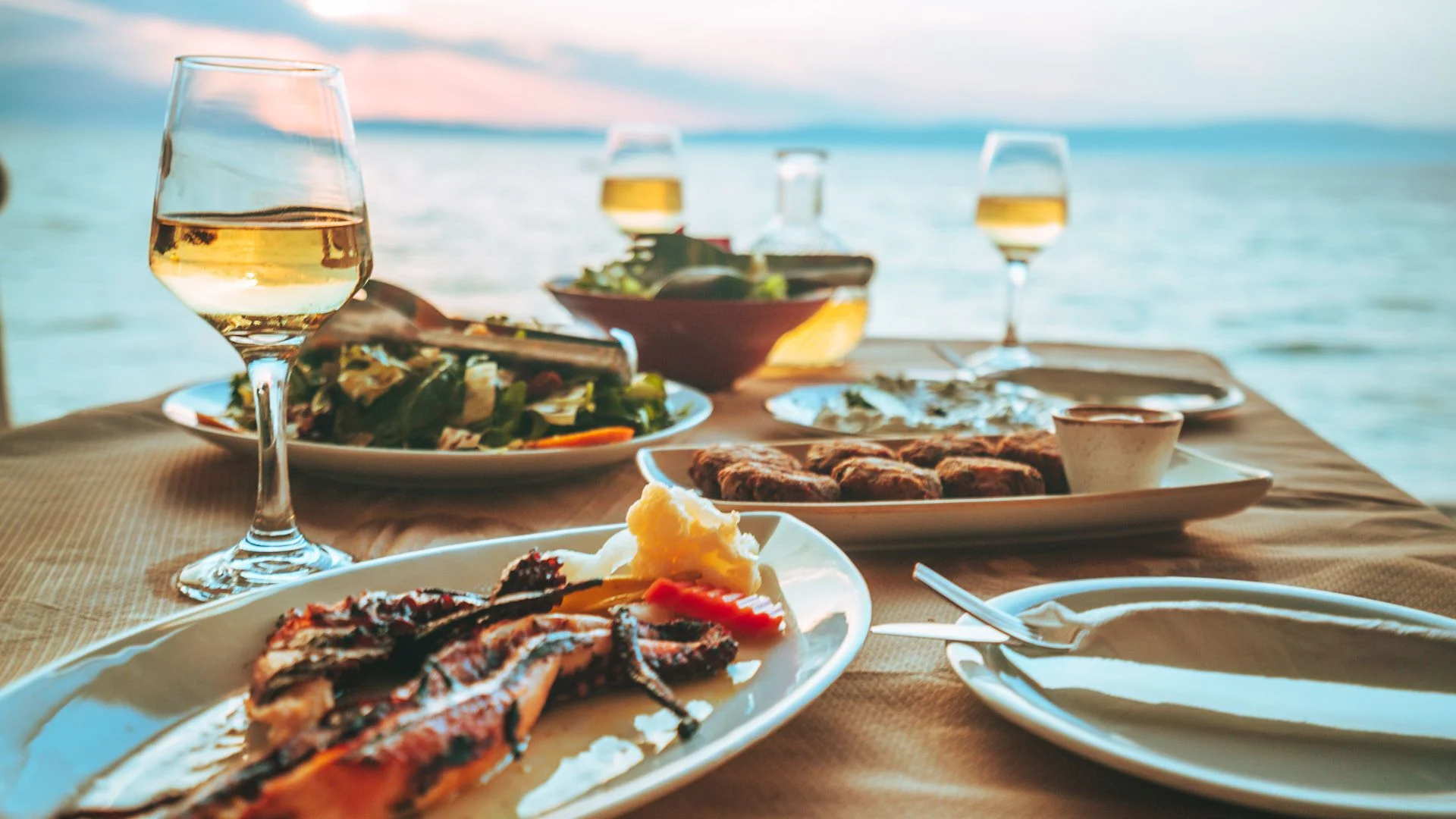
Greek wine is more than a drink, it is an inheritance of history, myth, and tradition. The grape harvest, with its rituals and celebrations, ties the present to the past. It is an invitation to slow down, to taste life sip by sip, and to remember that good things, like wine, take time.
So, whether you raise a glass of Assyrtiko by the Aegean or savour a rich Xinomavro in the north, you are not just tasting wine – you are sharing in Greece’s enduring story.
Was this useful?