
For decades, the luxury narrative of Greece has been dominated by two distinct visual signatures: the whitewashed sugar-cube minimalism of Mykonos and the blue-domed caldera edge of Santorini. While these Cycladic icons retain their undeniable allure, a quiet revolution in Greek hospitality design has been unfolding far beyond their crowded shores.
From the rugged crags of the Peloponnese to the dramatic cliffs of Crete and the pine-scented hillsides of the Ionian, visionary architects are reimagining modern Greek luxury. Here, design is no longer about replicating postcard tropes; it is an exercise in environmental dialogue, local craftsmanship, subterranean integration, and historical resonance.
For the discerning traveler seeking sanctuary, spatial innovation, and uncompromised elegance, here are ten architectural masterpieces across Greece redefining luxury hospitality, strictly outside of Mykonos and Santorini.
1. Amanzoe (Porto Heli, Peloponnese)
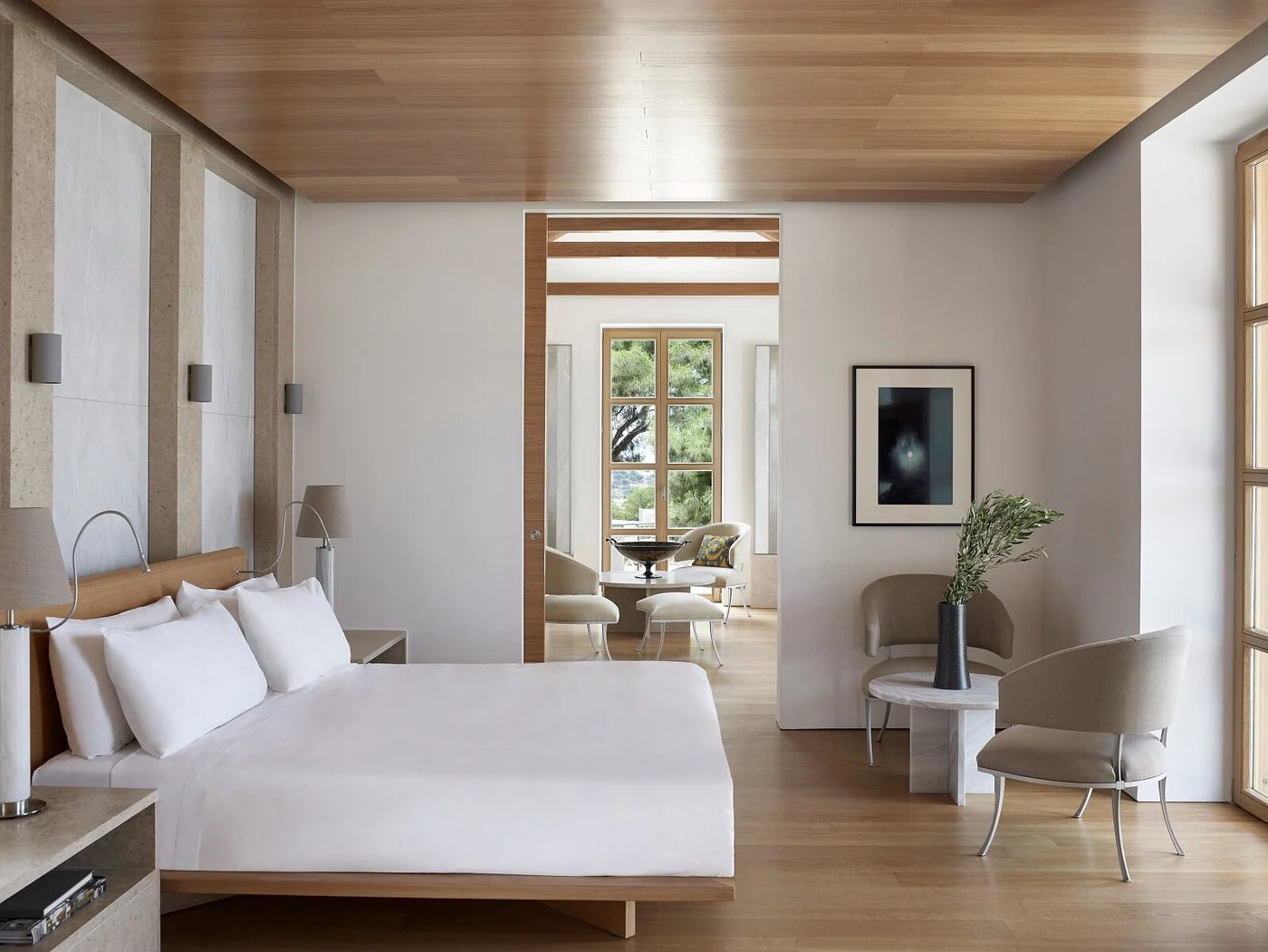
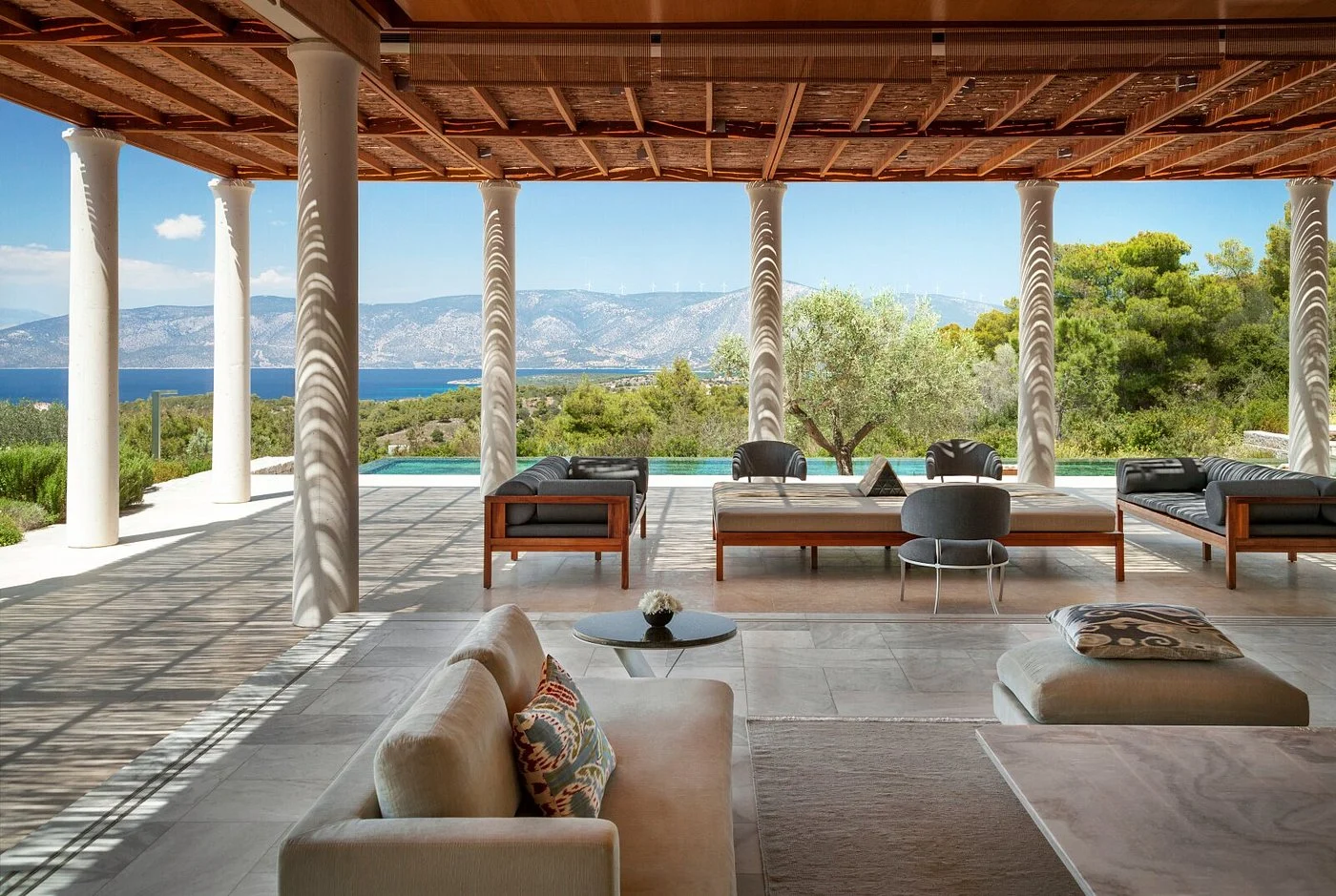
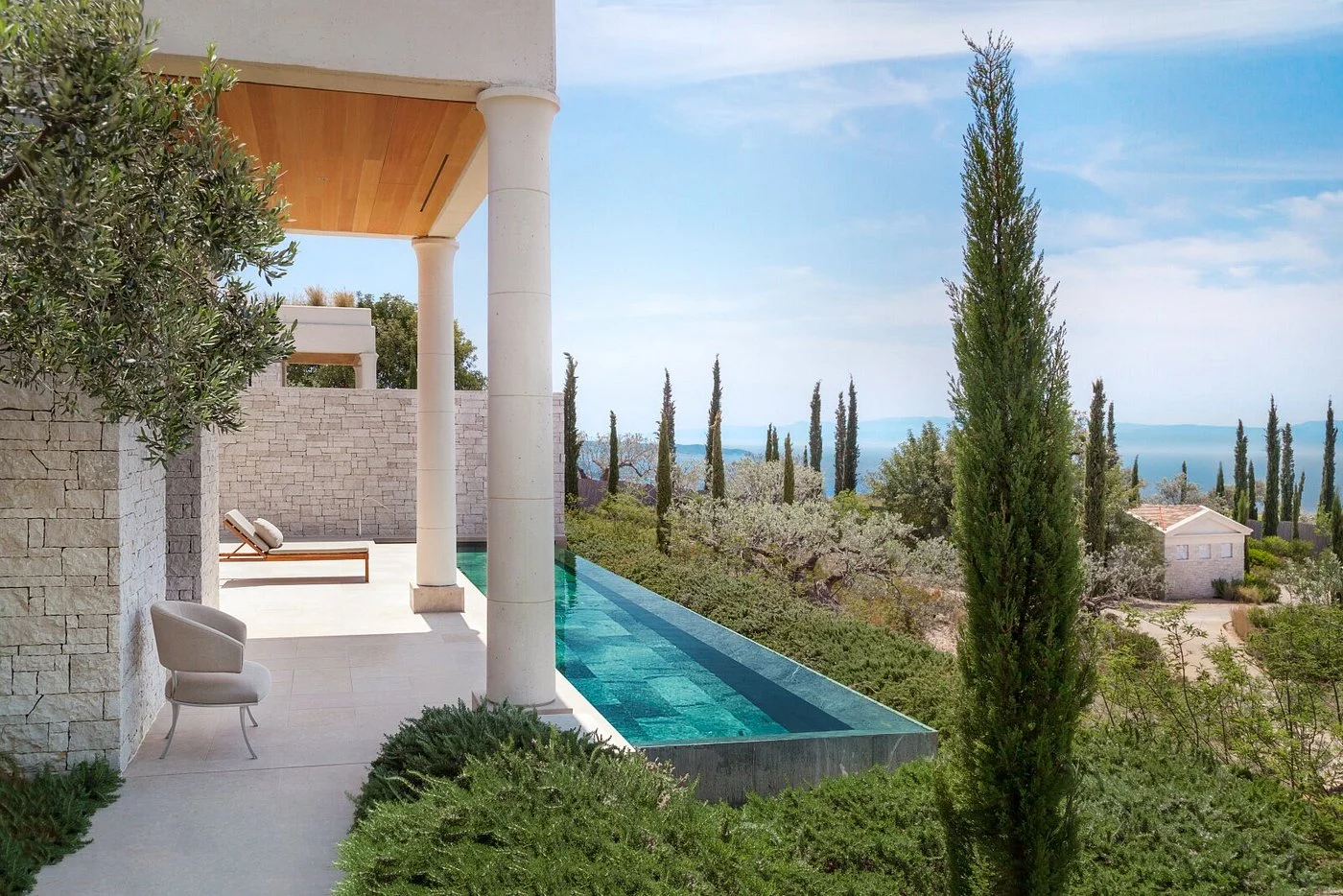
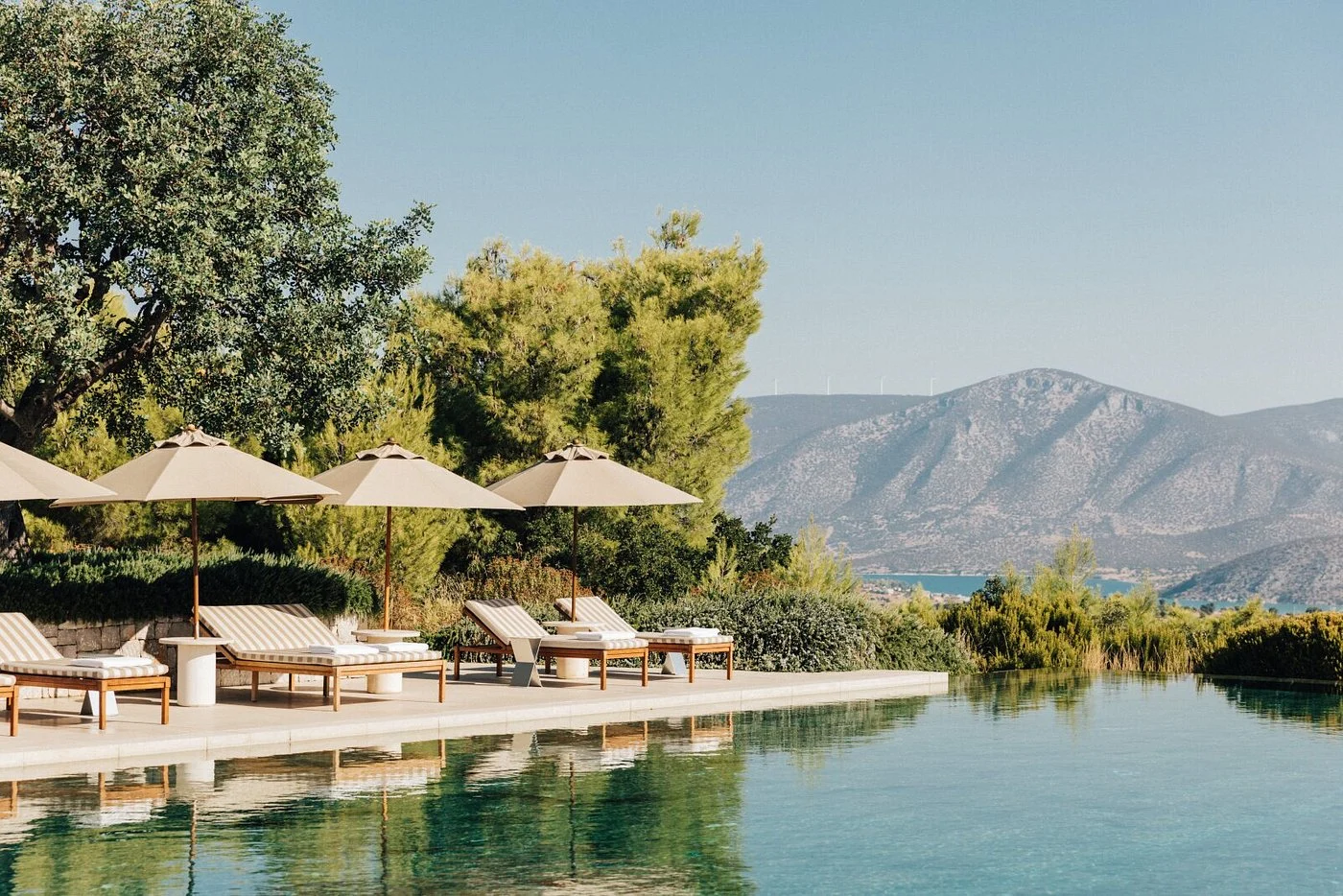
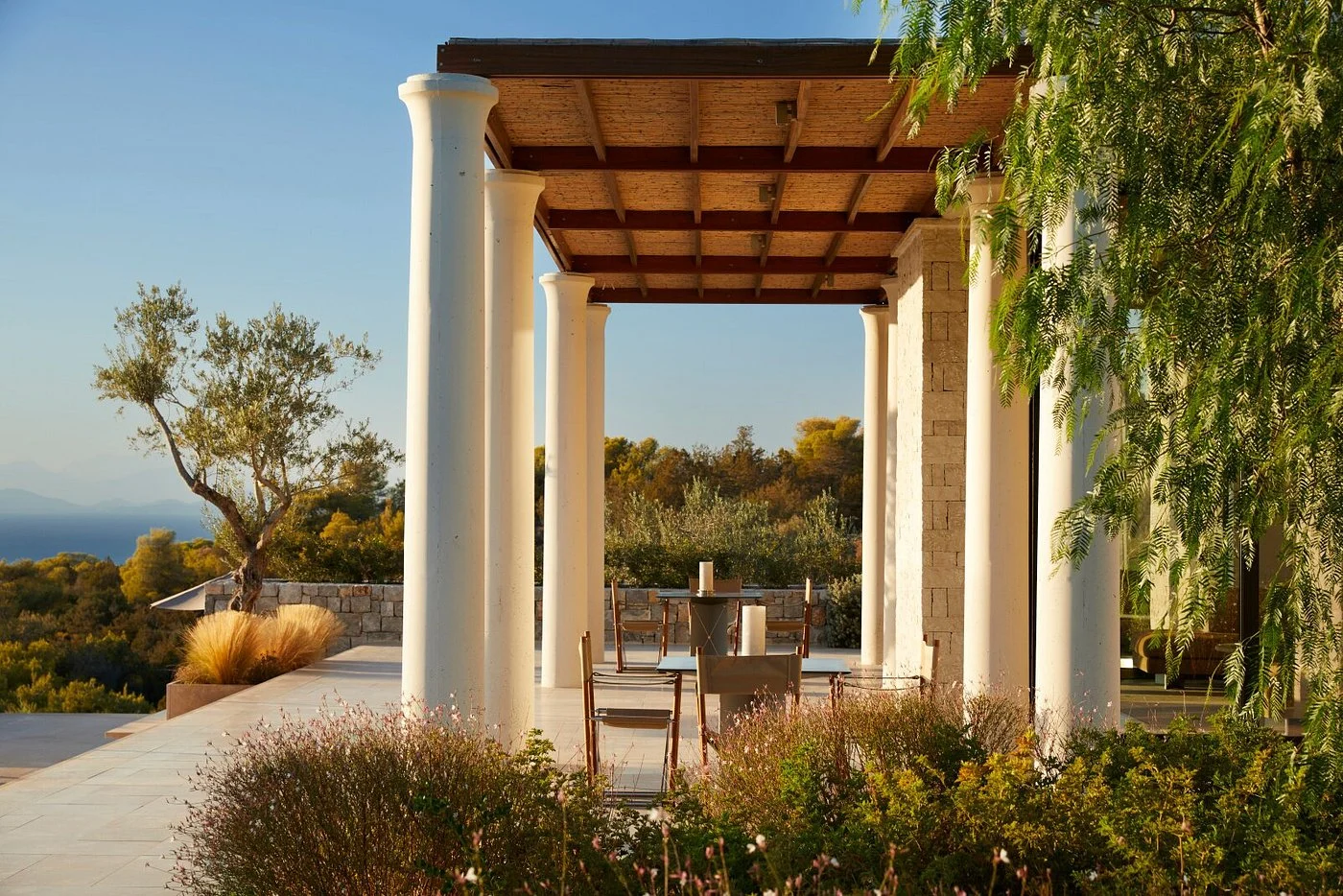
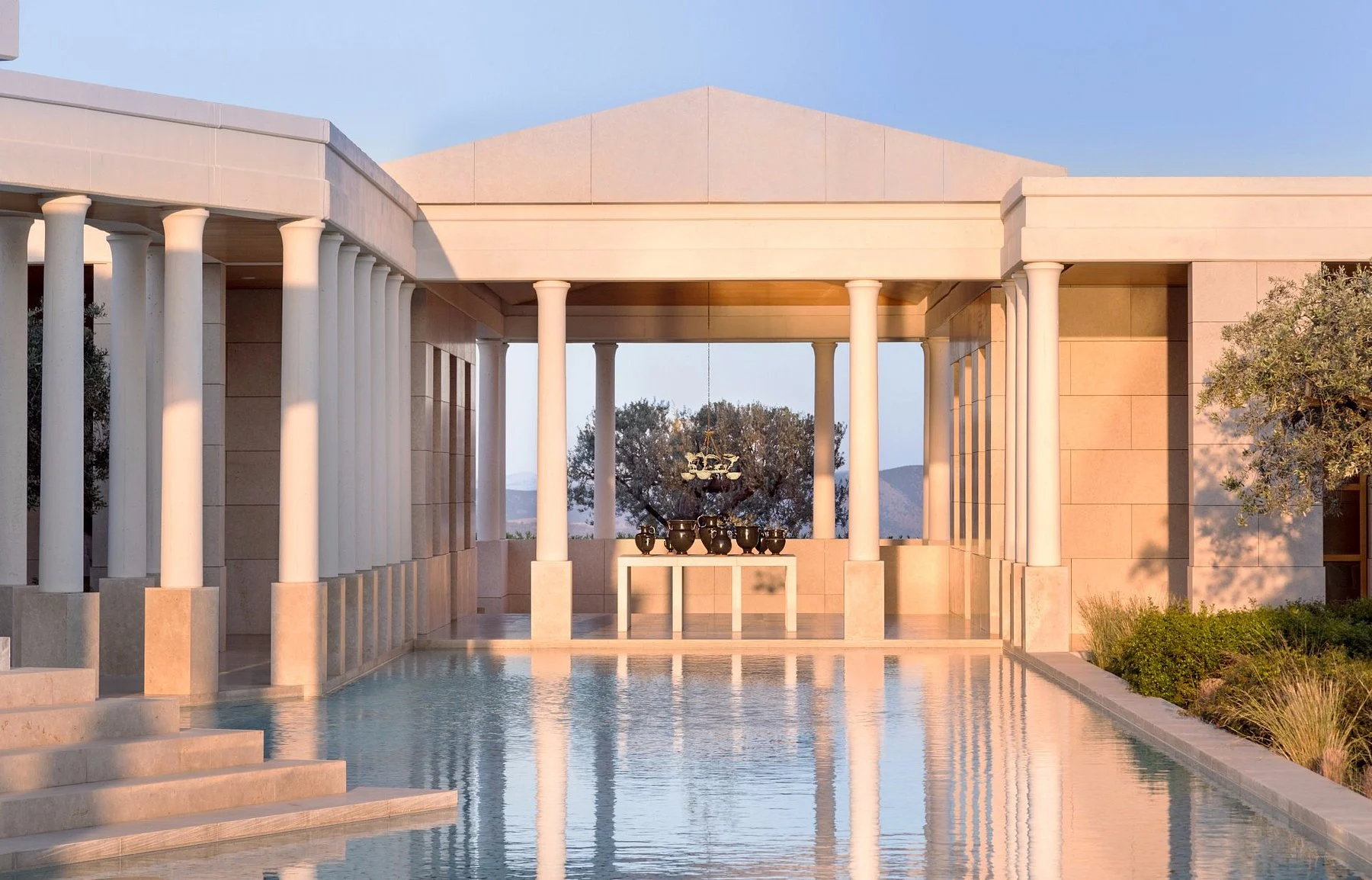
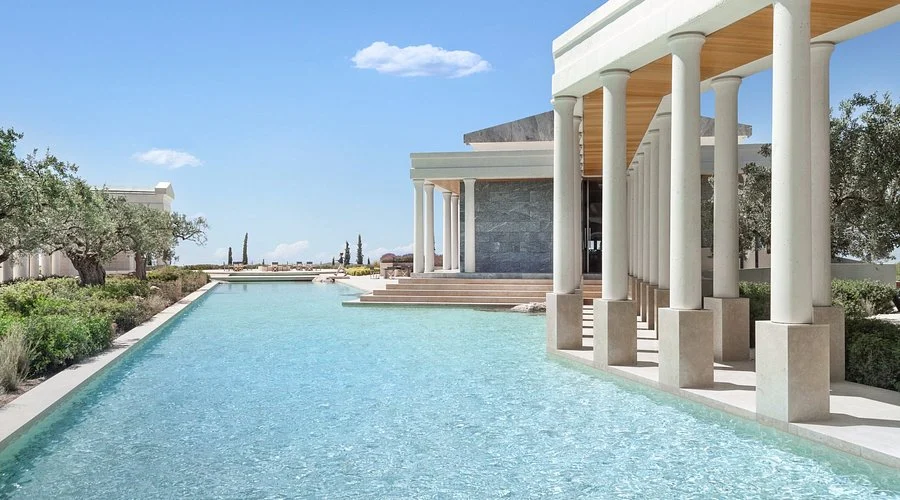
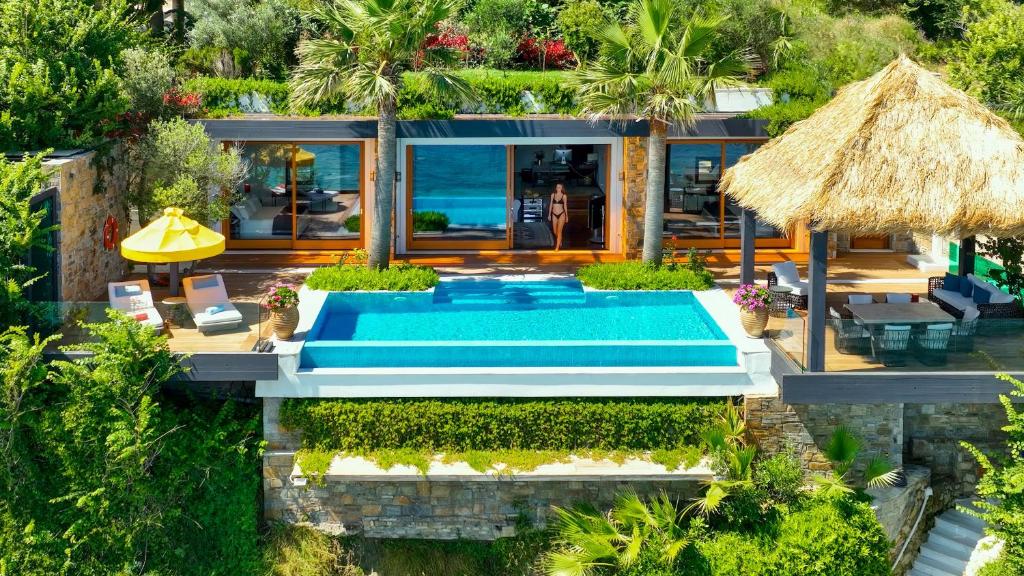
Designed by the late legendary resort architect Ed Tuttle, Amanzoe sits atop a hilltop surrounded by ancient olive groves and pine forests. Tuttle drew inspiration from classical Greek architecture, reinterpreting the Acropolis through an ultra-modernist lens. Fluted columns, pale marble colonnades, and expansive reflecting pools frame sweeping views of the Aegean Sea. The pavilions and villas feature clean geometric lines and flat roofs planted with native vegetation, seamlessly blending classical symmetry with minimalist luxury.
2. Acro Suites (Agia Pelagia, Crete)
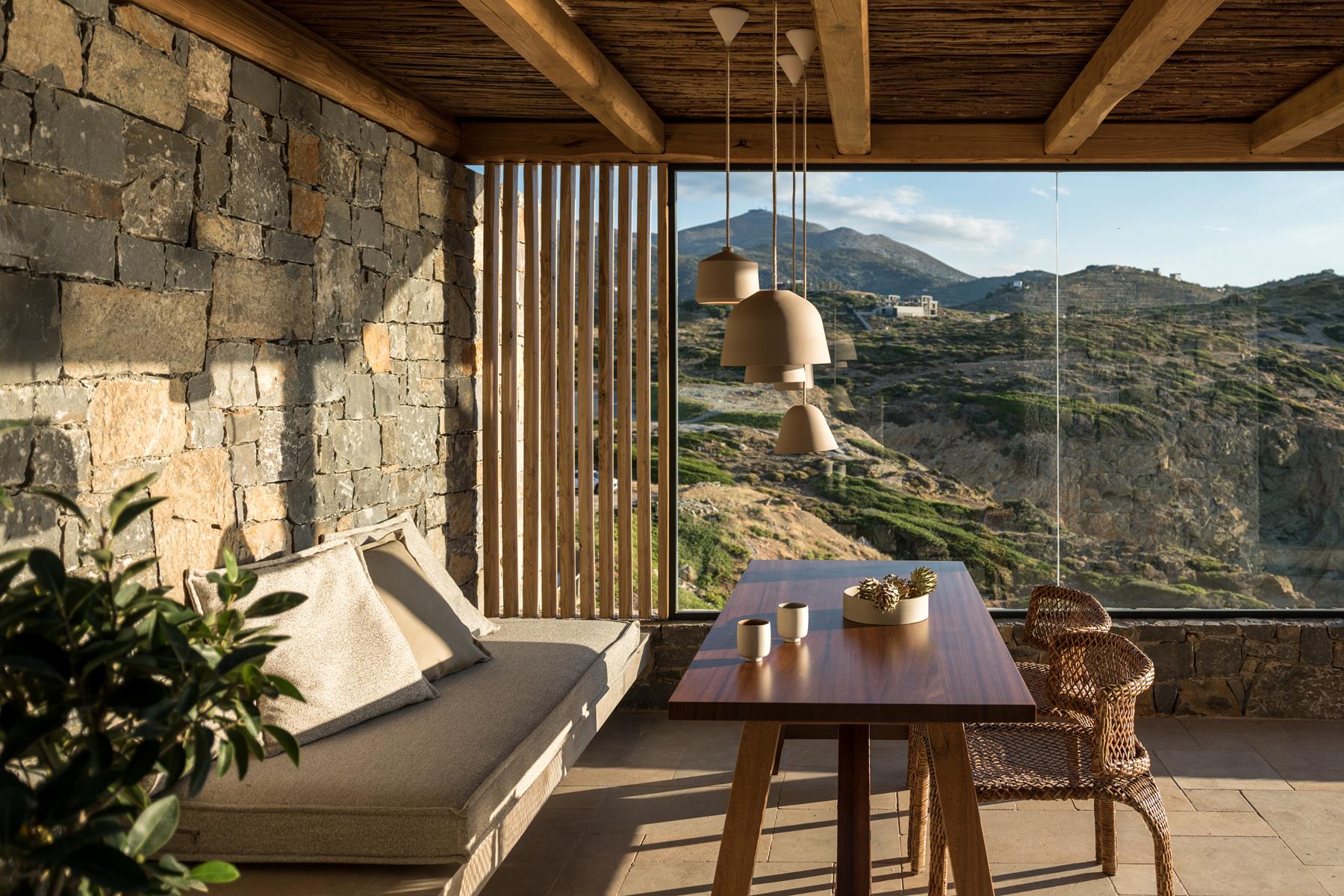
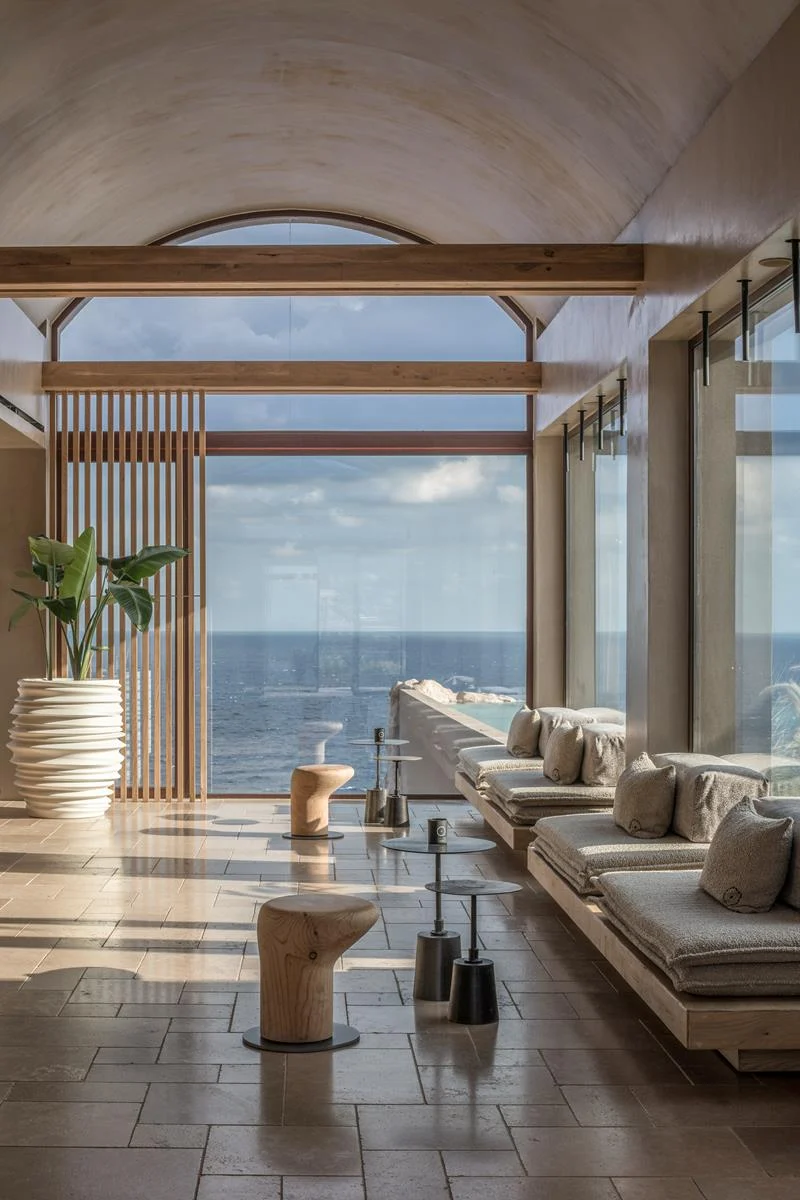
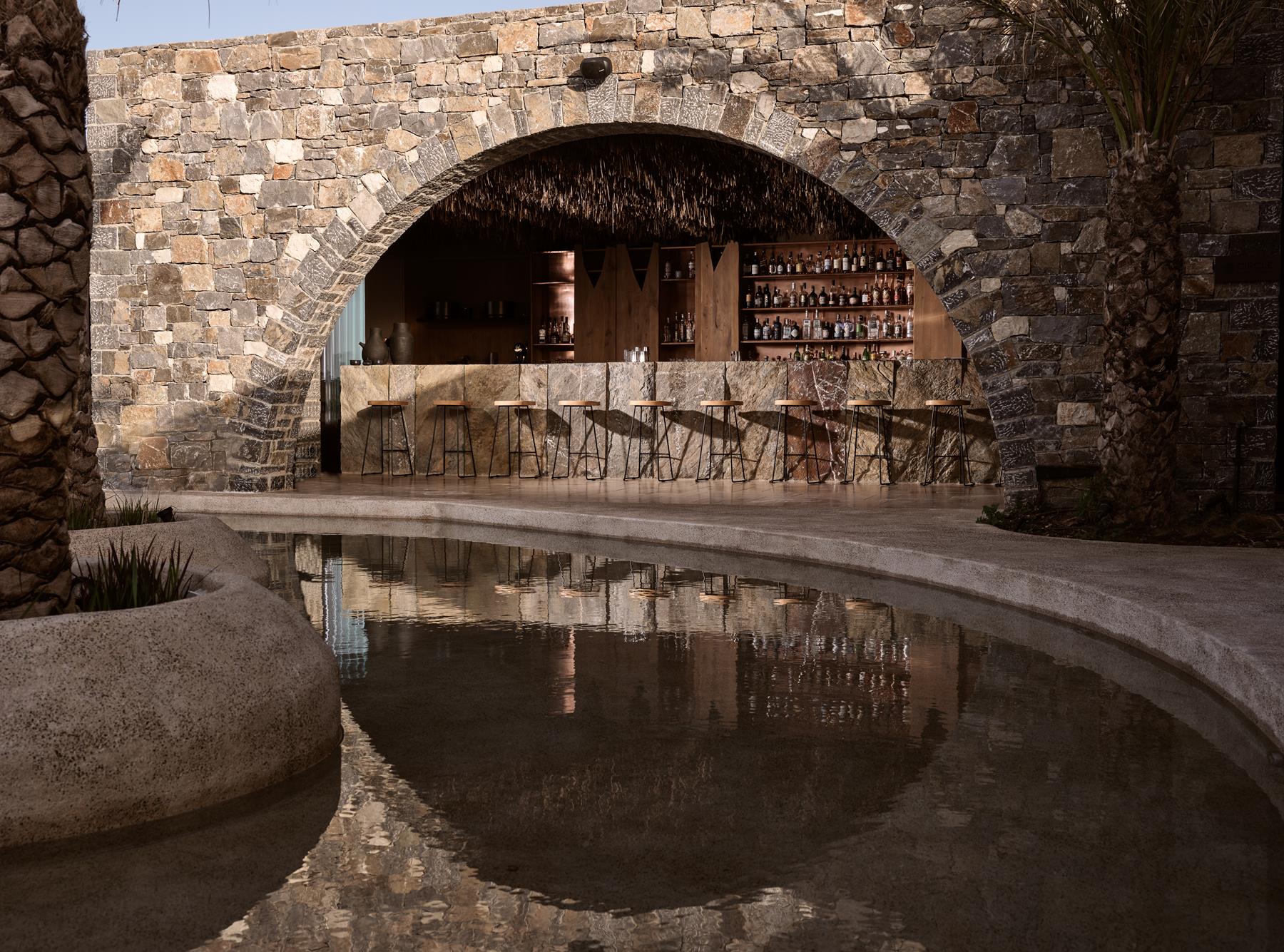
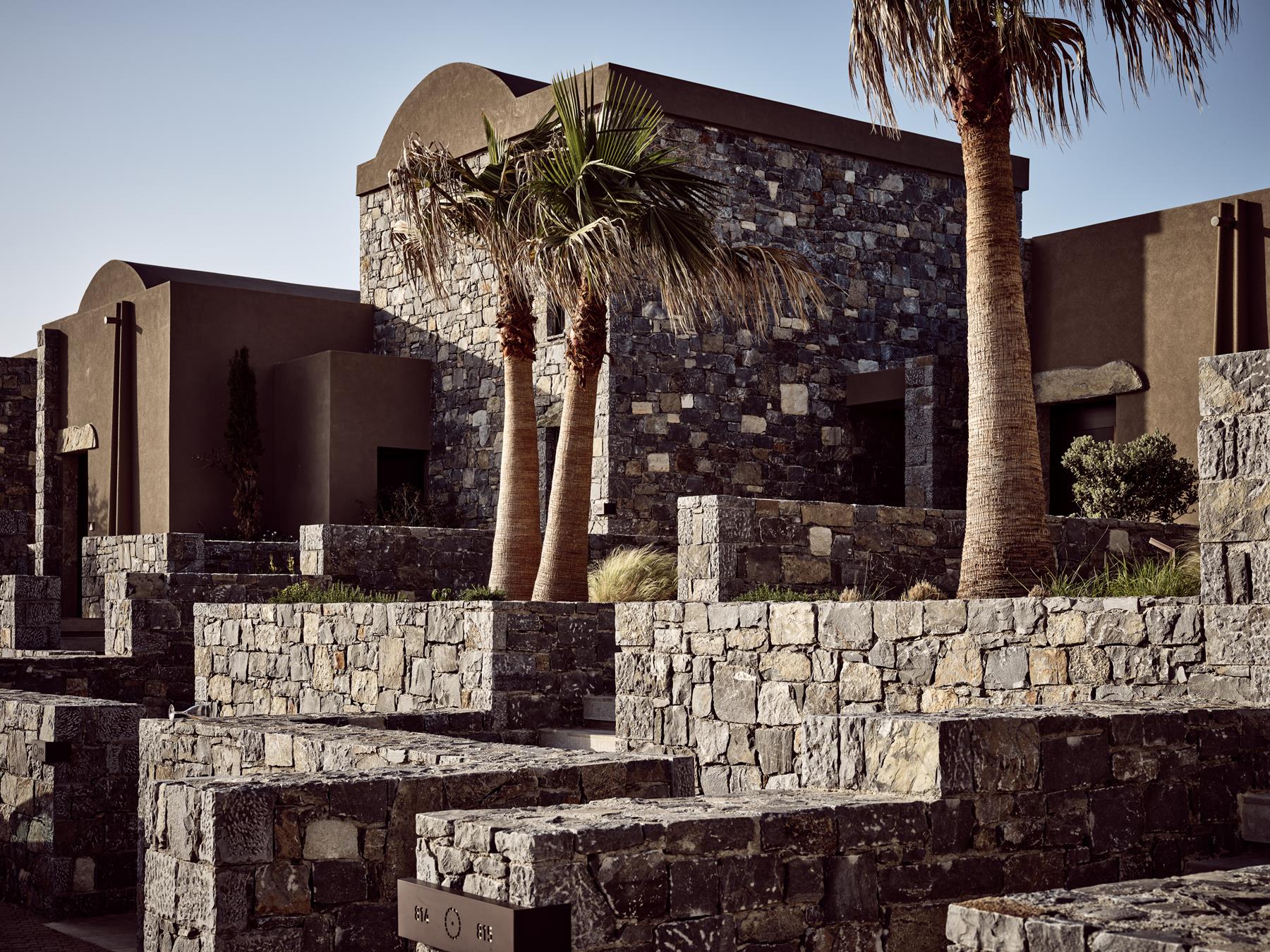
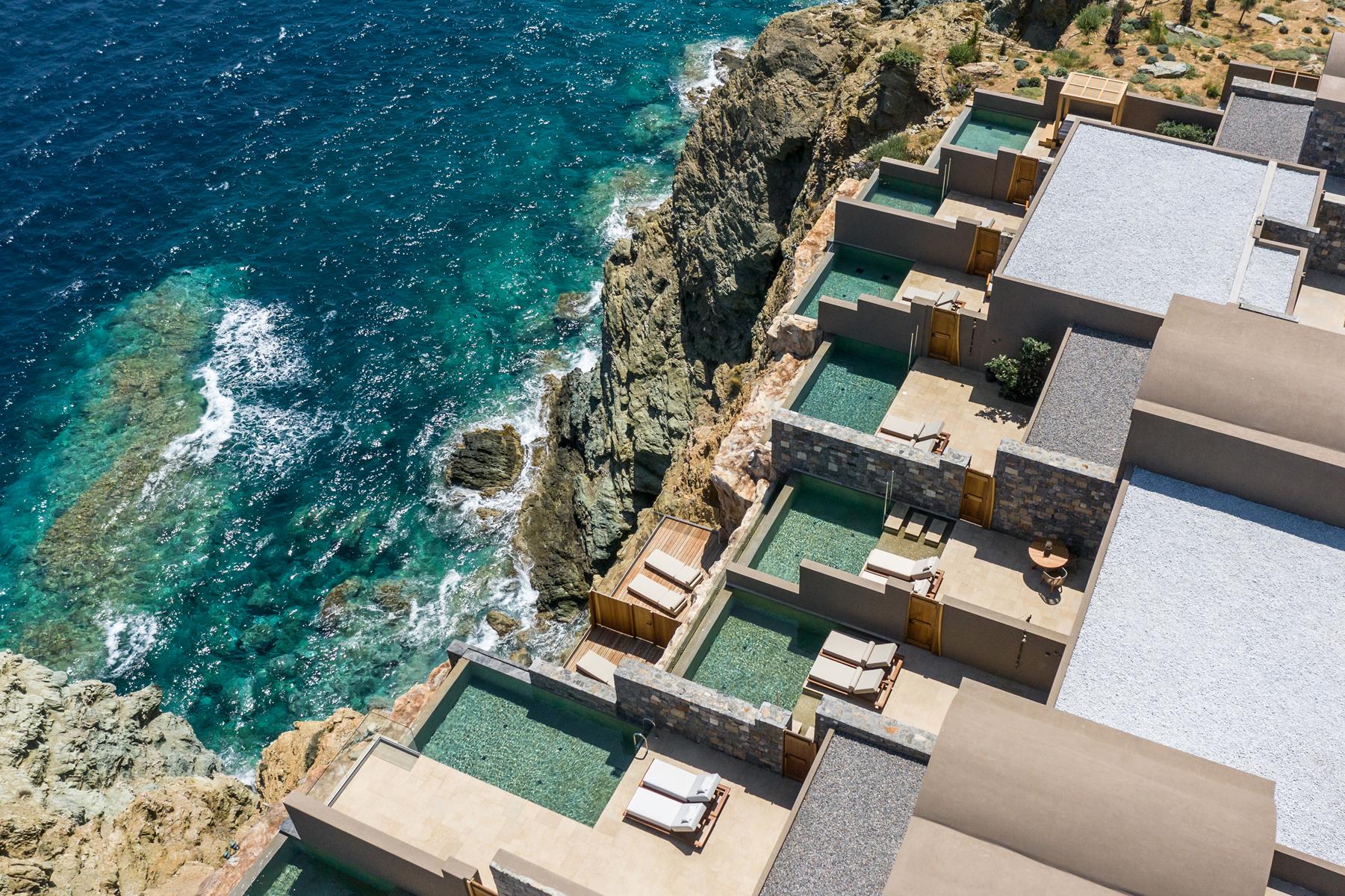
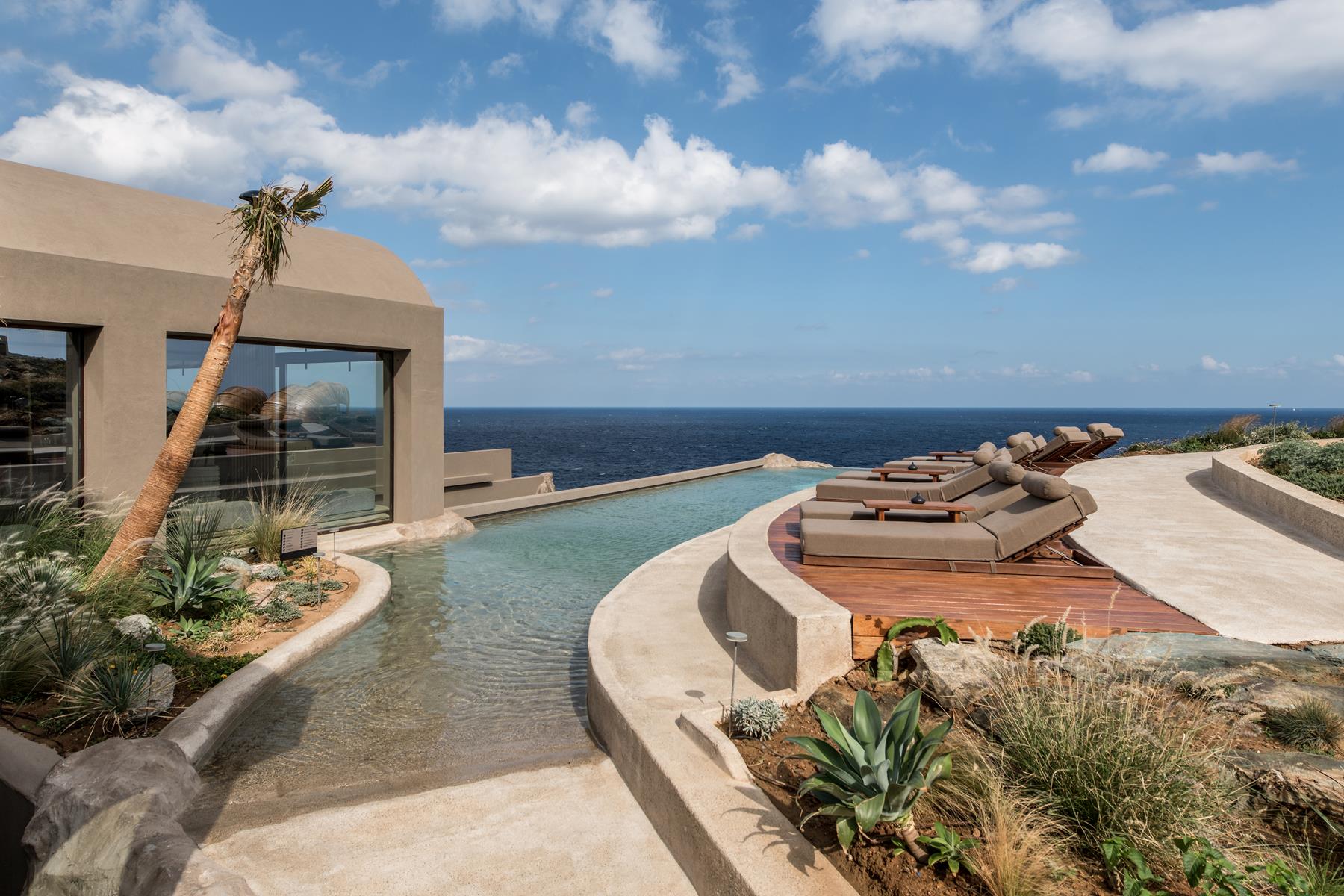
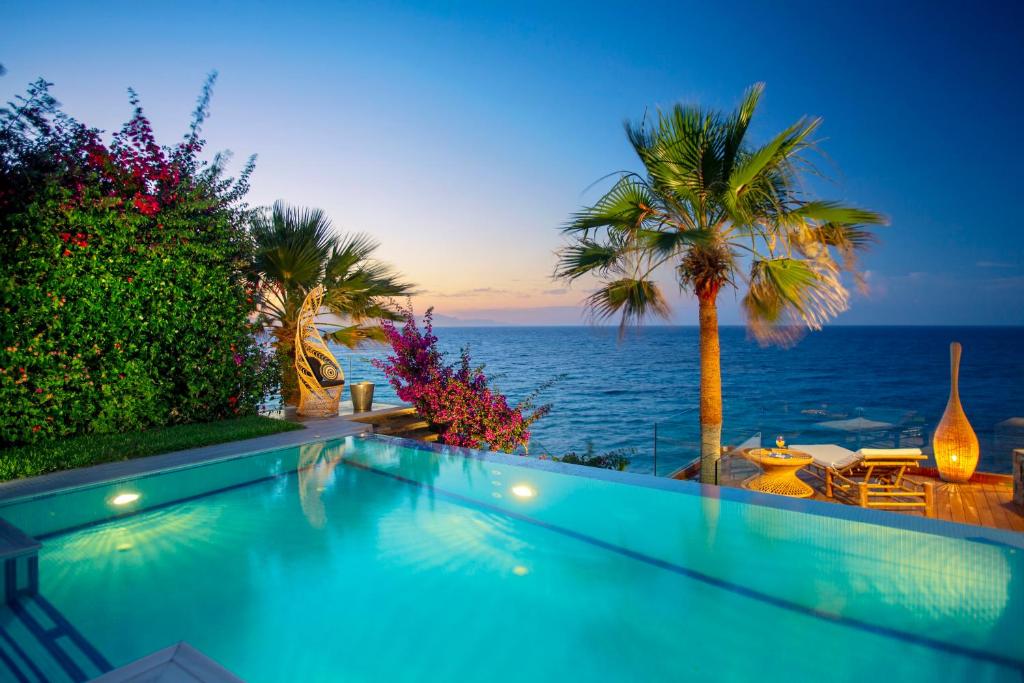
Perched dramatically on the rocky cliffs of Mononaftis Bay in Crete, Acro Suites is an ode to raw, organic minimalism. Designed in collaboration with local artisans and architects, the resort features 49 suites built directly into the cliffside. The signature cave suites are carved out of natural stone, offering subterranean microclimates and private infinity pools suspended over the sea. The palette is strictly earthy—rough-hewn wood, unpolished stone, and smooth micro-cement—allowing the dramatic natural landscape to remain the hero.
3. Costa Navarino / Navarino Waterfront (Messinia, Peloponnese)
The Costa Navarino region has become a benchmark for sustainable architecture in Greece. The development features innovative “earth-sheltered” design, where buildings are embedded into the natural contours of the hillsides and topped with green roofs. Using local Messinian stone, timber, and rammed earth, the architecture prioritizes energy efficiency and minimal visual impact. Large glass apertures slide away to create fluid transitions between indoor living rooms and surrounding olive orchards.
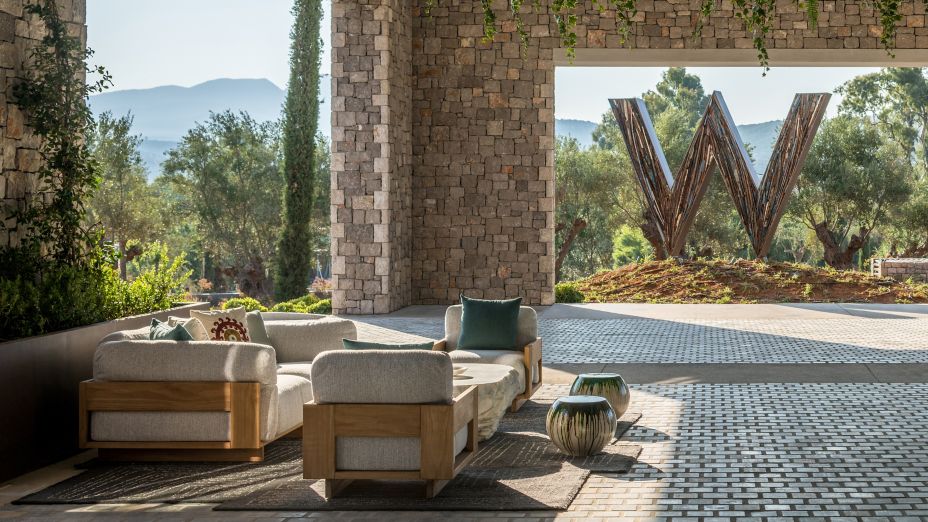
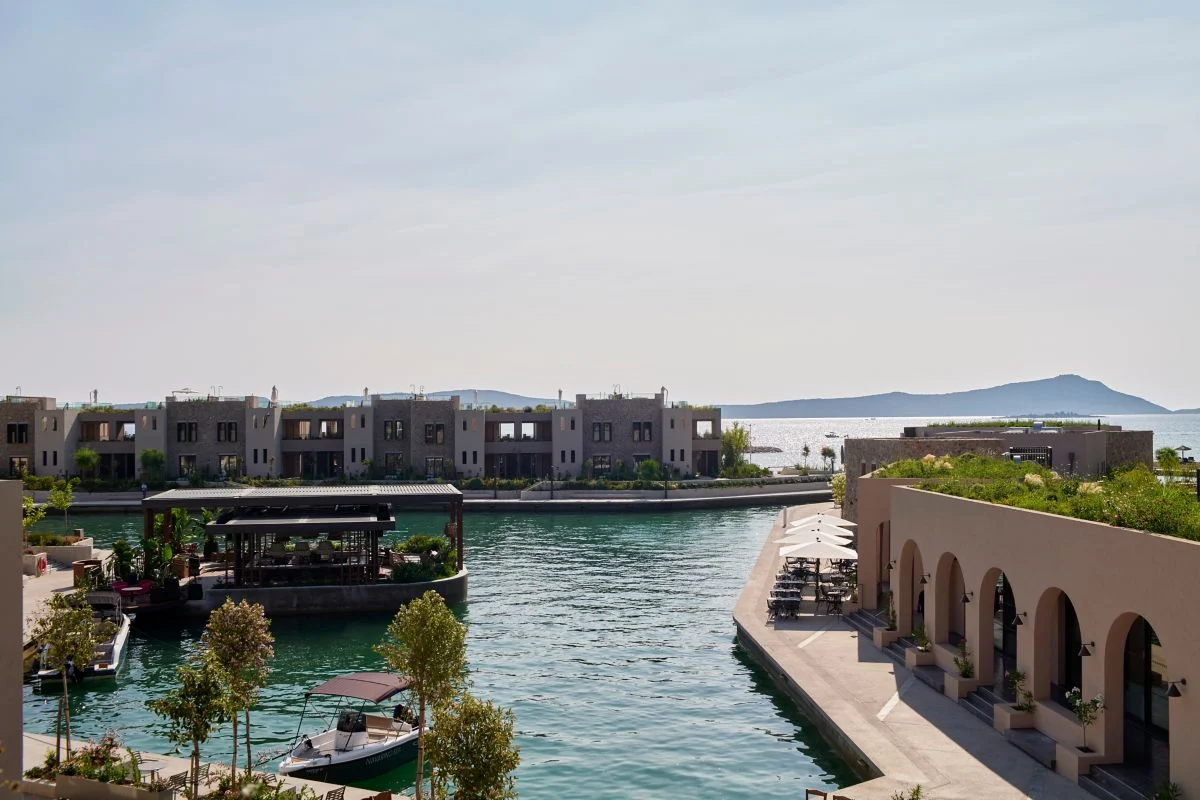
4. The Rooster (Antiparos, Cyclades)
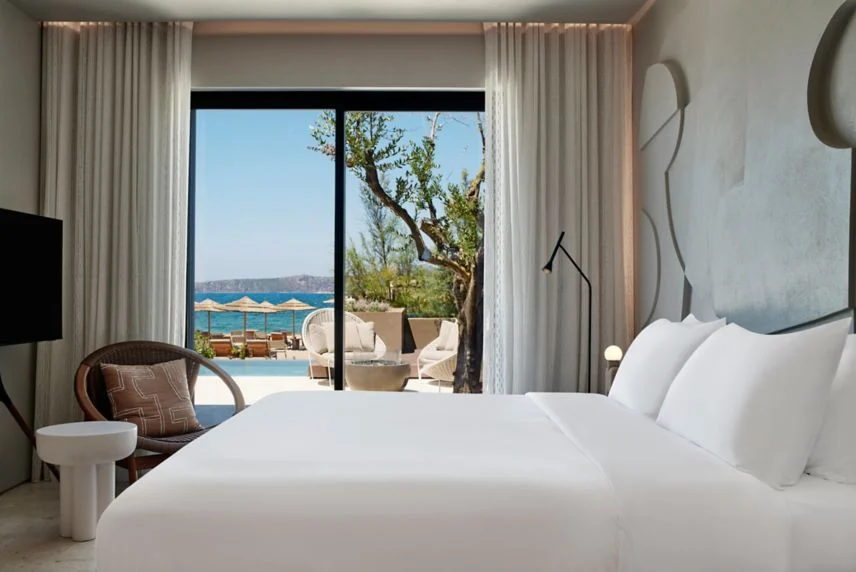
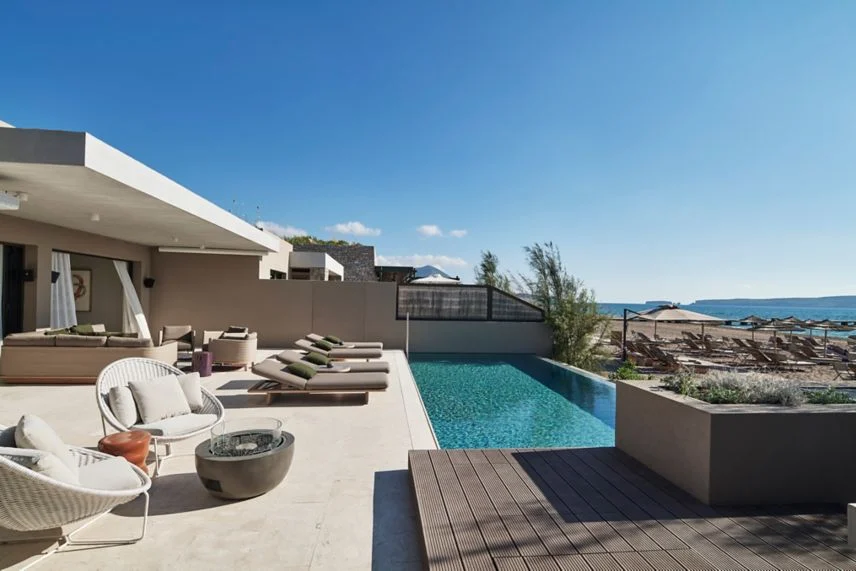
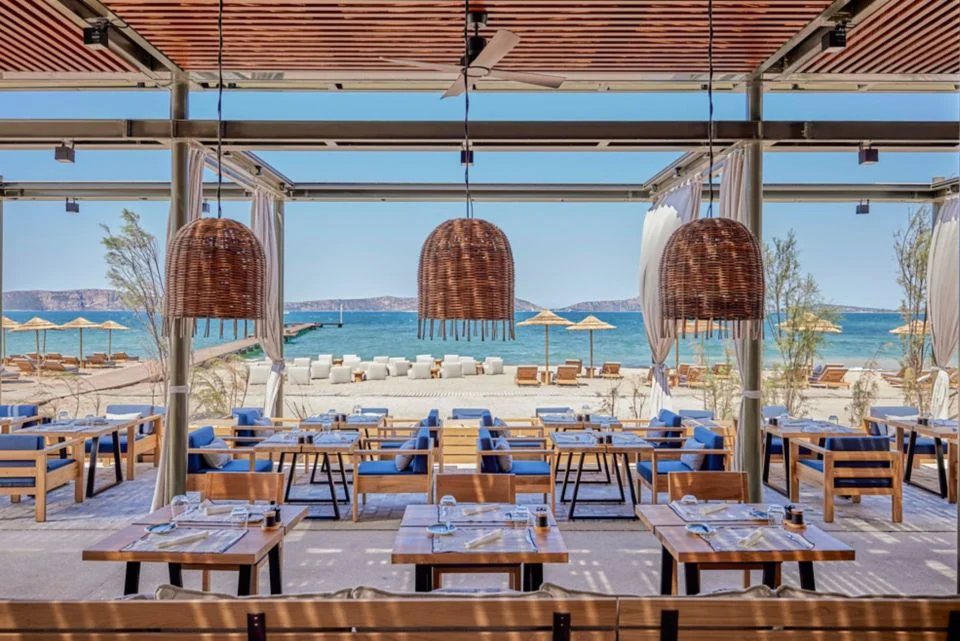
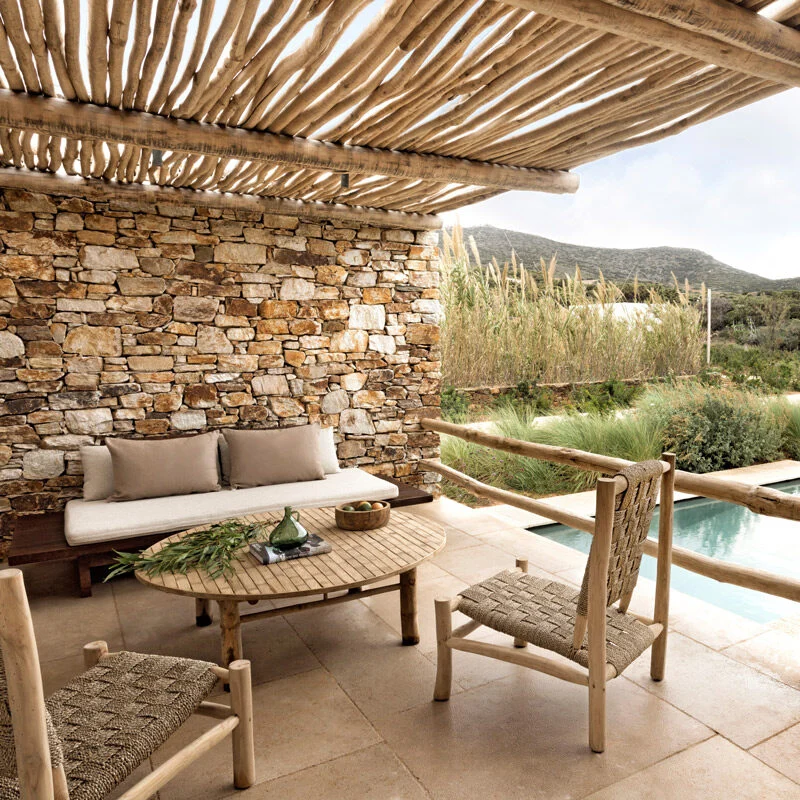
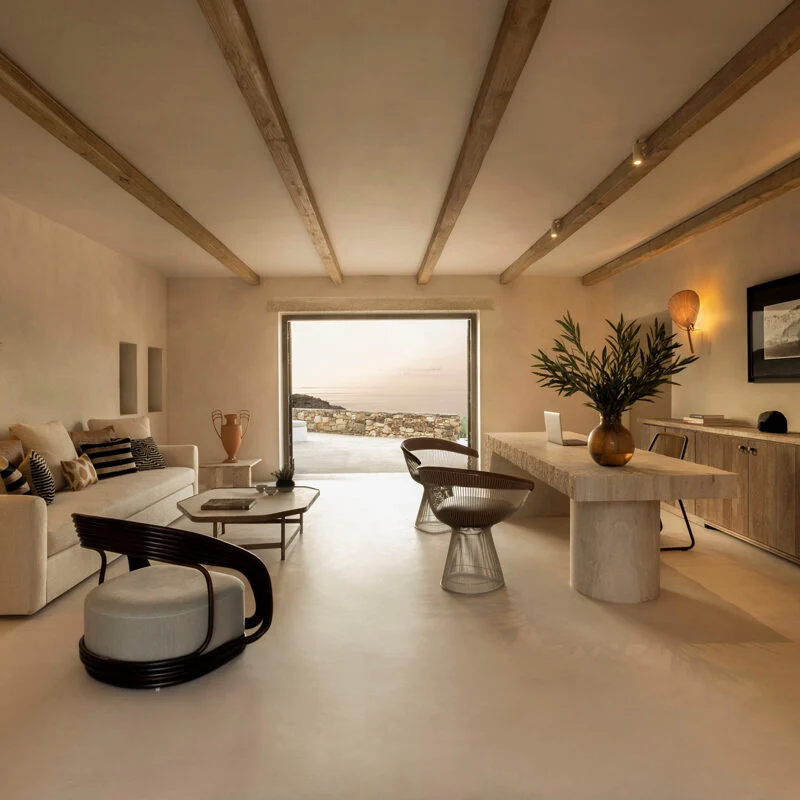
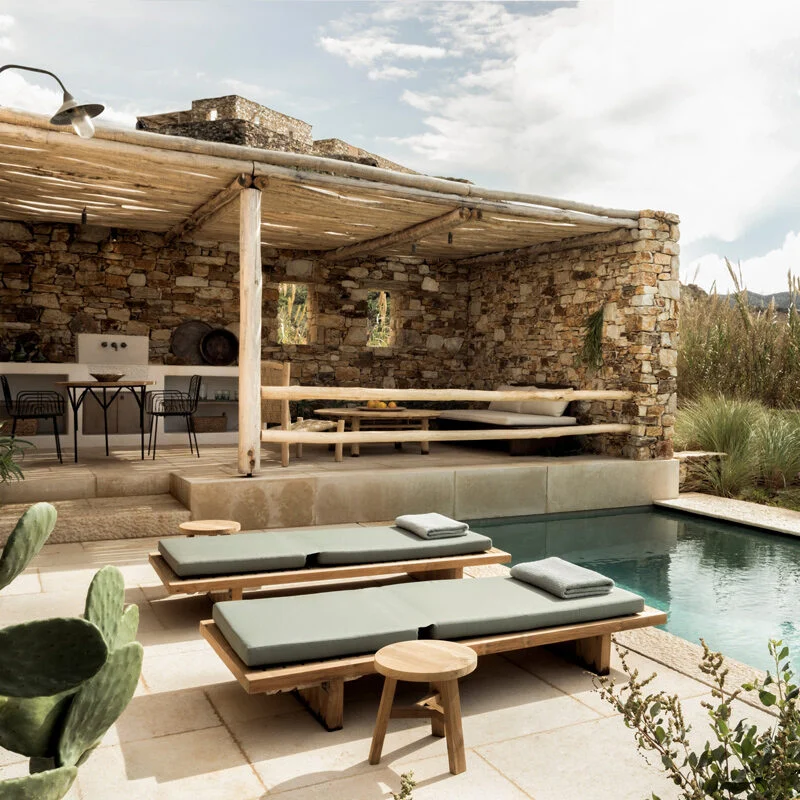
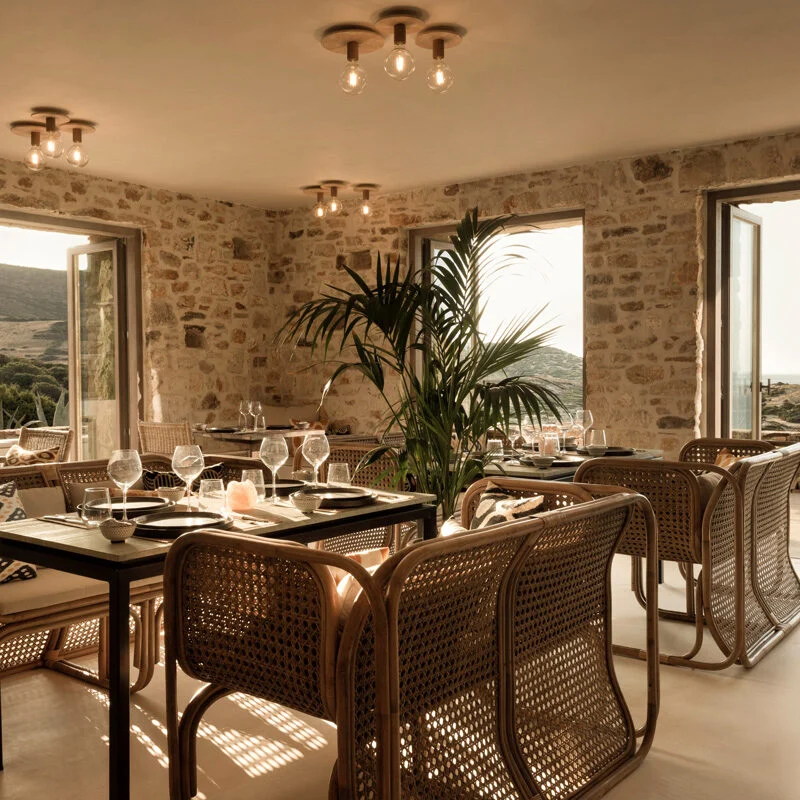
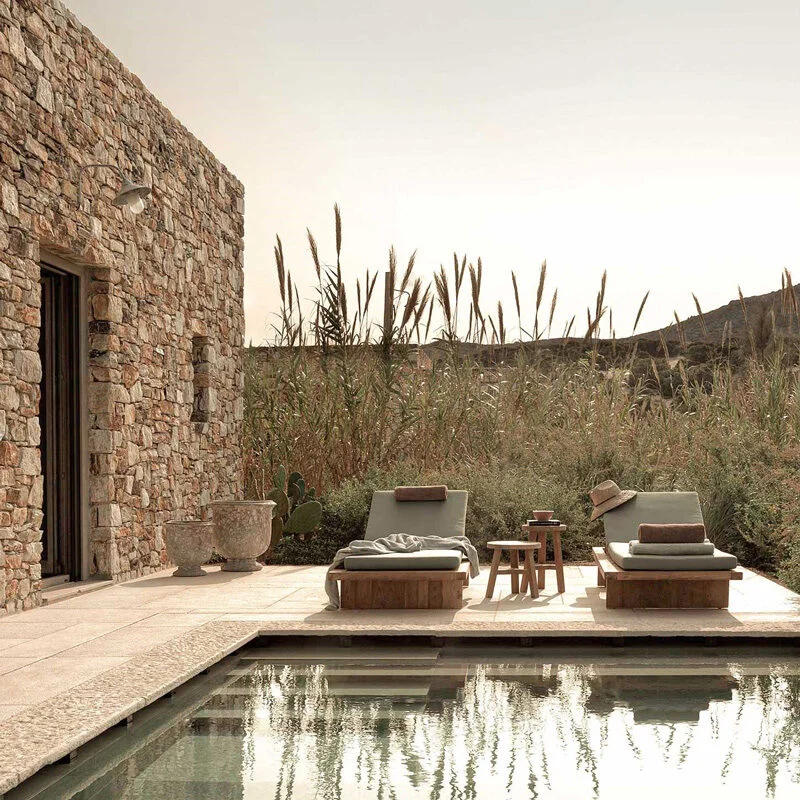
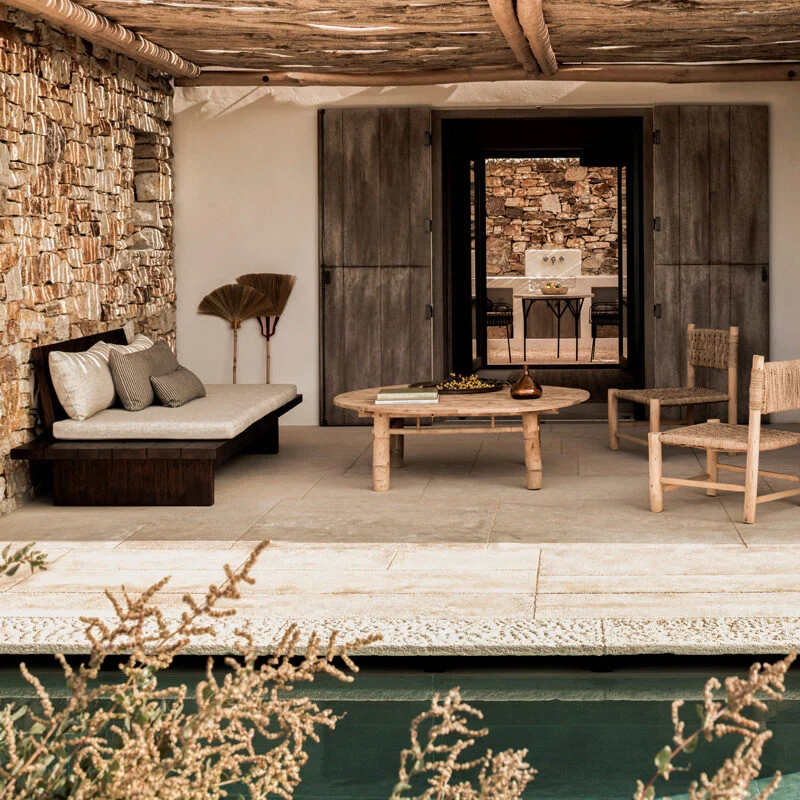
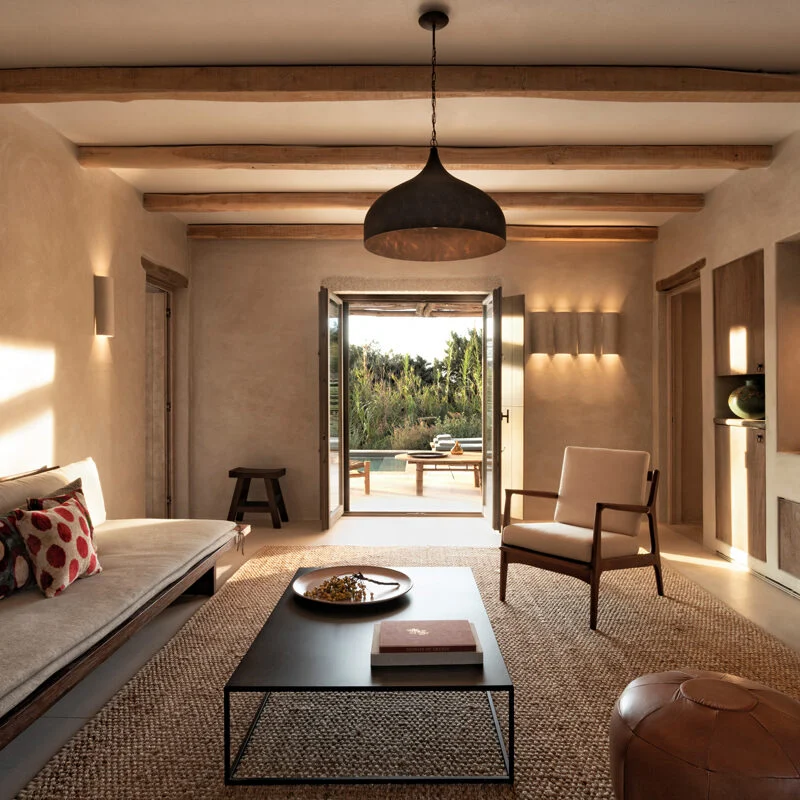
Set across 30 acres of unblemished hills on the serene island of Antiparos, The Rooster intentionally departs from hyper-glossy resort aesthetics. Its 16 individual suites (termed “houses”) are crafted from raw stone, cedar, and tactile fabrics. Designed to foster slowness and introspection, the low-slung structures mirror the island’s natural topography, framed by dry-stone retaining walls (xerolithies) that have defined the Aegean landscape for centuries.
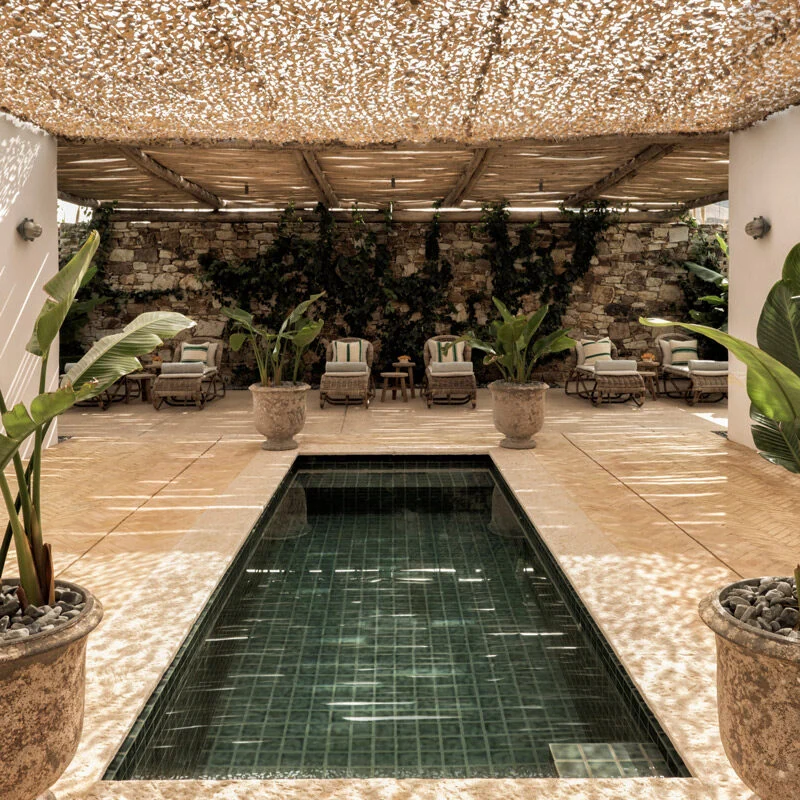
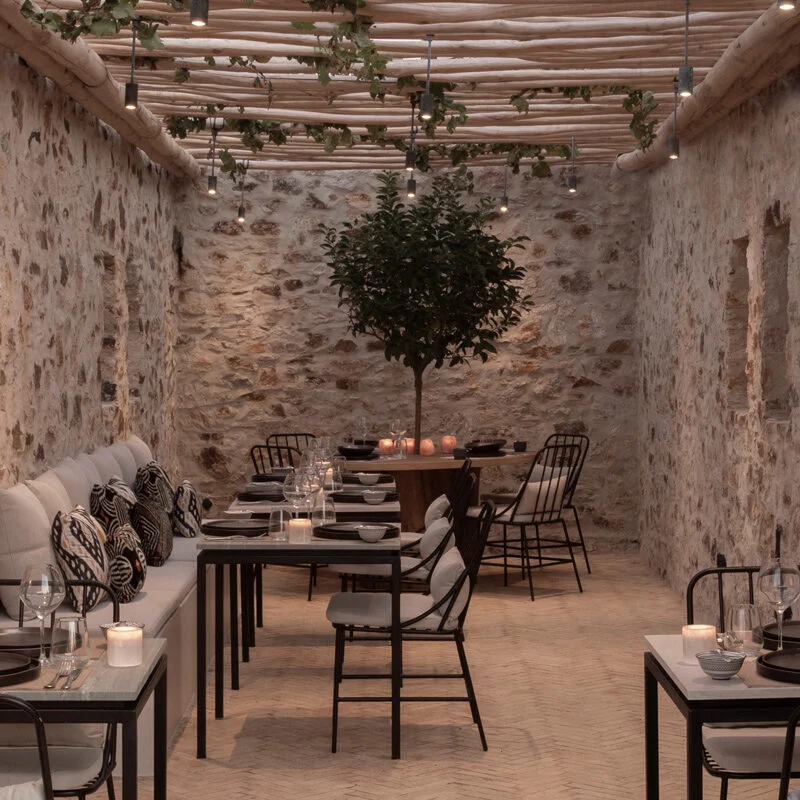
5. Dexamenes Seaside Hotel (Kourouta, Peloponnese)
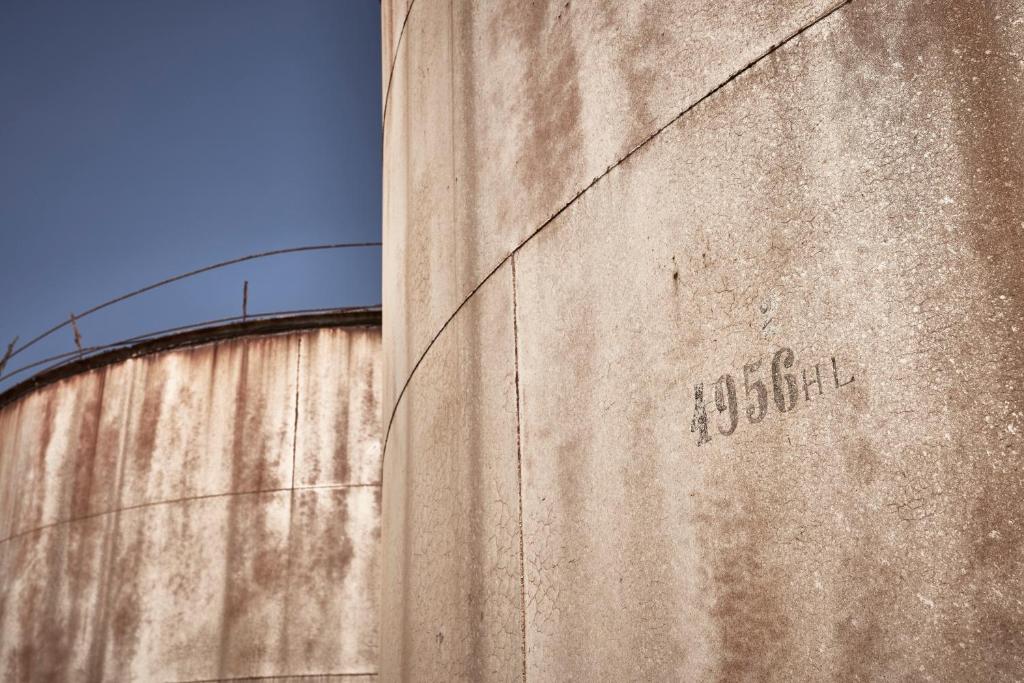
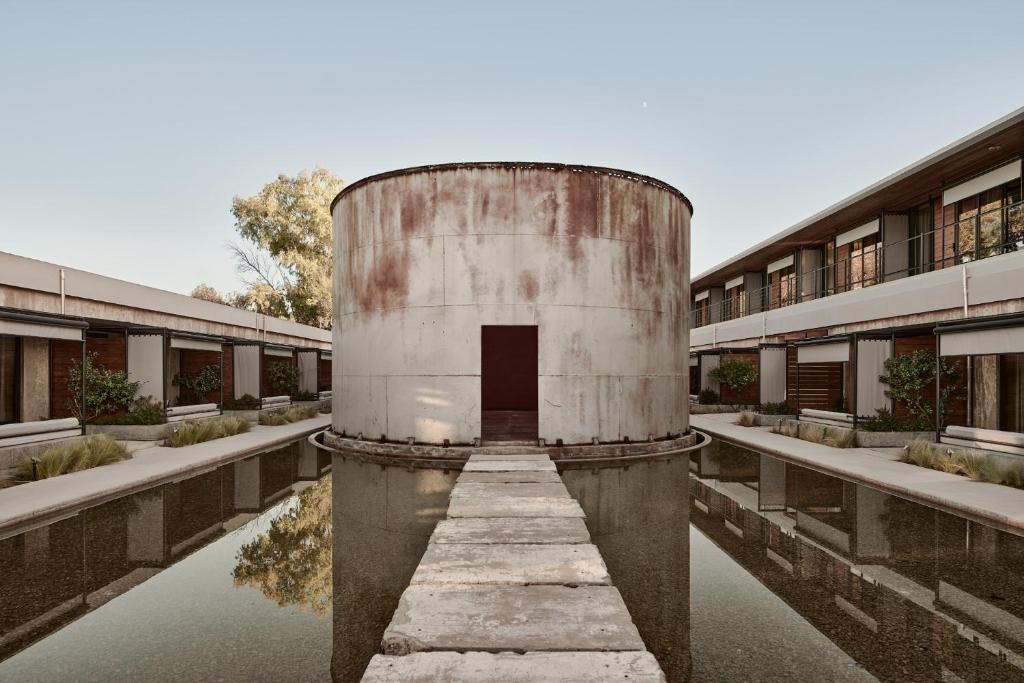
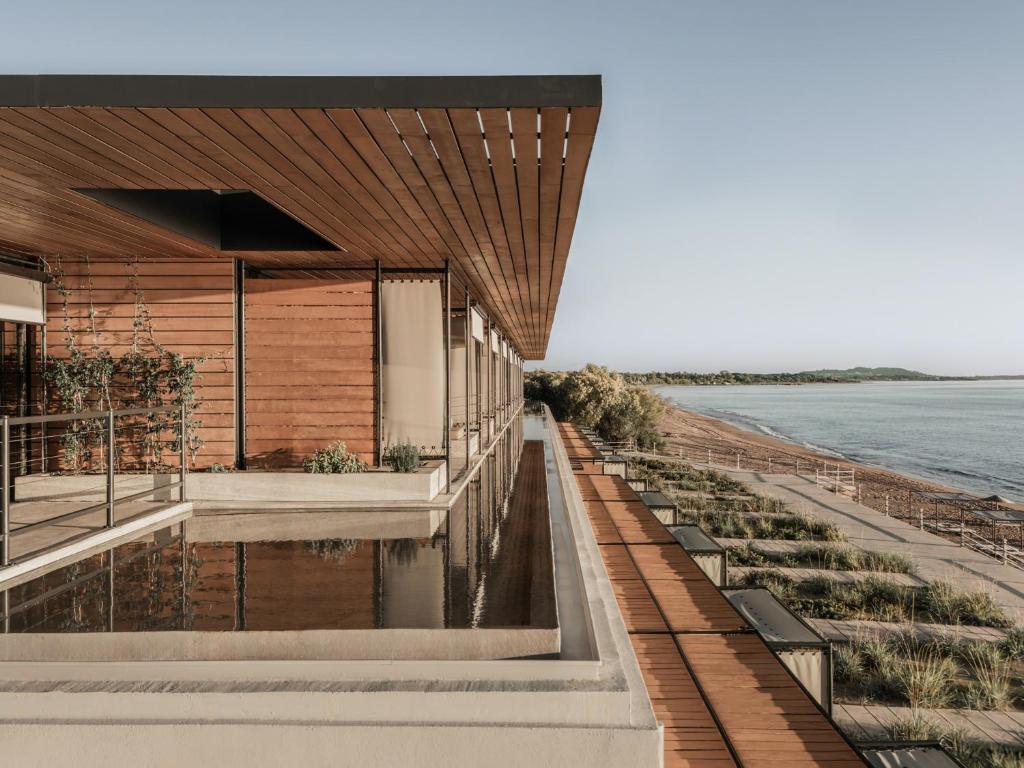
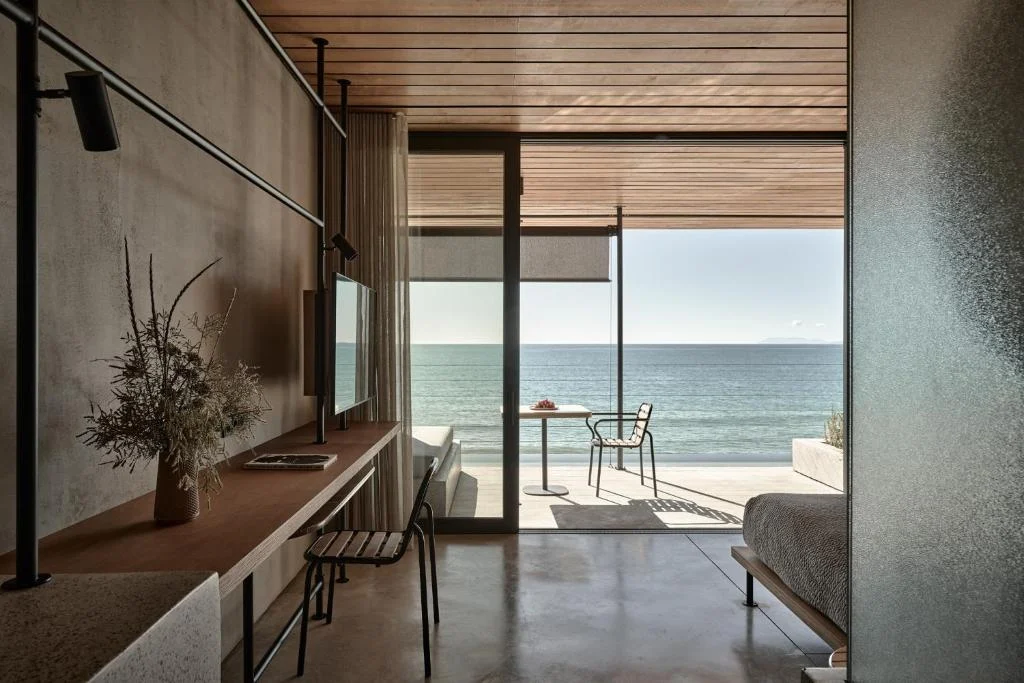
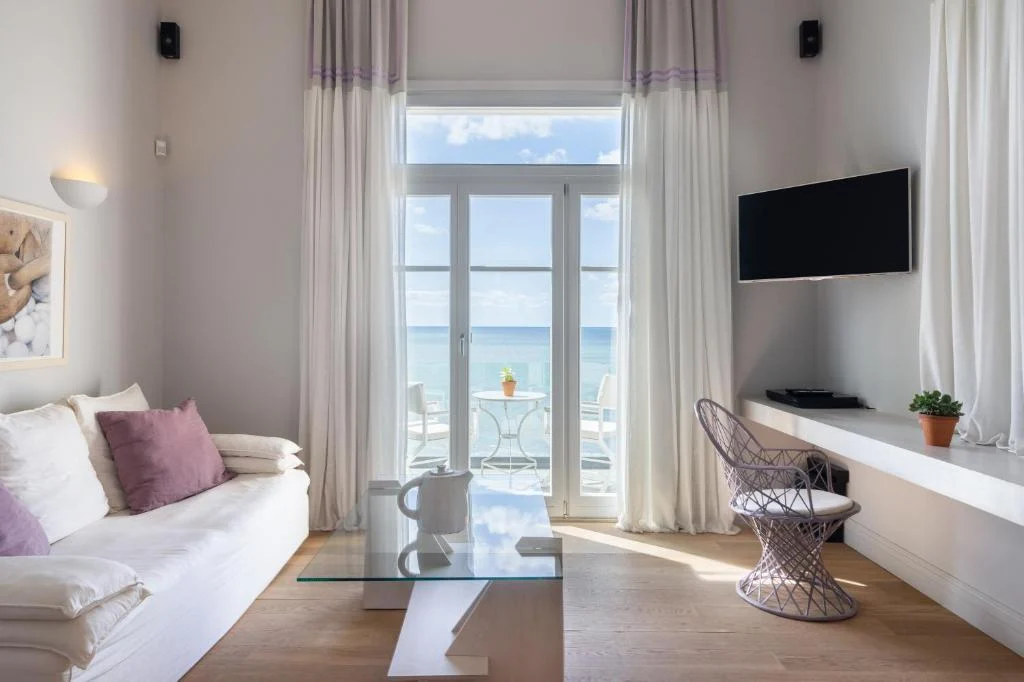
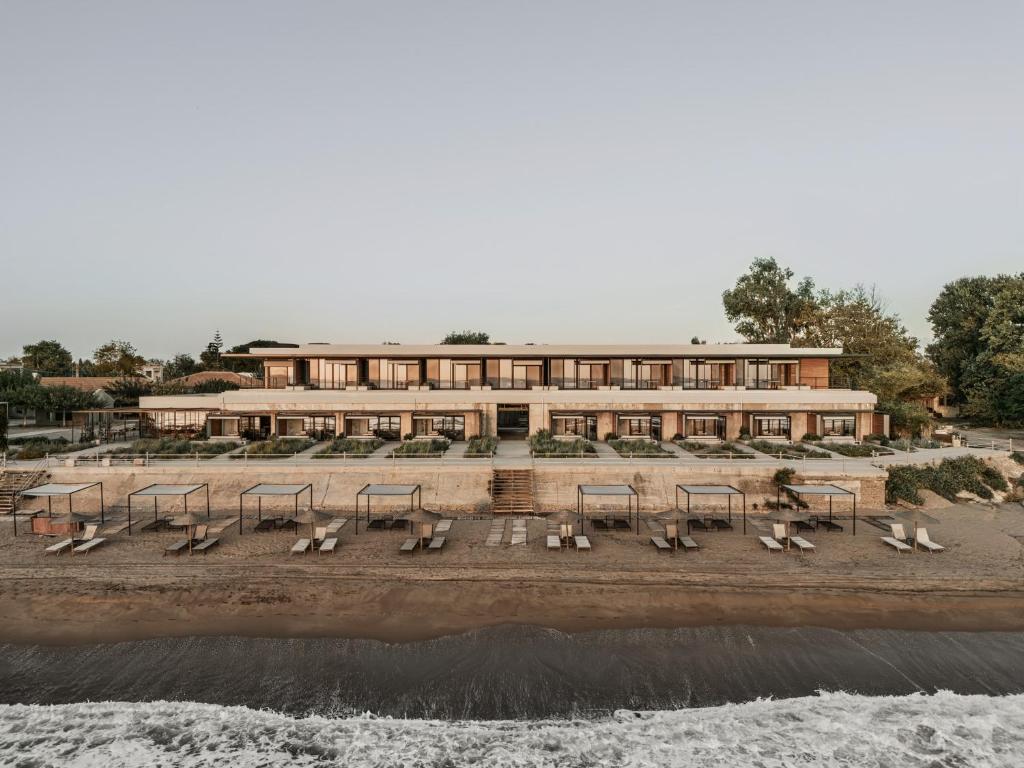
For a masterclass in industrial adaptive reuse, Dexamenes transforms an abandoned 1920s wine factory located directly on the beach into an avant-garde hotel. Designed by K-Studio, the concrete wine tanks have been meticulously converted into sleek guest suites. The raw industrial concrete framing and exposed pipework are softened by warm timber, linen curtains, and terrazzo floors. The result is a striking, brutalist beachfront sanctuary that honors Greece’s agricultural-industrial heritage.
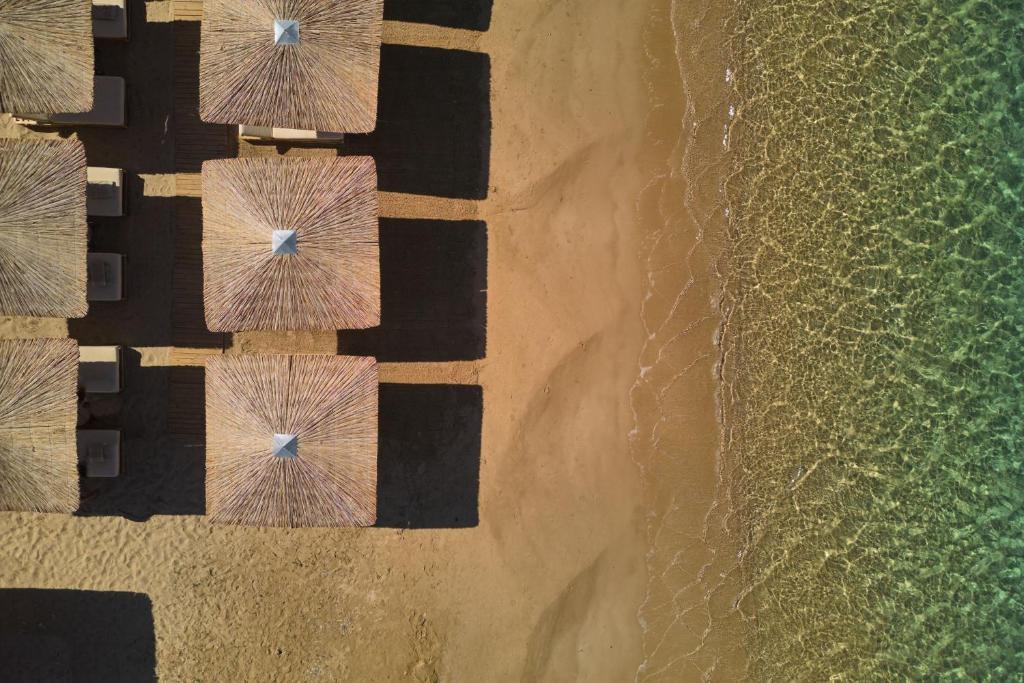
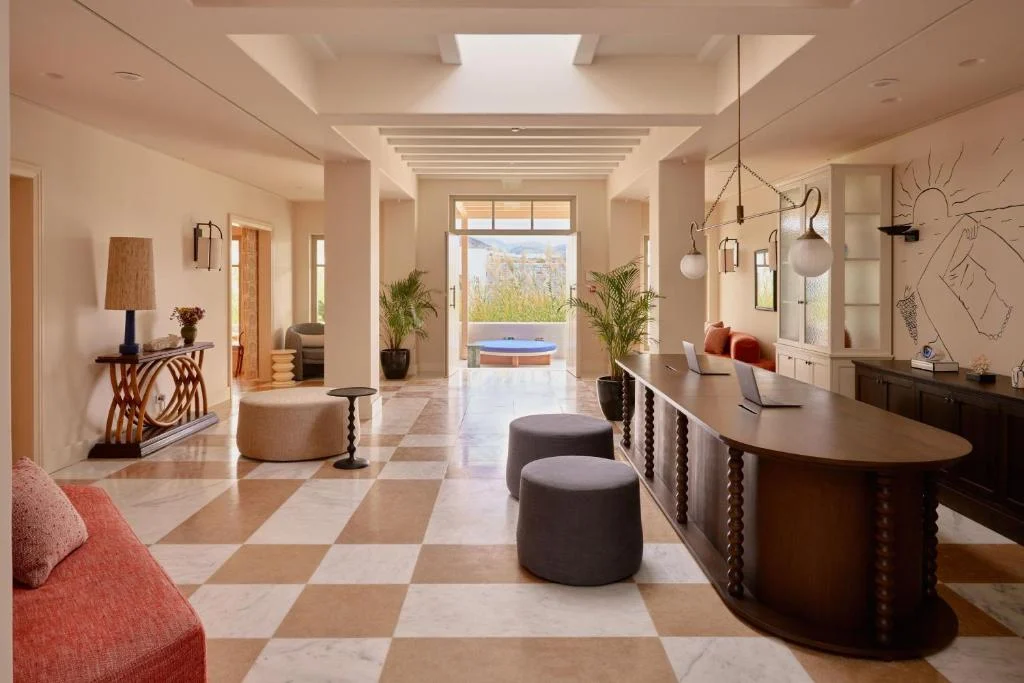
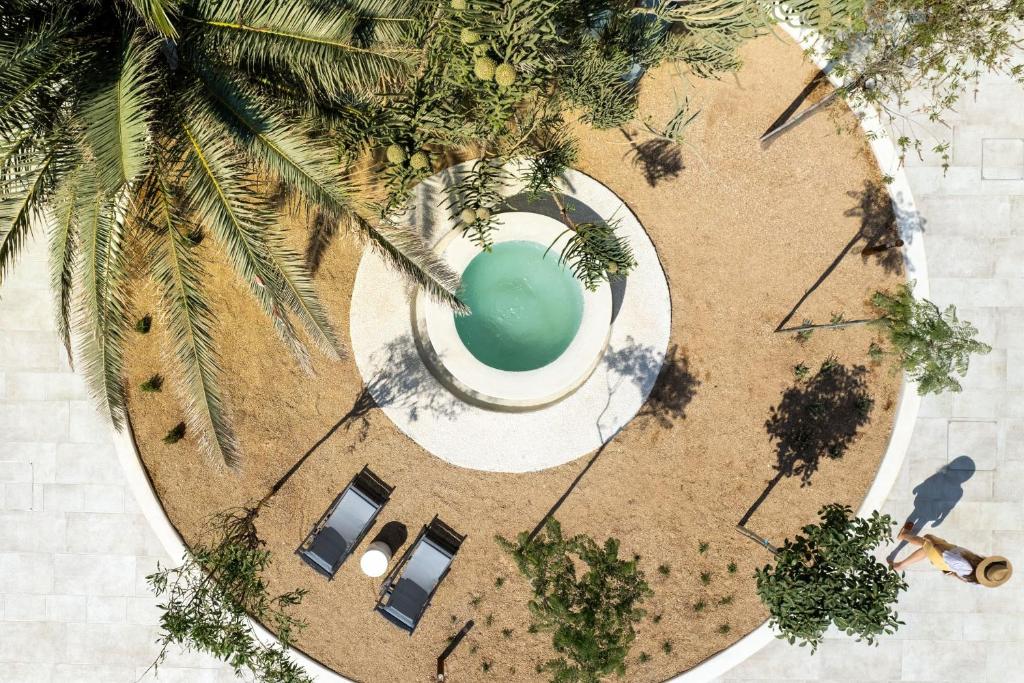
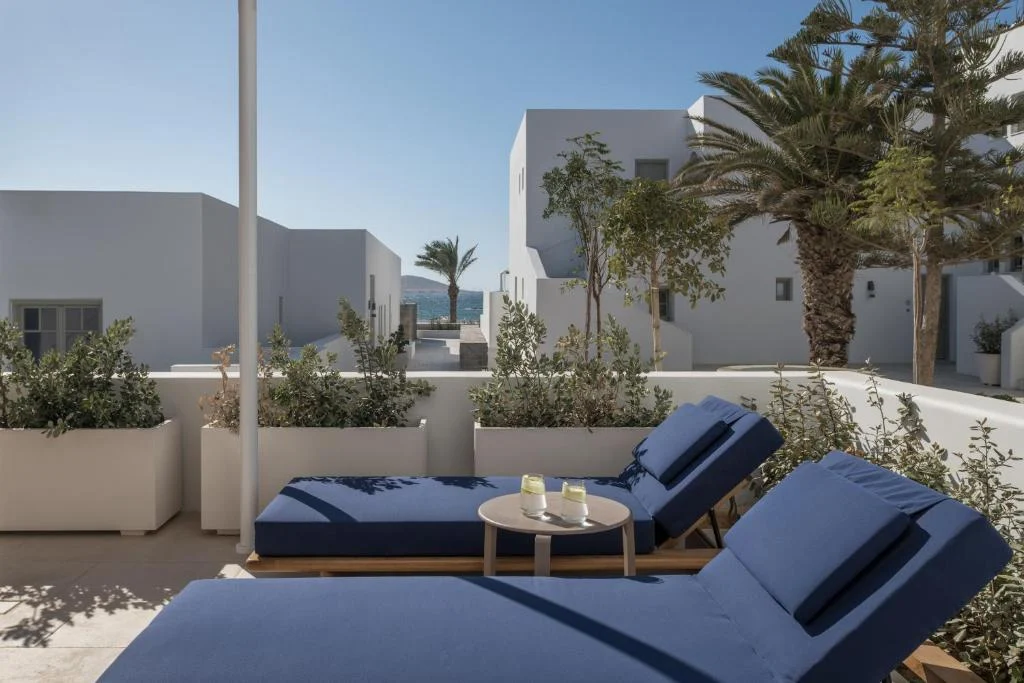
6. Cosme, a Luxury Collection Resort (Paros, Cyclades)
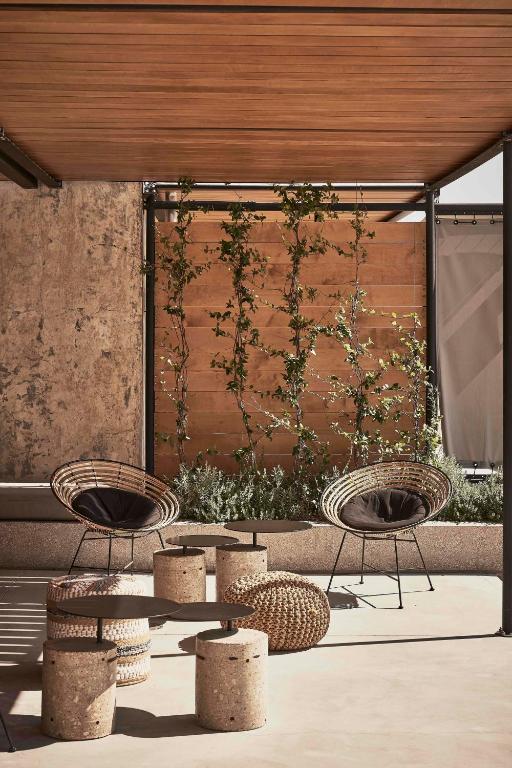
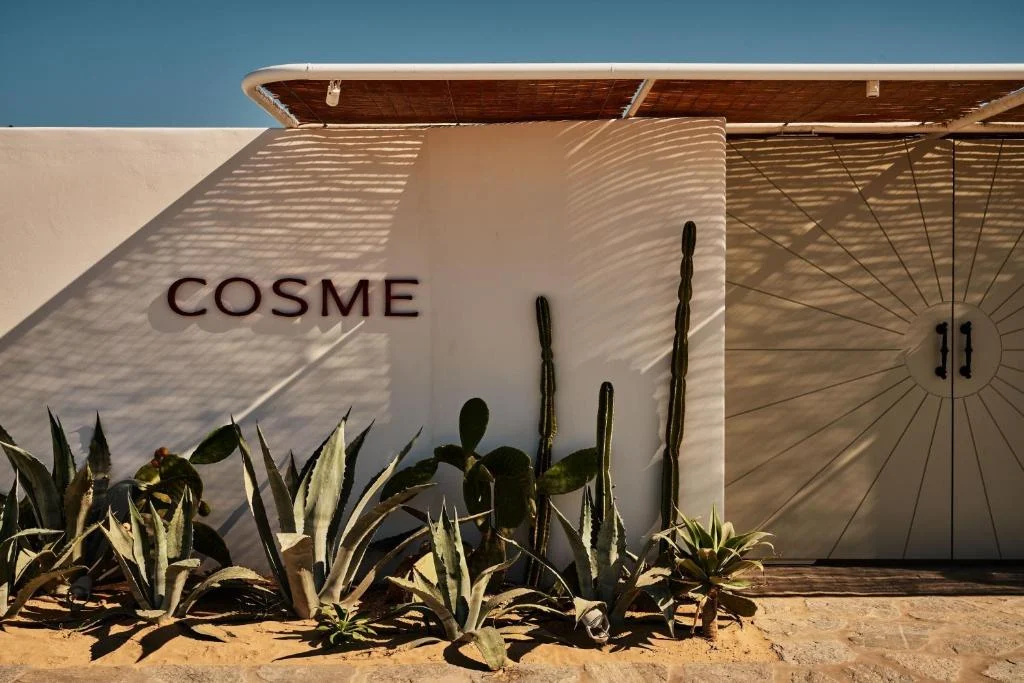
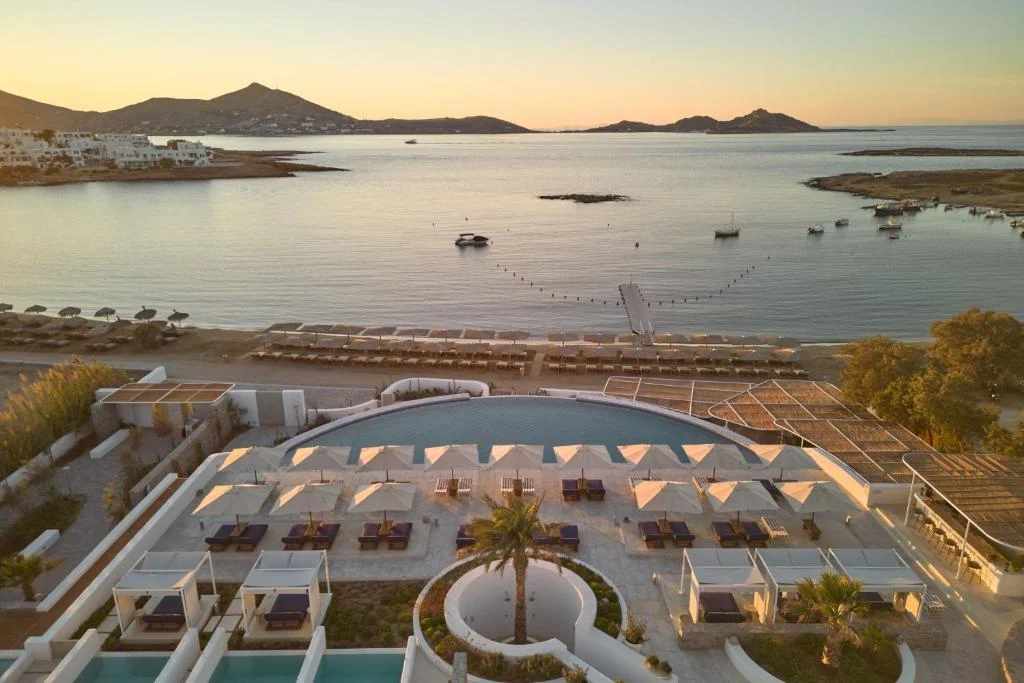
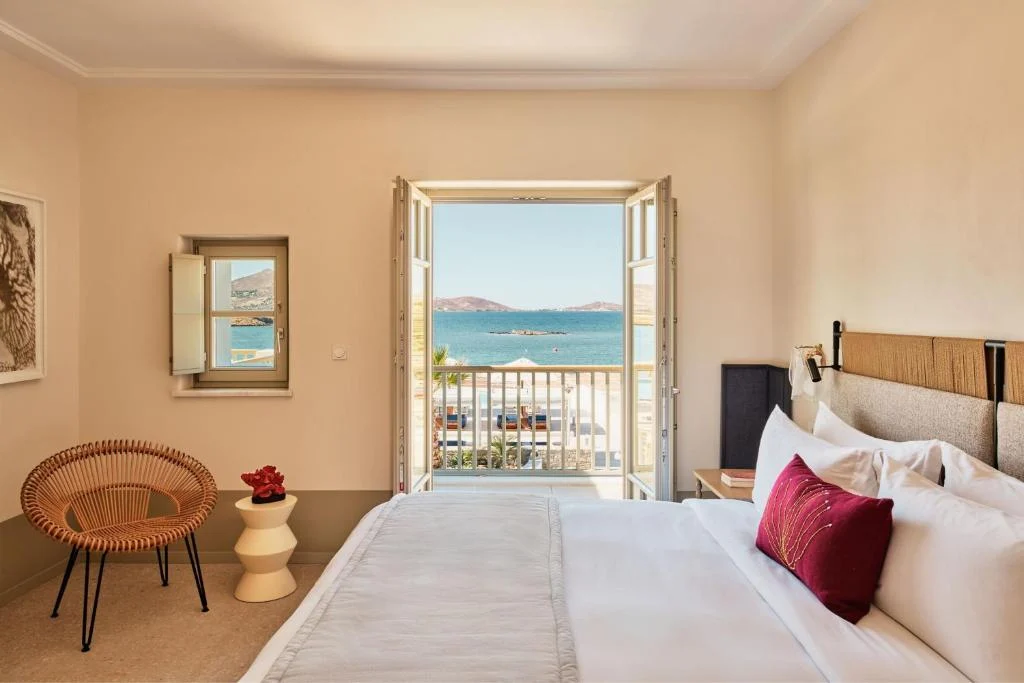
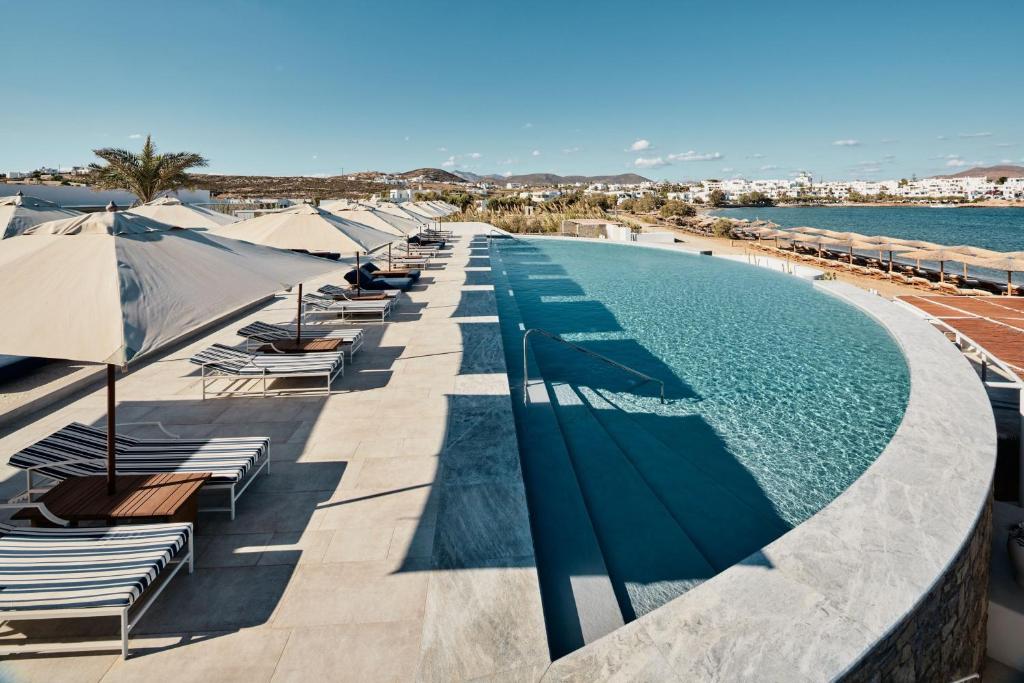
Replacing the typical party-island luxury template, Cosme on the island of Paros offers an elevated interpretation of Cycladic modernism. Designed by ID Laboratorium, the resort’s layout mirrors a traditional Aegean coastal village, complete with meandering paths and central communal plazas (plateia). The architecture honors local Cycladic forms through soft-curved whitewashed structures, sandstone accents, and bespoke textiles, seamlessly connecting contemporary art with maritime heritage.
7. Olea All Suite Hotel (Zakynthos, Ionian Islands)
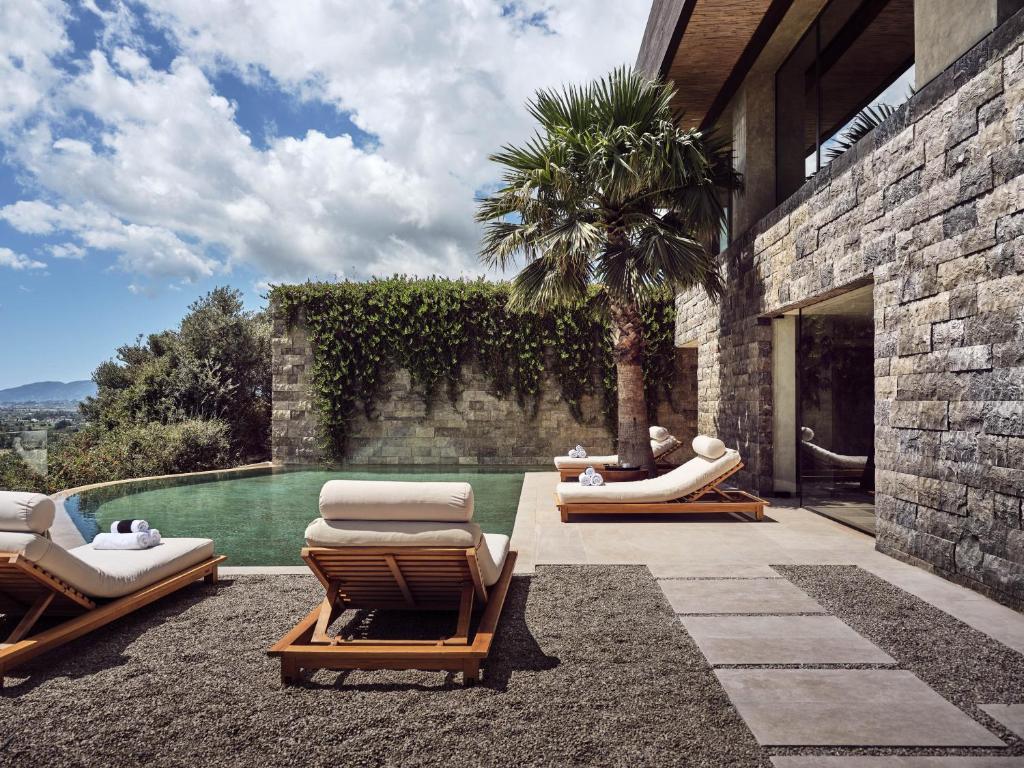
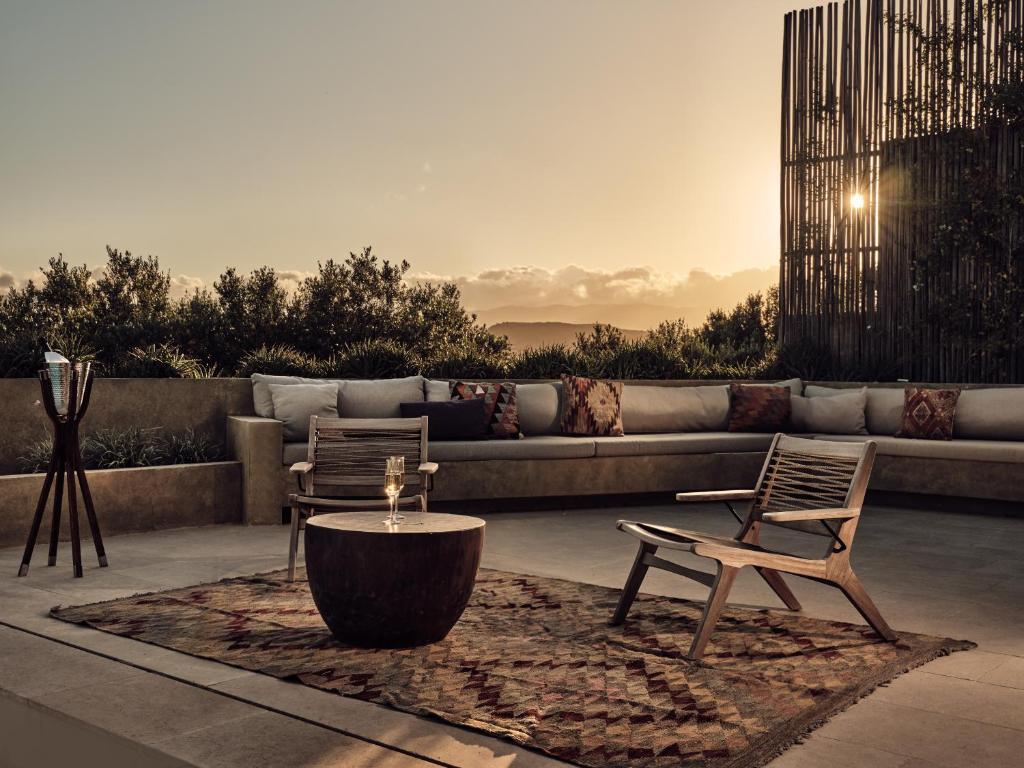
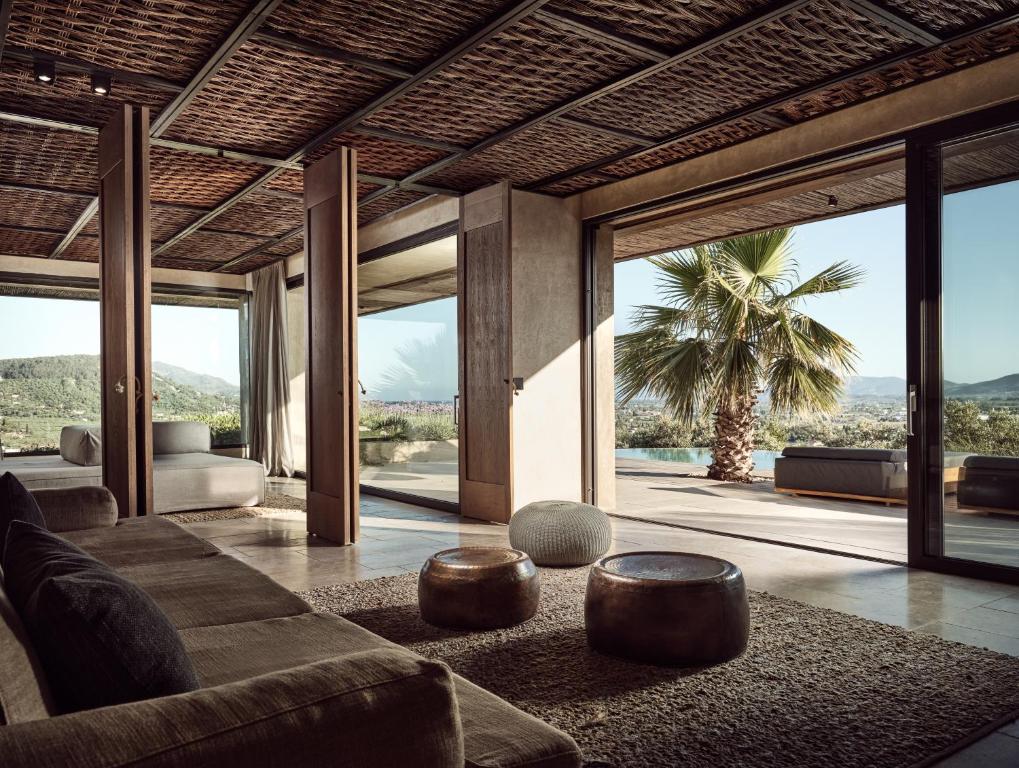
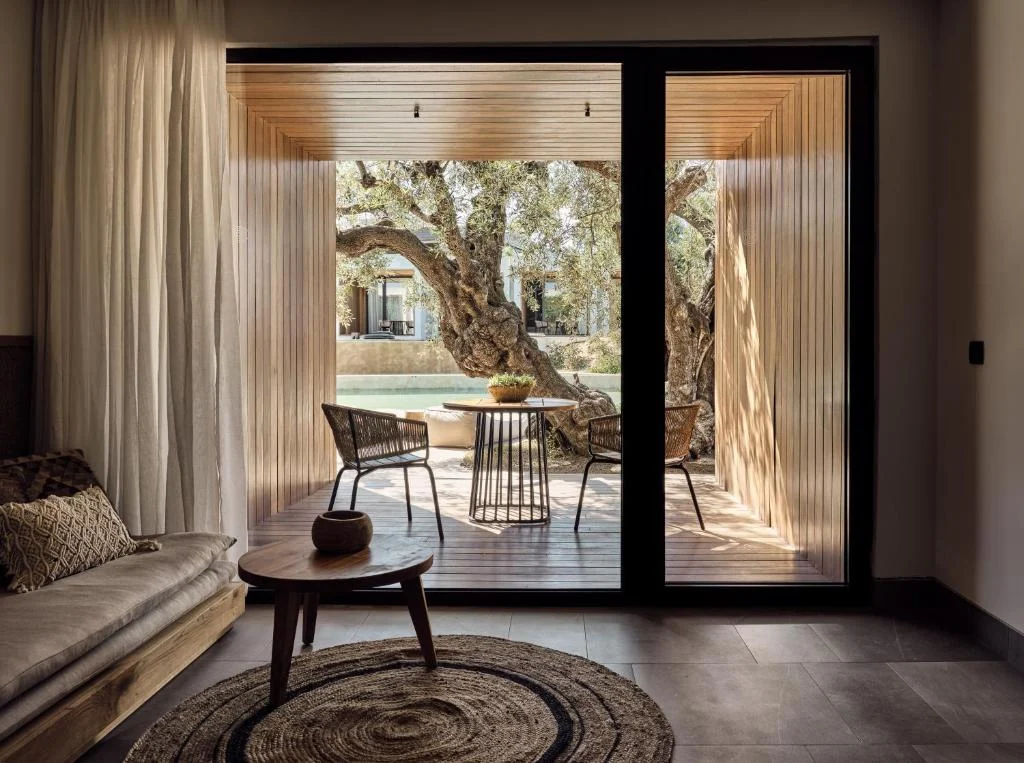
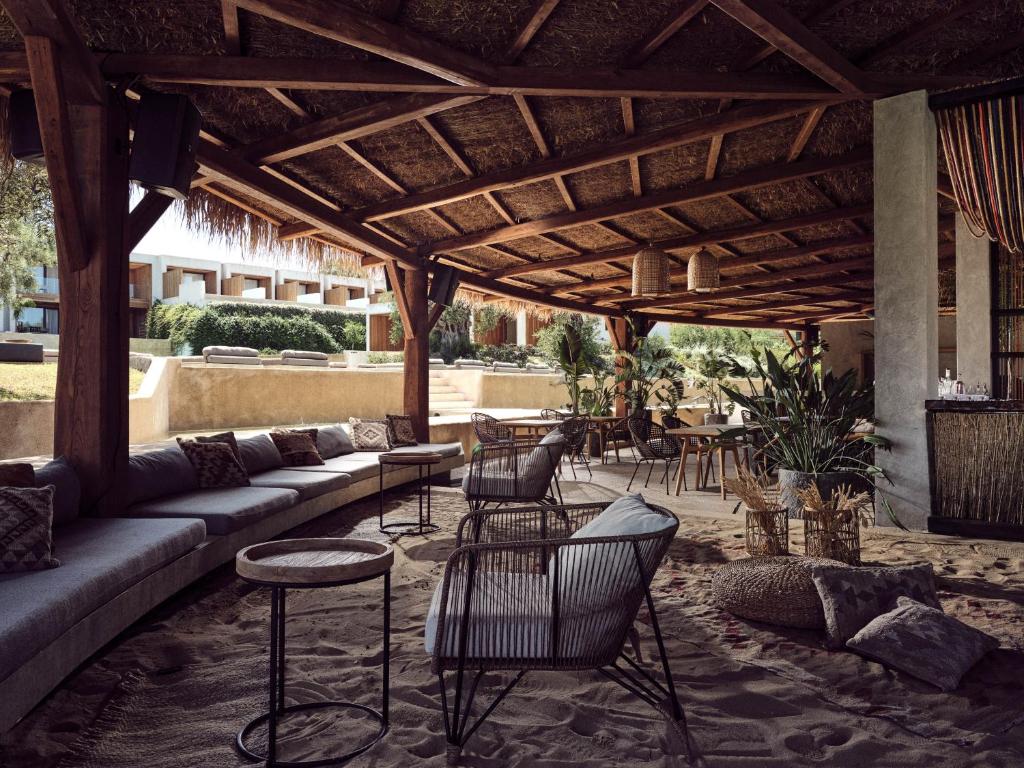
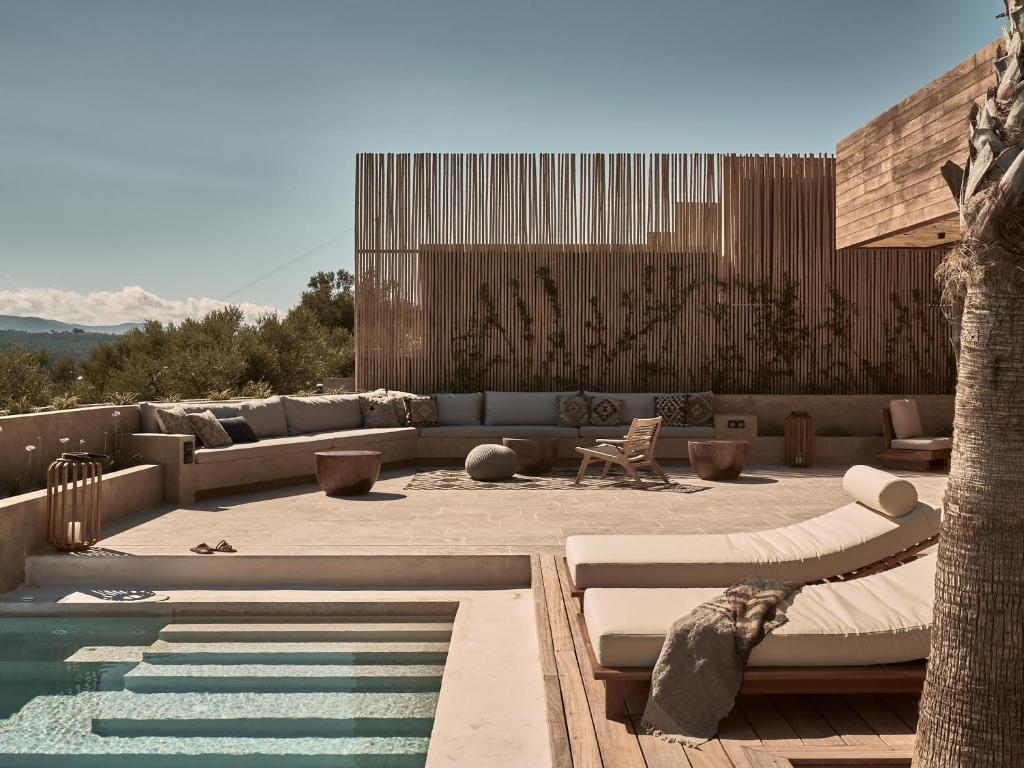
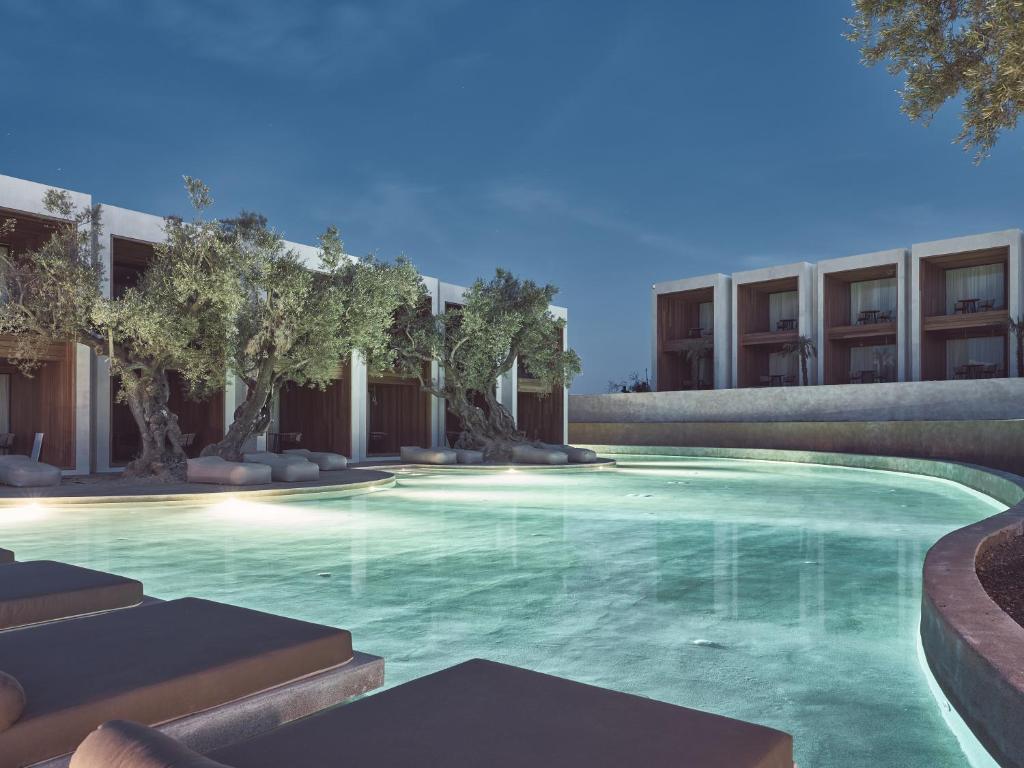
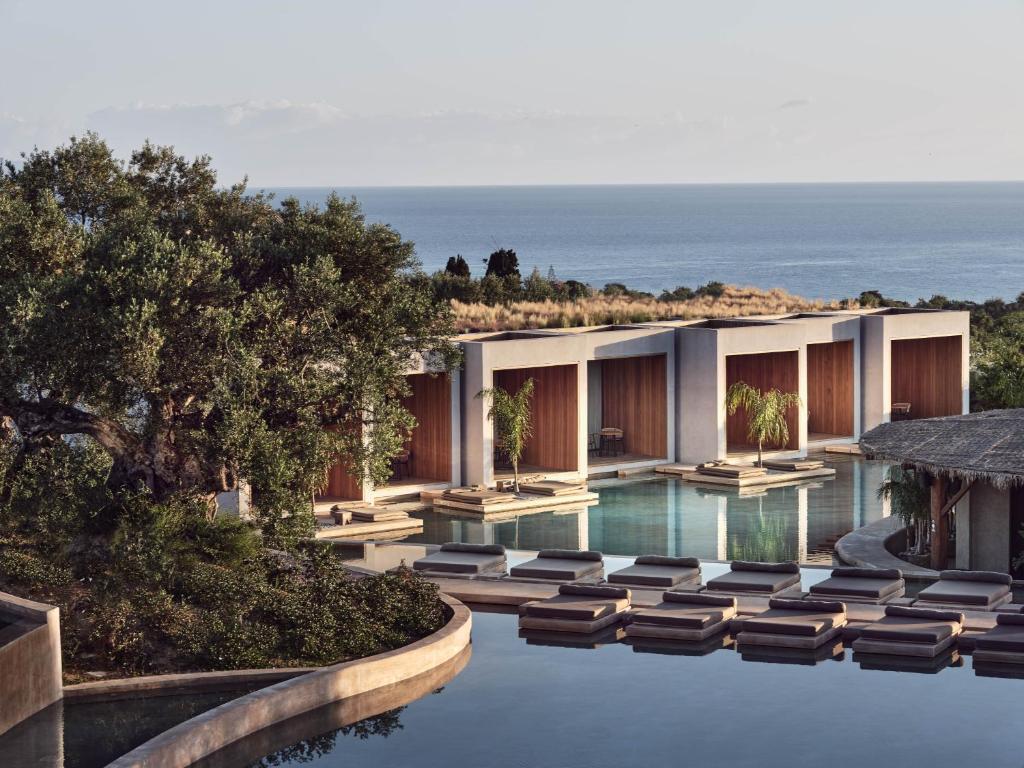
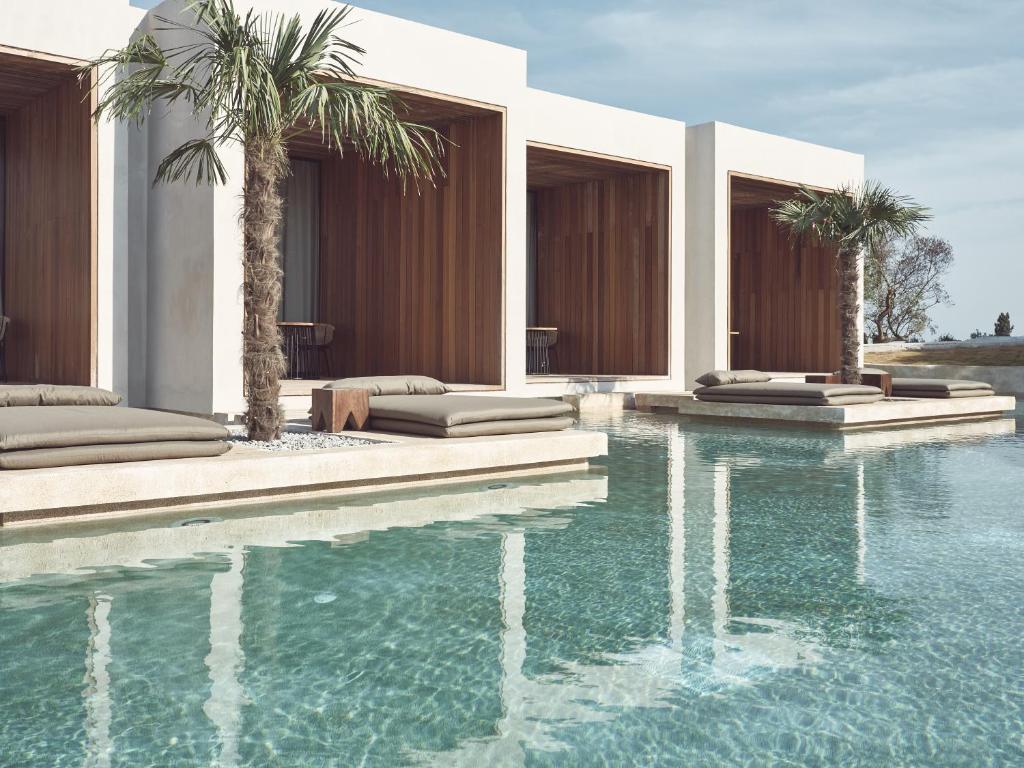
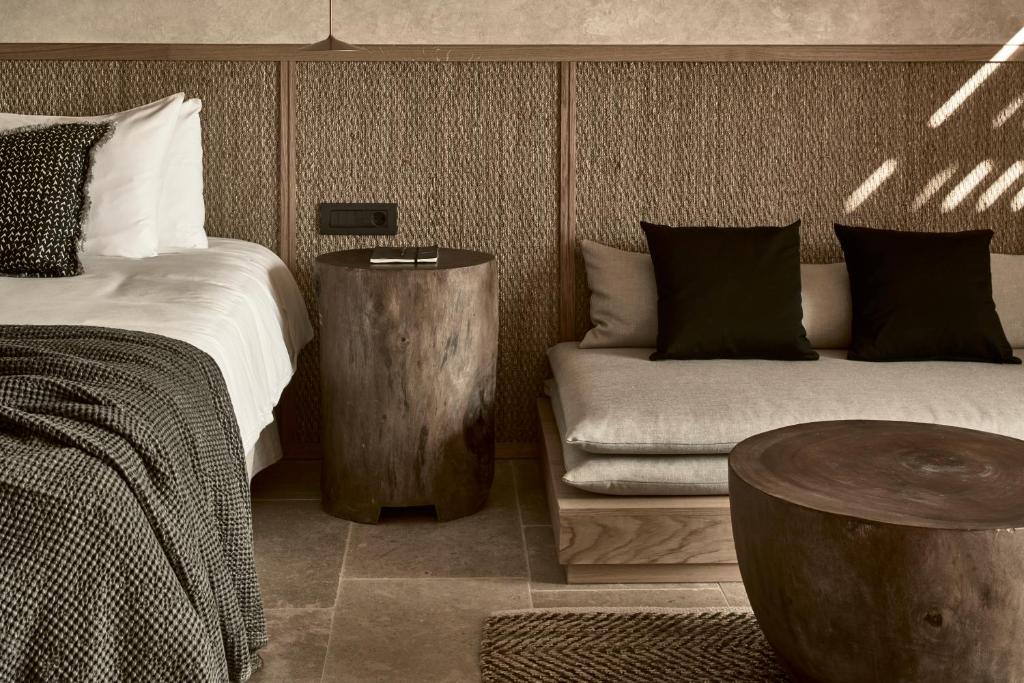
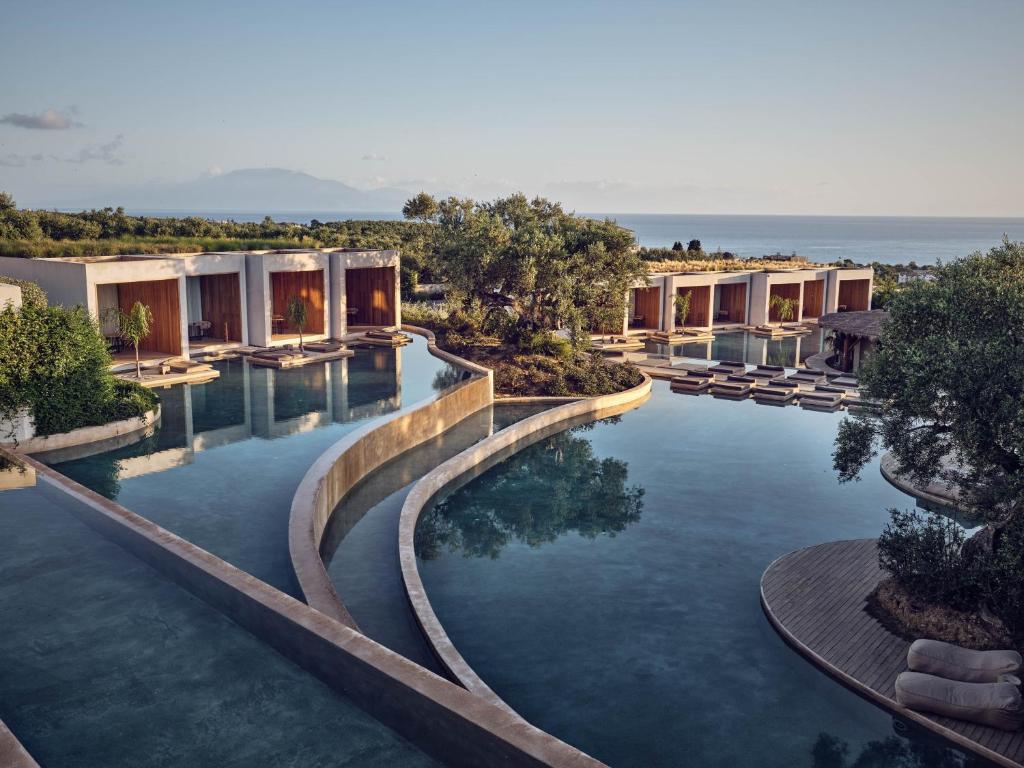
Designed by Block722, Olea All Suite Hotel redefines the island of Zakynthos through tropical-influenced Mediterranean modernism. The architectural layout revolves around a massive 4,000-square-meter water feature that flows like a natural lake through the resort. The suites are built using natural bamboo, oak wood, and smooth plaster. The design deliberately eschews rigid walls in favor of open-plan living and soft water transitions, bringing an ethereal sense of calm to the pine-scented island.
8. Gundari (Folegandros, Cyclades)
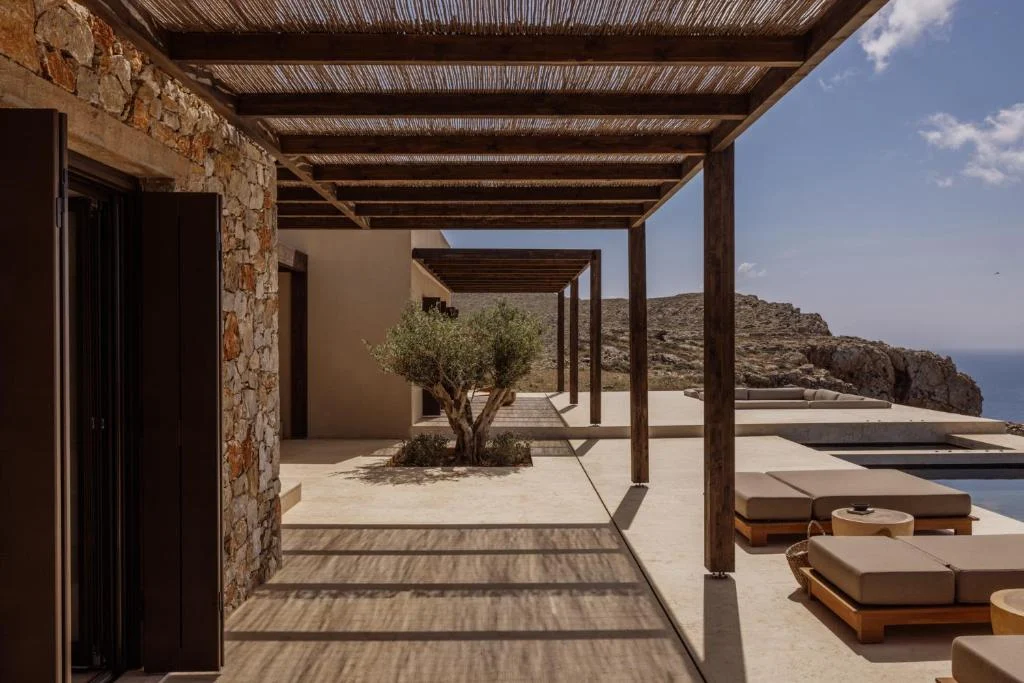
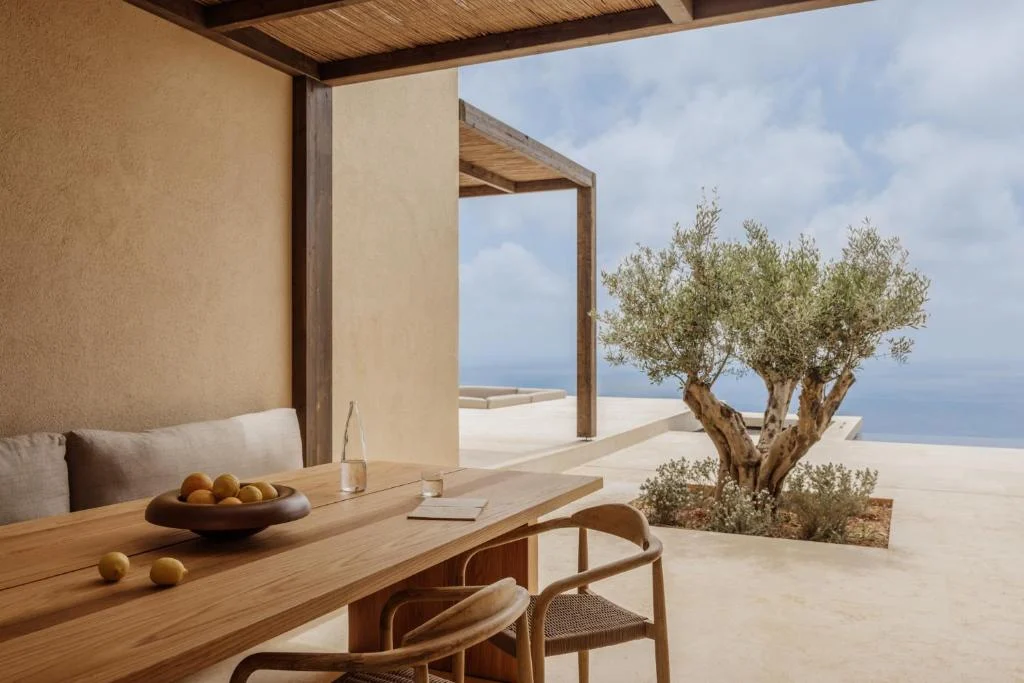
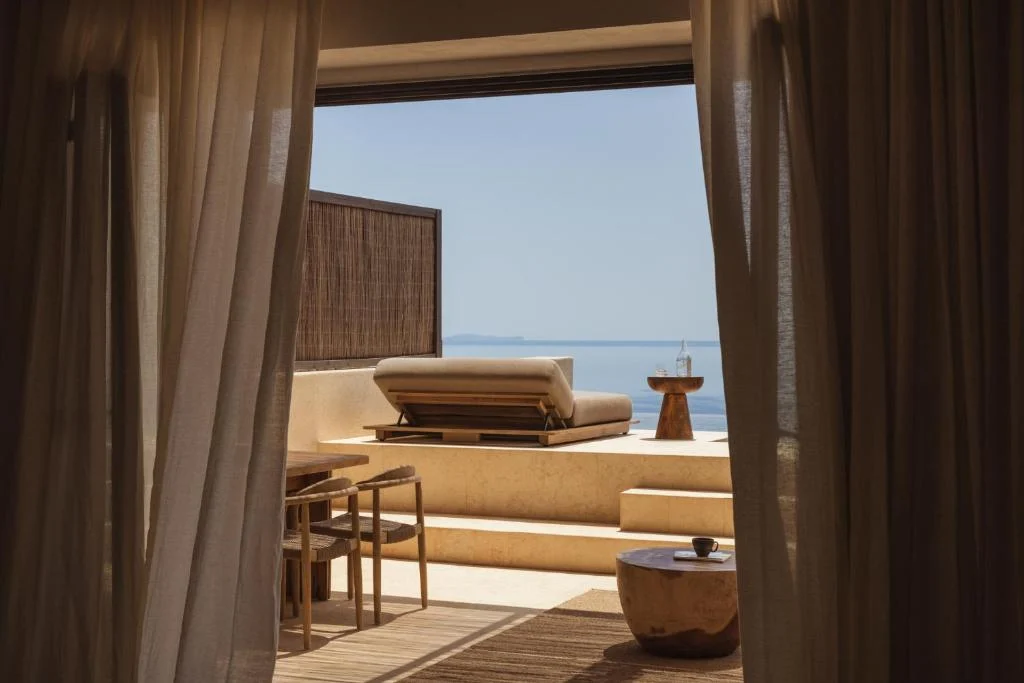
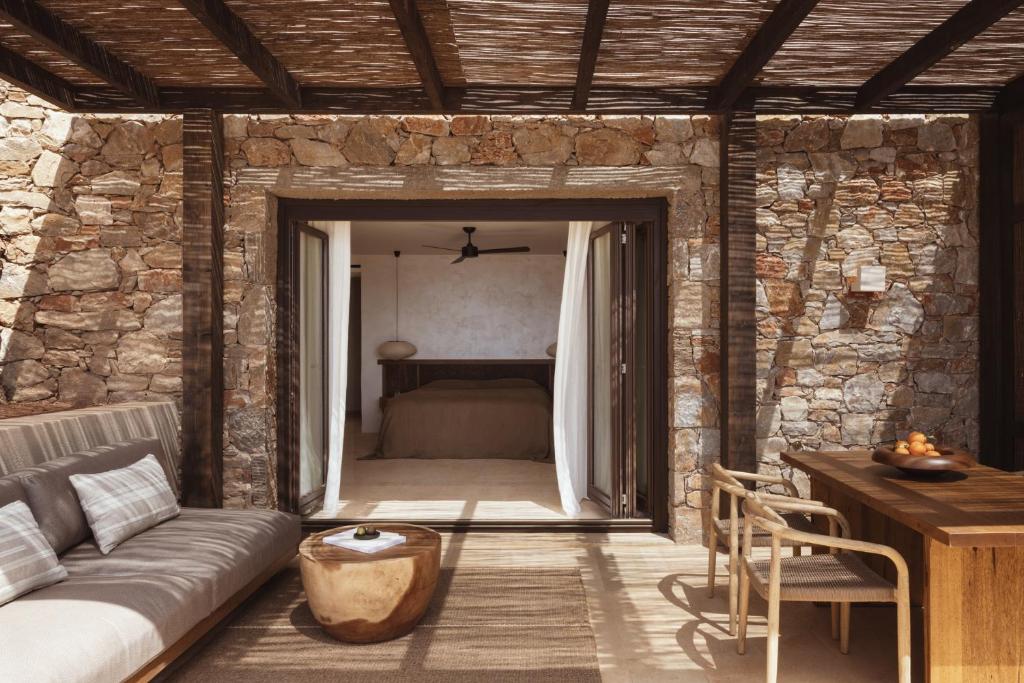
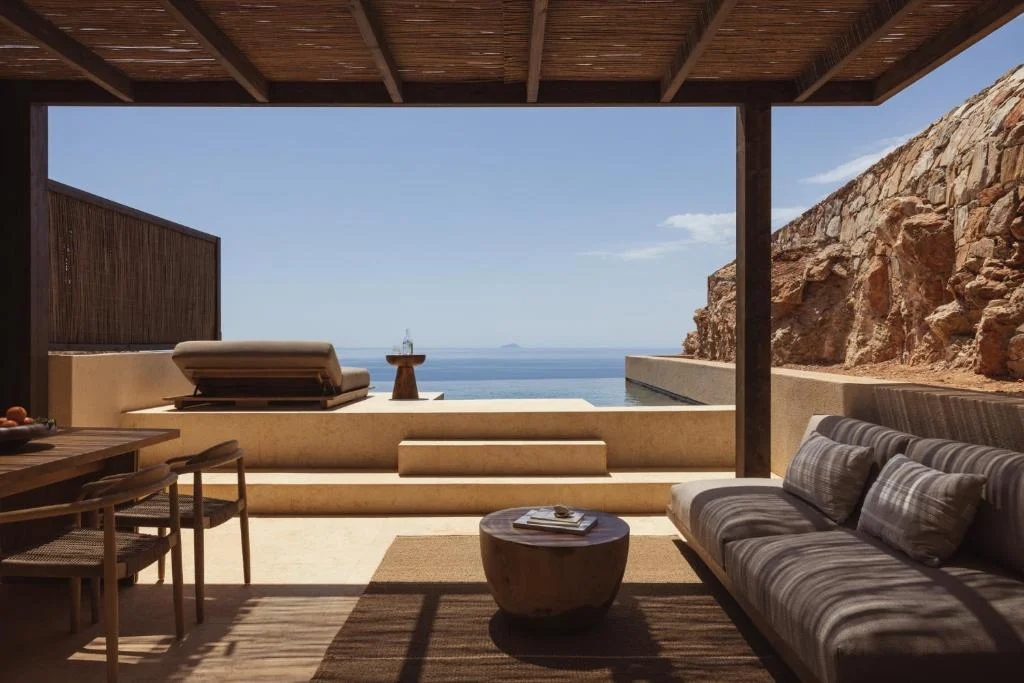
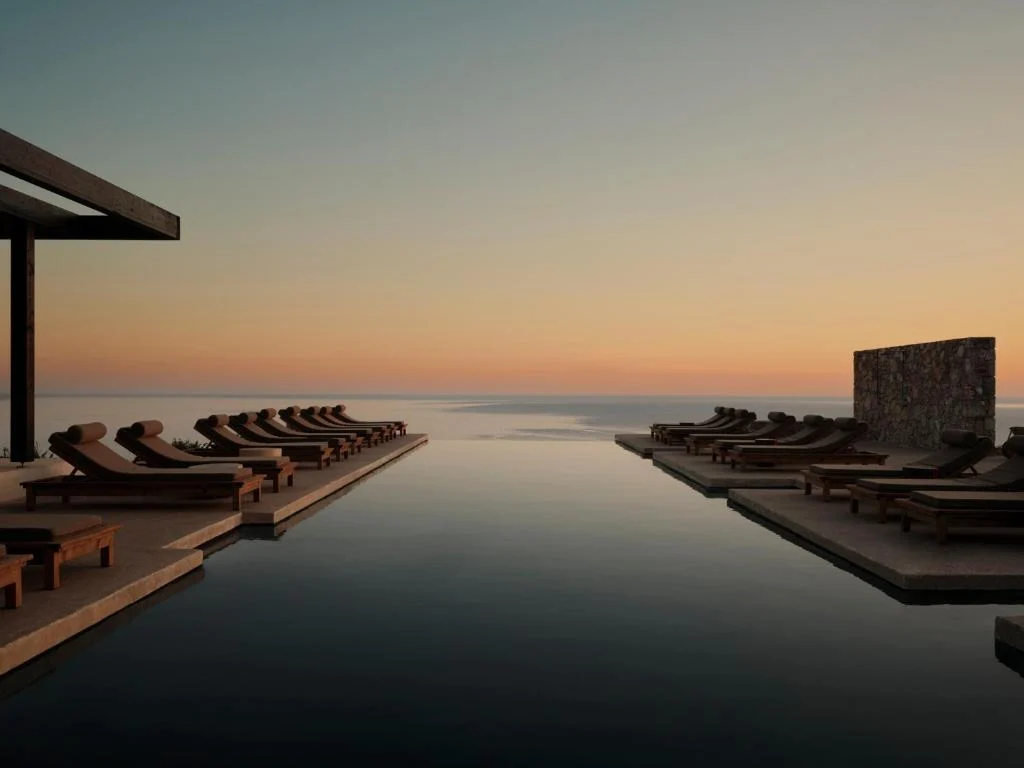
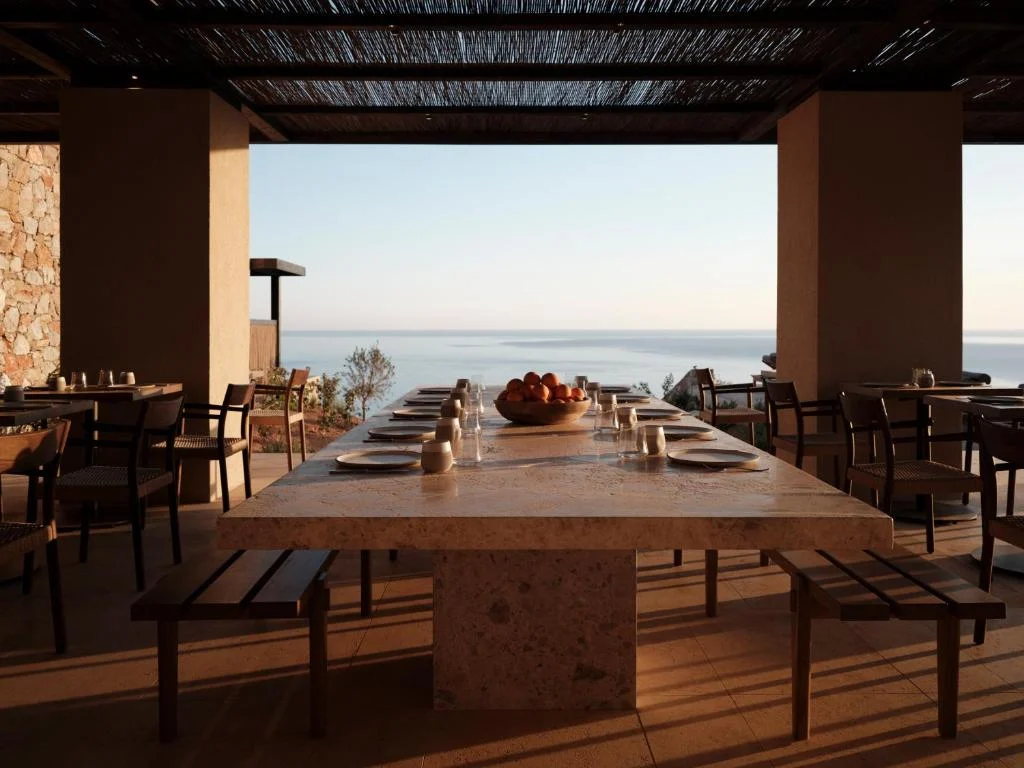
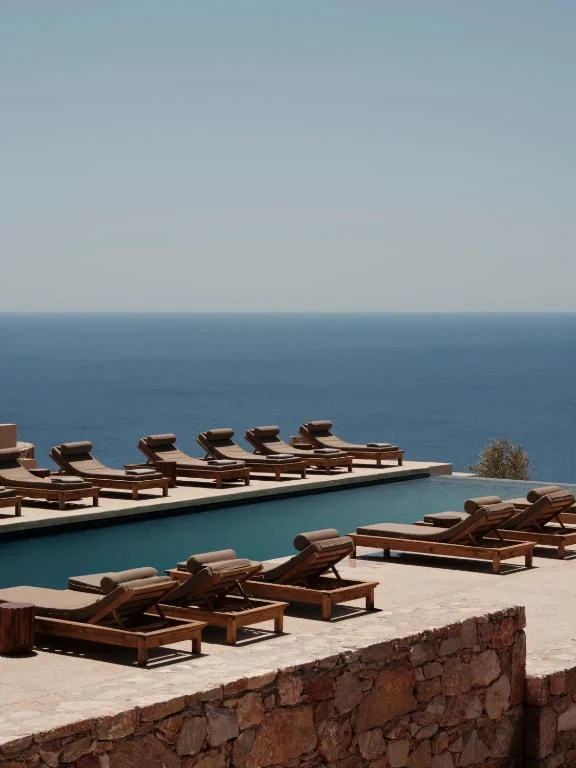
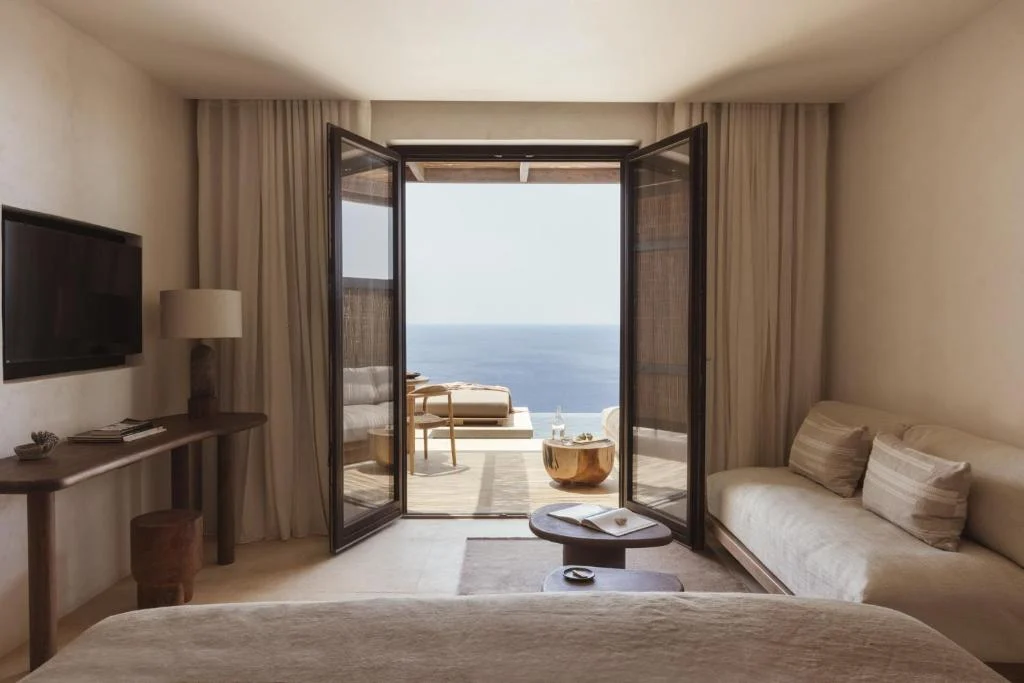
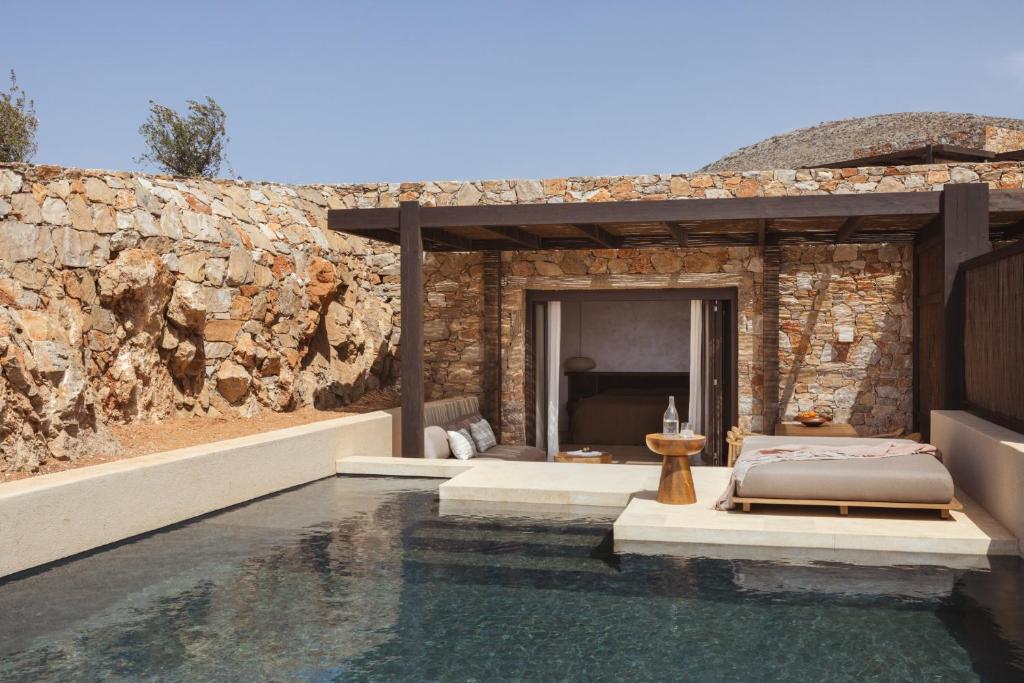
Perched on a cliff edge 160 meters above the Aegean on the pristine island of Folegandros, Gundari was designed by Block722 to disappear into its rugged landscape. Built using stone excavated directly from the site, the resort’s low-profile villas feature cantilevered decks and private infinity pools that project toward the horizon. The design adheres strictly to bioclimatic architectural principles, ensuring natural ventilation and light while preserving the raw, wild character of the island.
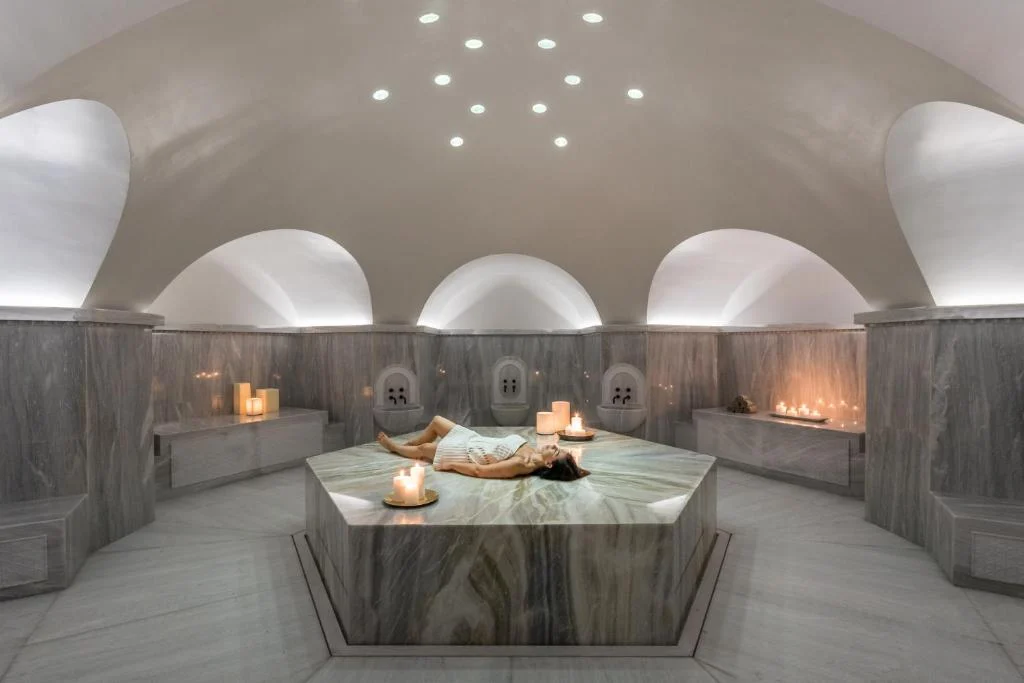
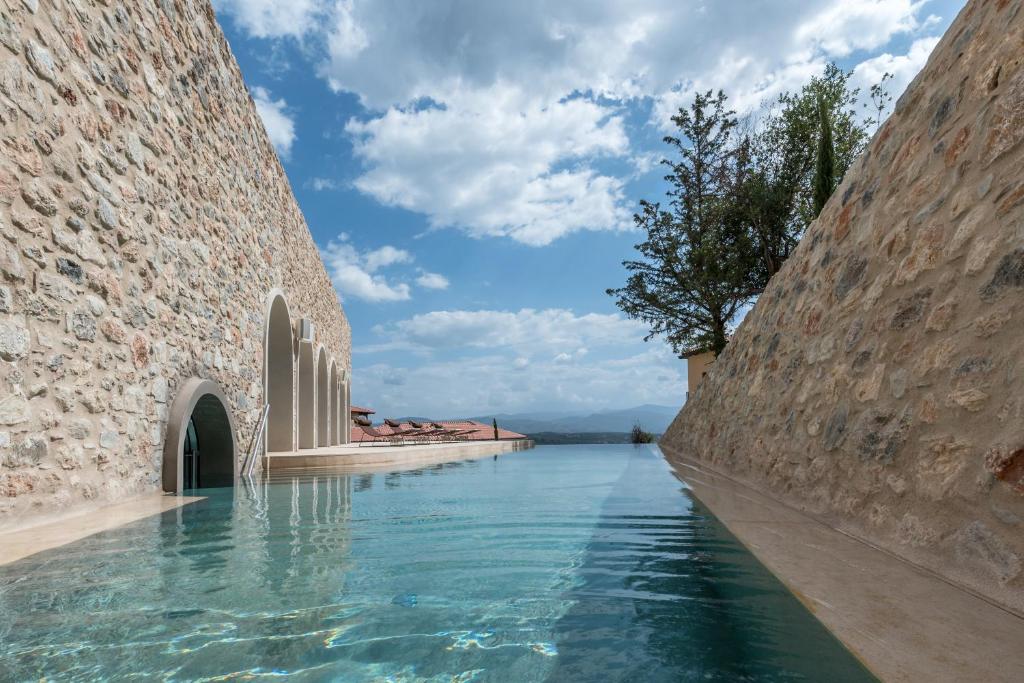
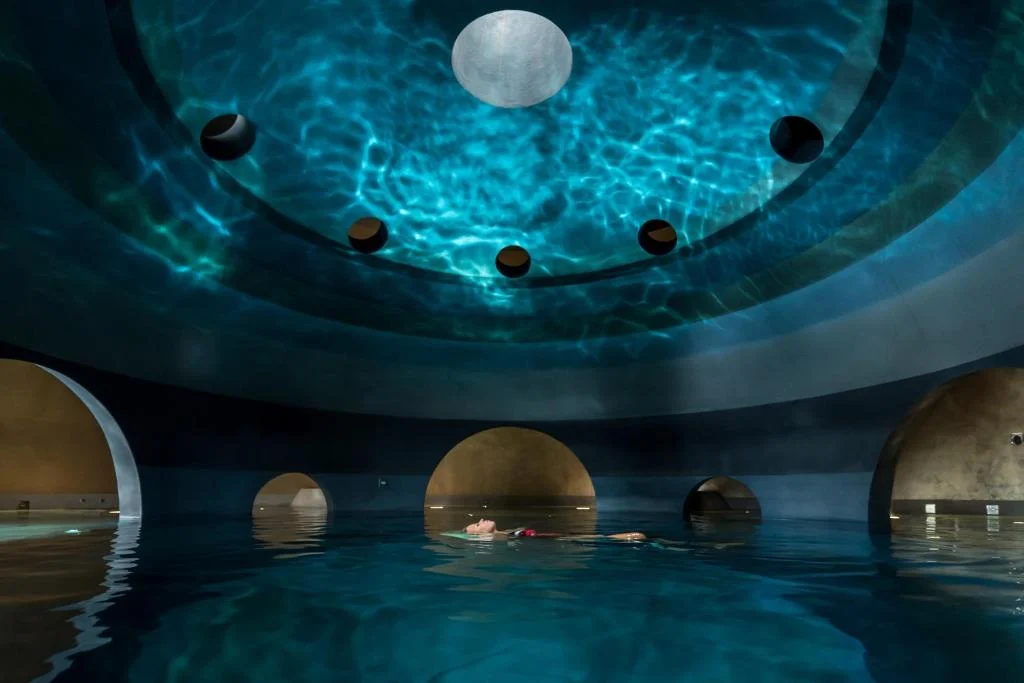
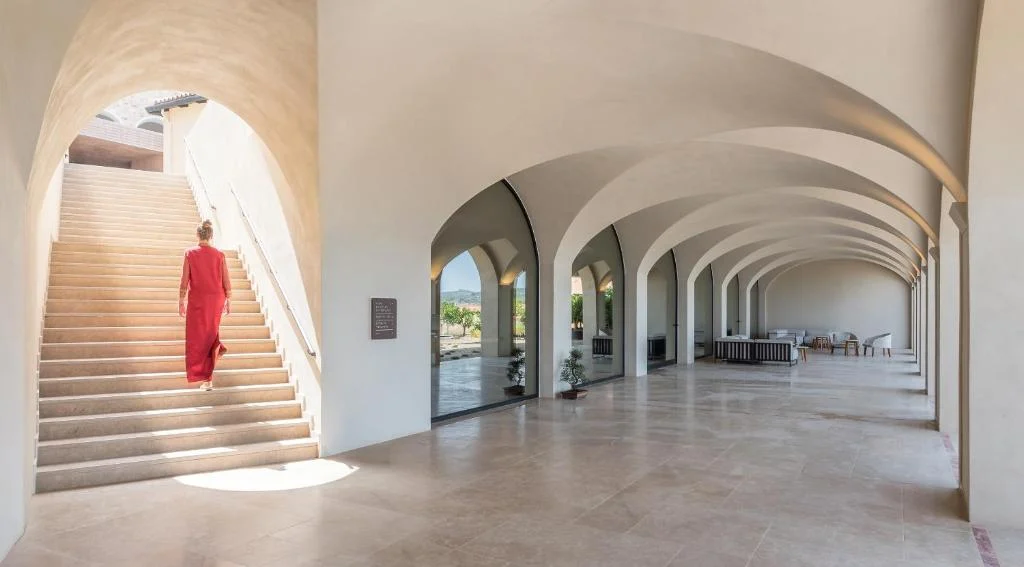
9. Euphoria Retreat (Mystras, Peloponnese)
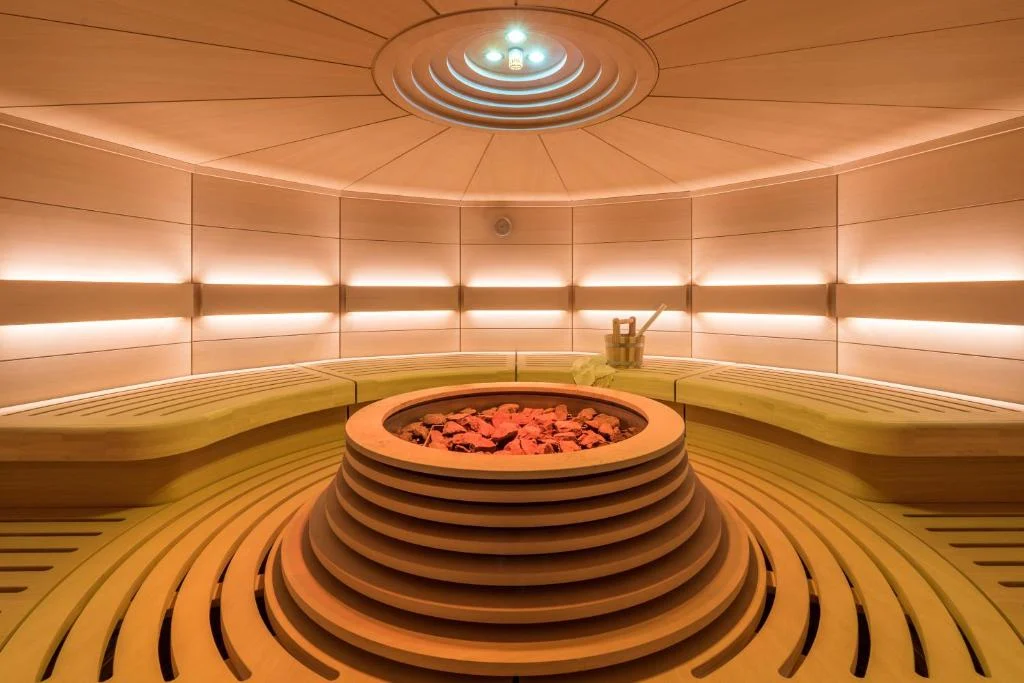
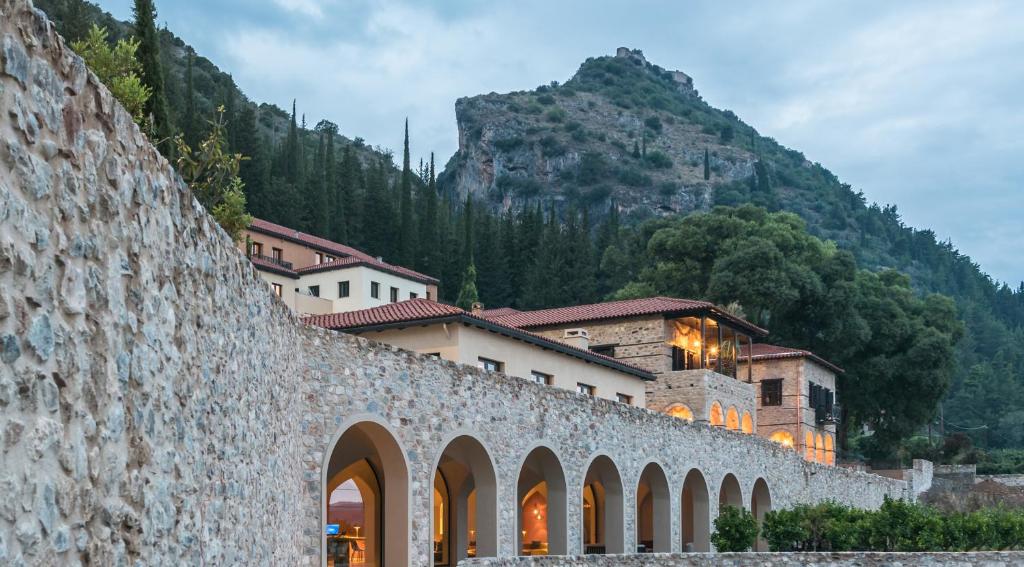
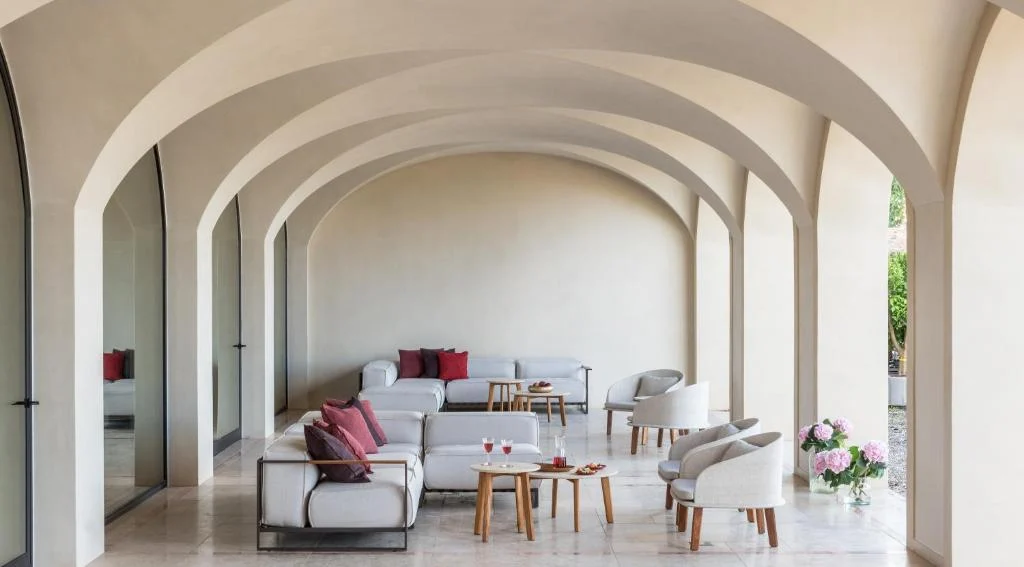
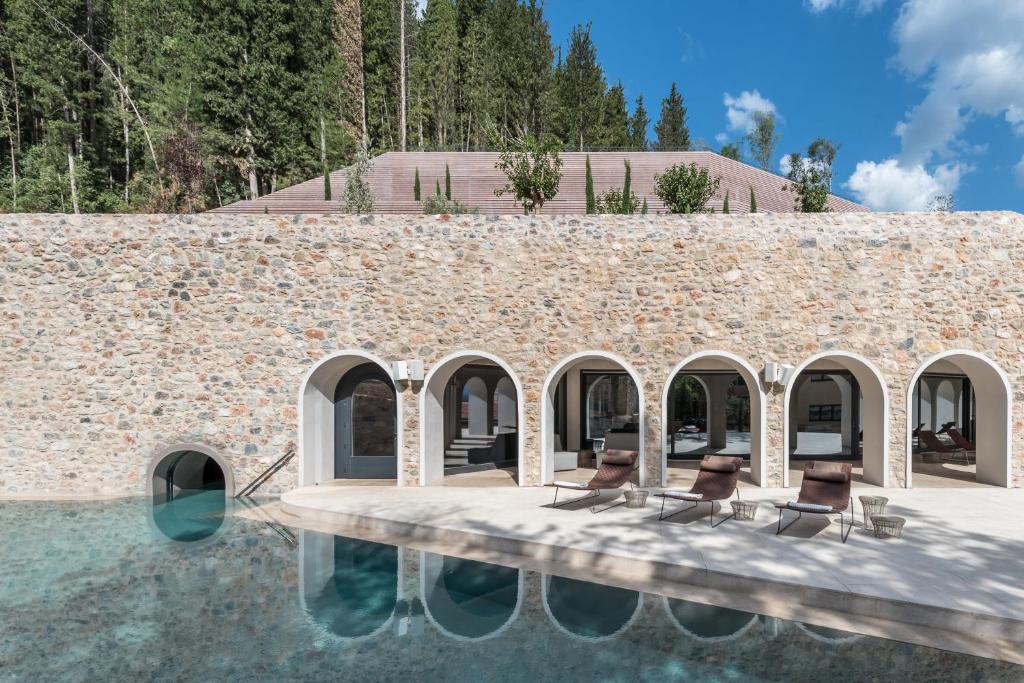
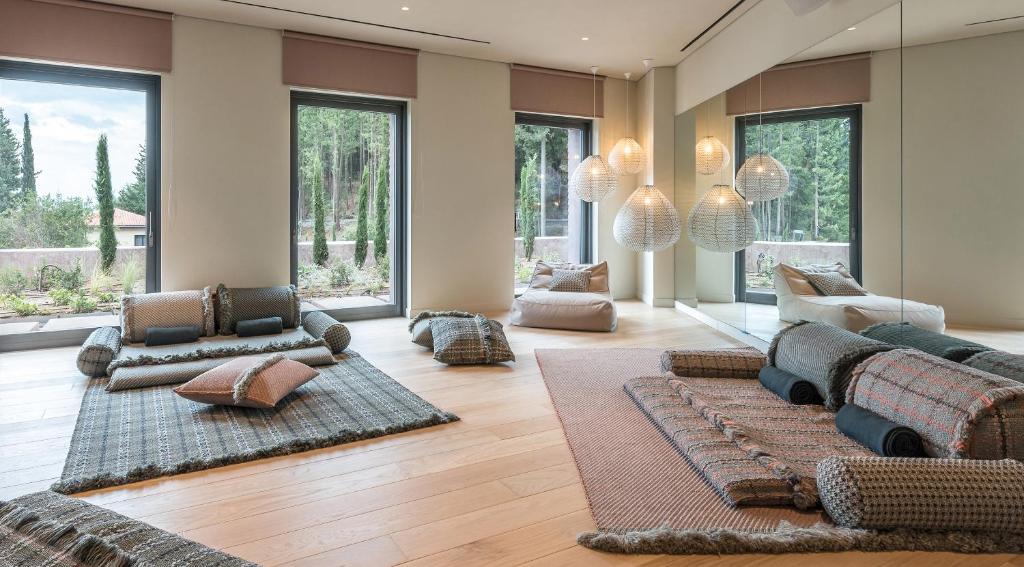
Set at the foot of Mount Taygetus near the UNESCO World Heritage site of Mystras, Euphoria Retreat blends Byzantine architectural heritage with modern spa design. Architectural firm DecaArchitecture created a cavernous, multi-level sanctuary centered around a four-story water well. Curved brick arches, domed ceilings, and warm golden lighting evoke the monastic quietude of the neighboring medieval city, creating a deeply grounding spatial experience.
10. Porto Zante Villas & Spa (Zakynthos)
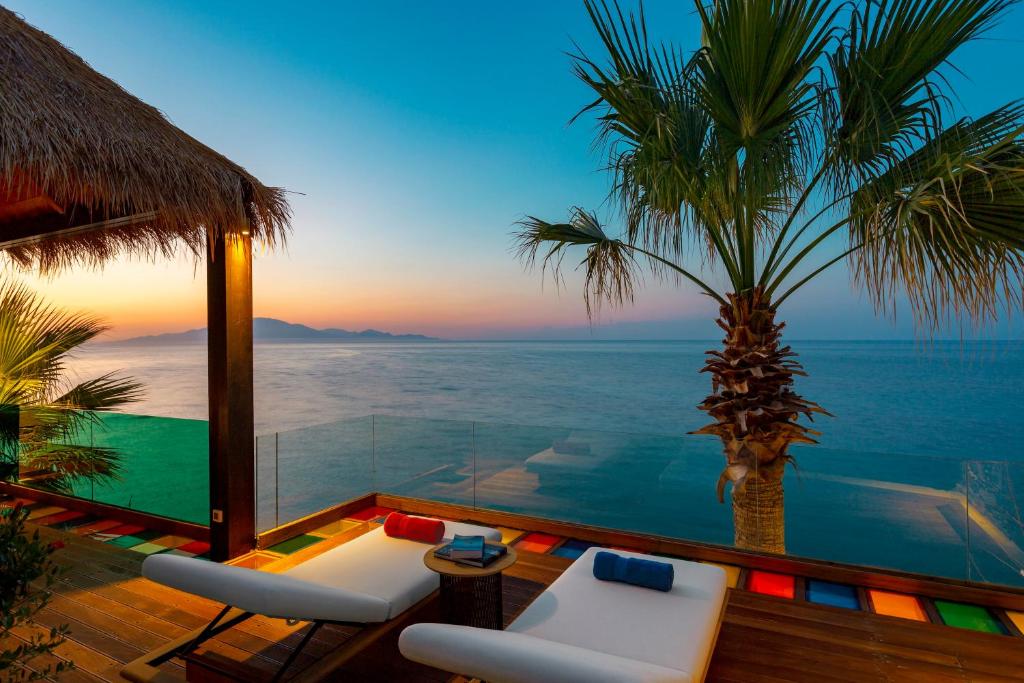
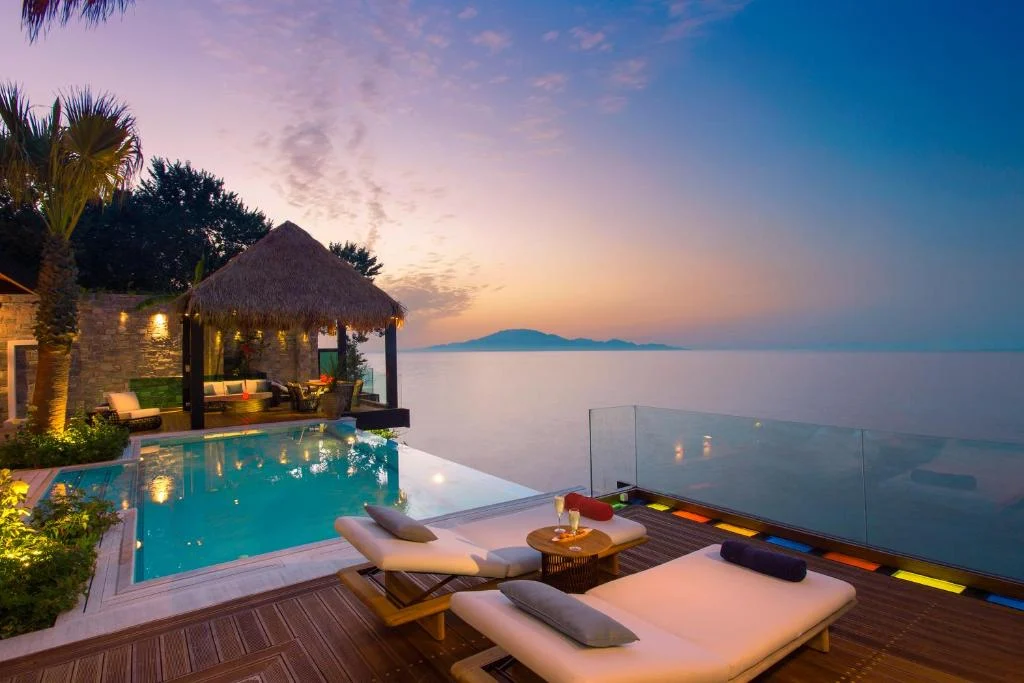
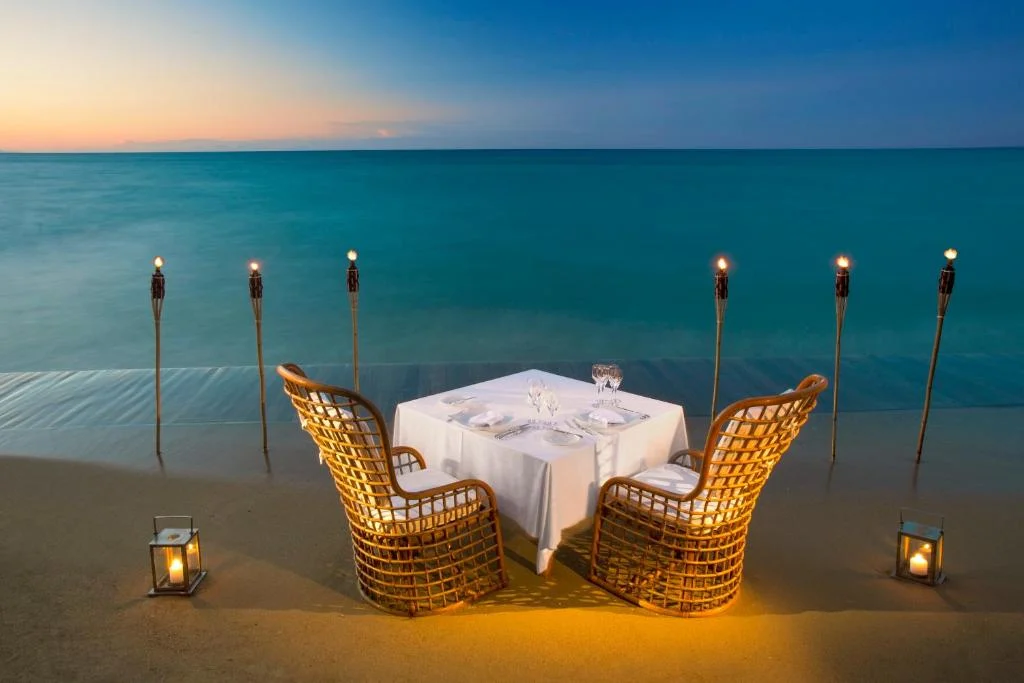
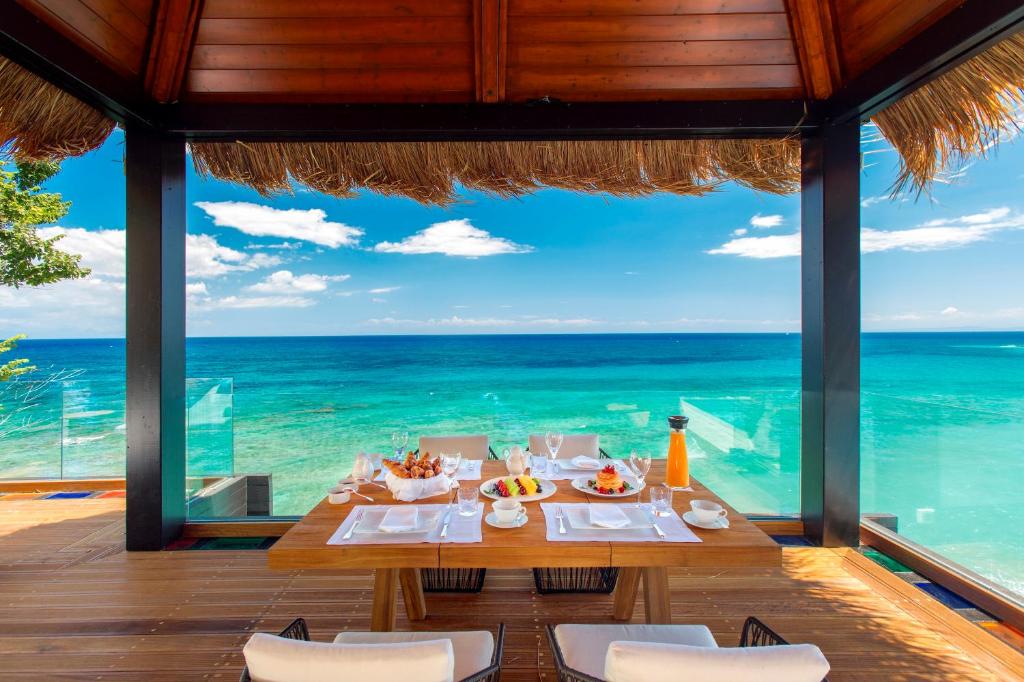
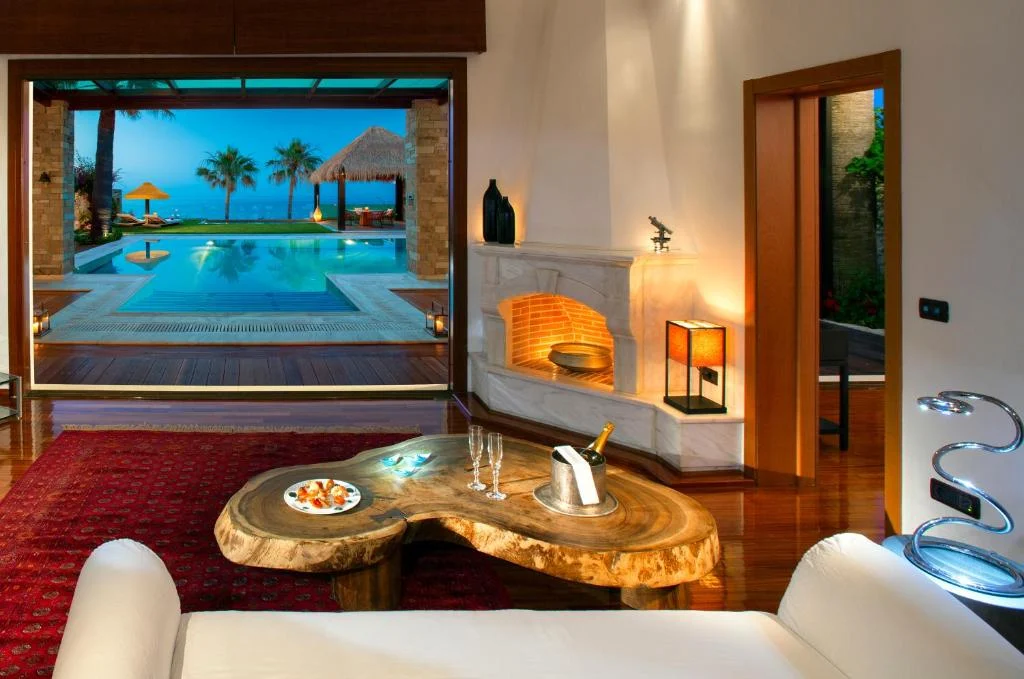
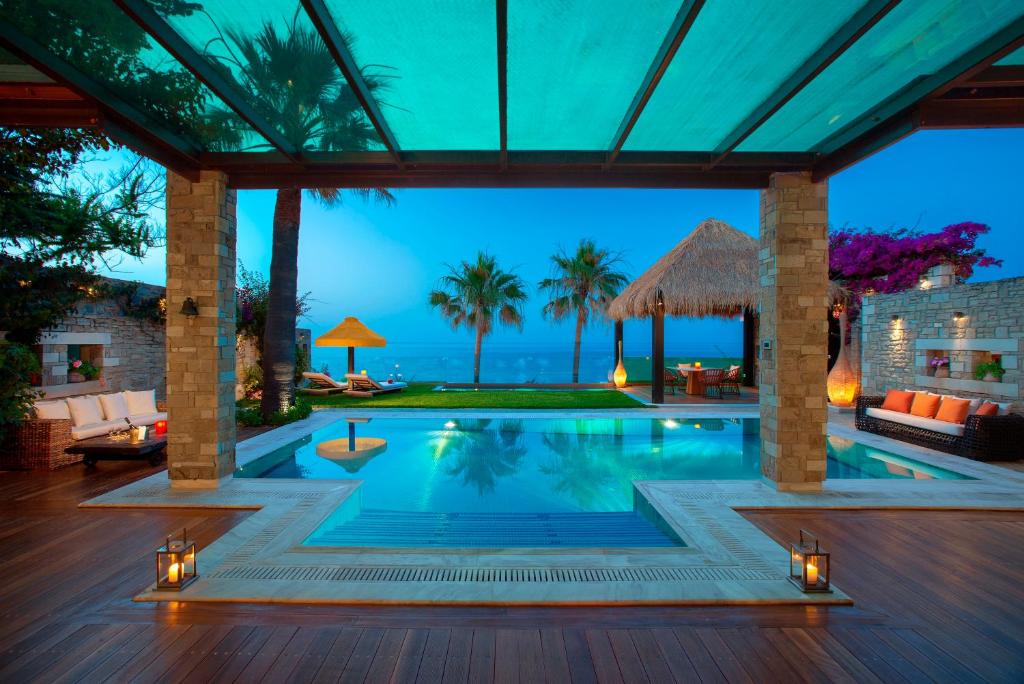
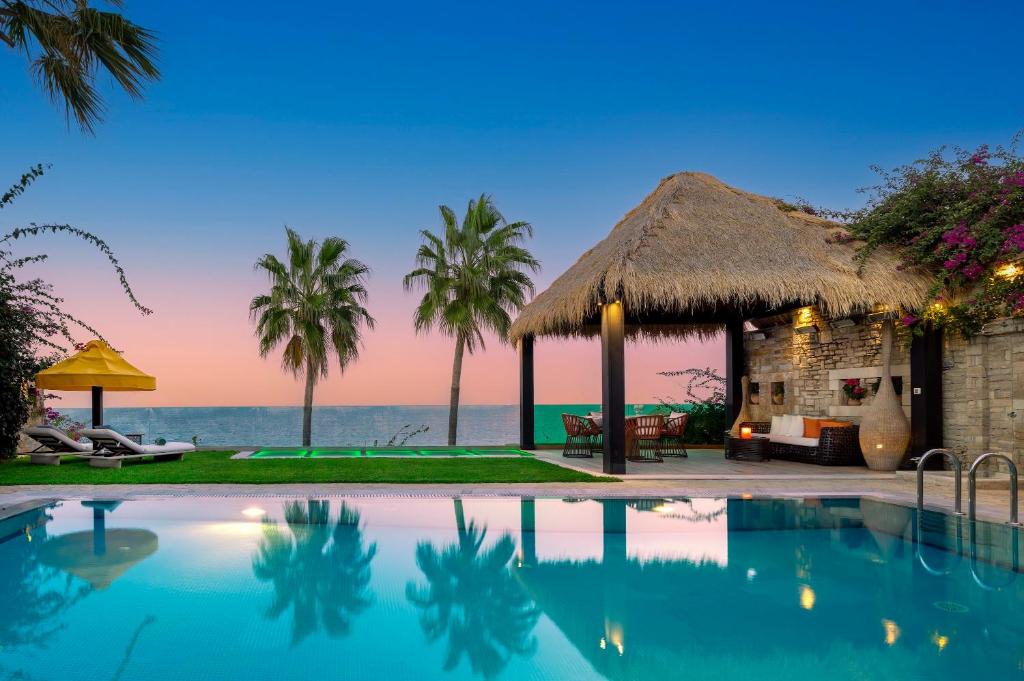
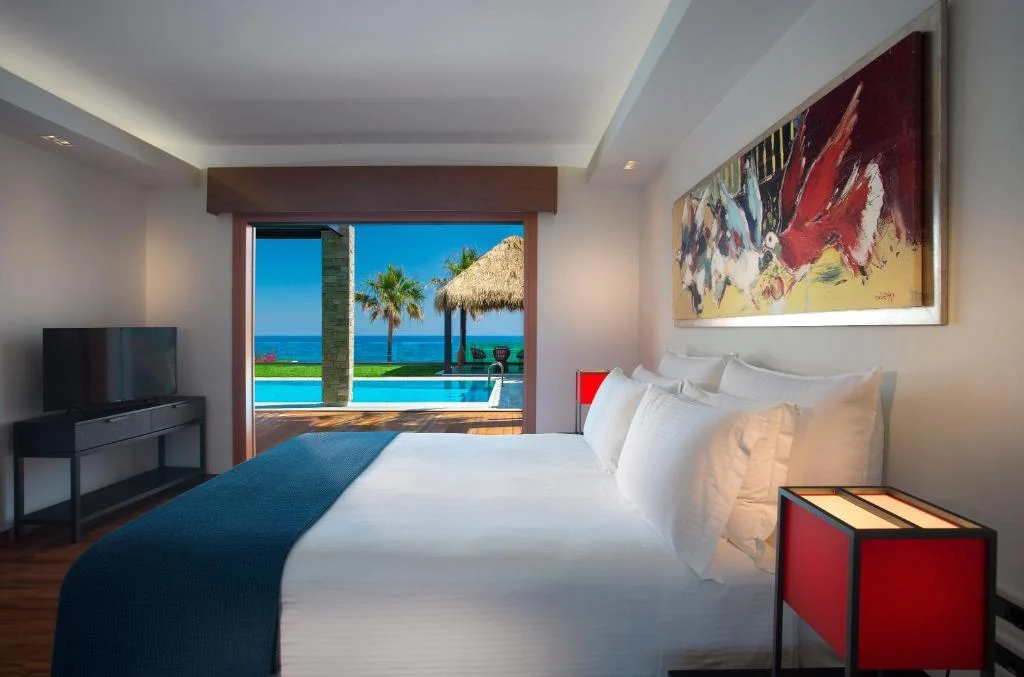
For pure ultra-luxury privacy combined with residential classical architecture, Porto Zante offers majestic beachfront villas that sit directly on the sands of a private bay. Featuring floor-to-ceiling glass fronts, Greek marble bathrooms, and expansive teak wood decks, the villas are designed as private sanctuaries that maximize uninterrupted views of the Ionian Sea and neighboring Cephalonia.
This shift toward site-specific, environmentally conscious design represents a mature new era for Greek tourism. By stepping beyond the familiar blue-and-white horizons of Mykonos and Santorini, these resorts demonstrate that Greece’s richest architectural dialogues are found where history, terrain, and modern innovation meet.
Was this useful?